
Last updated November 2, 2026
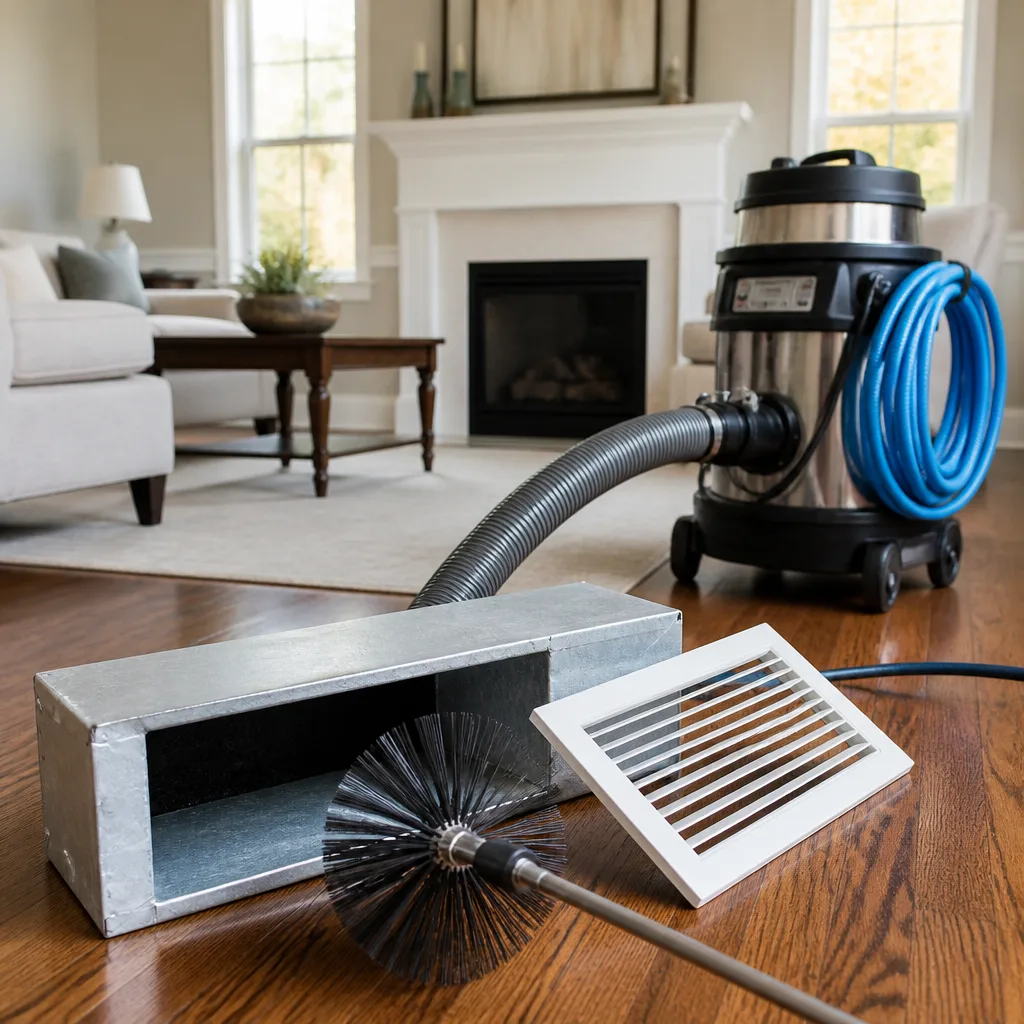 Whole-home duct cleaning
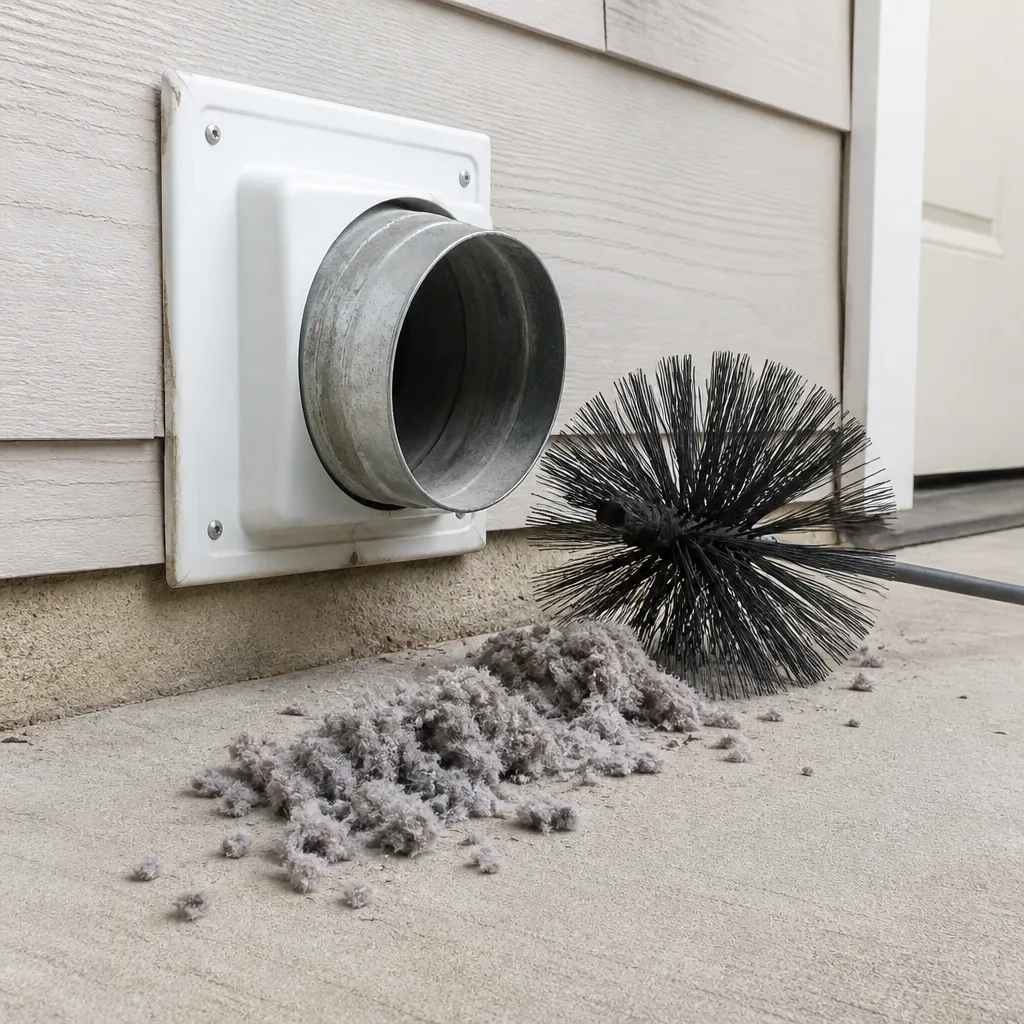 Dryer vent cleaning
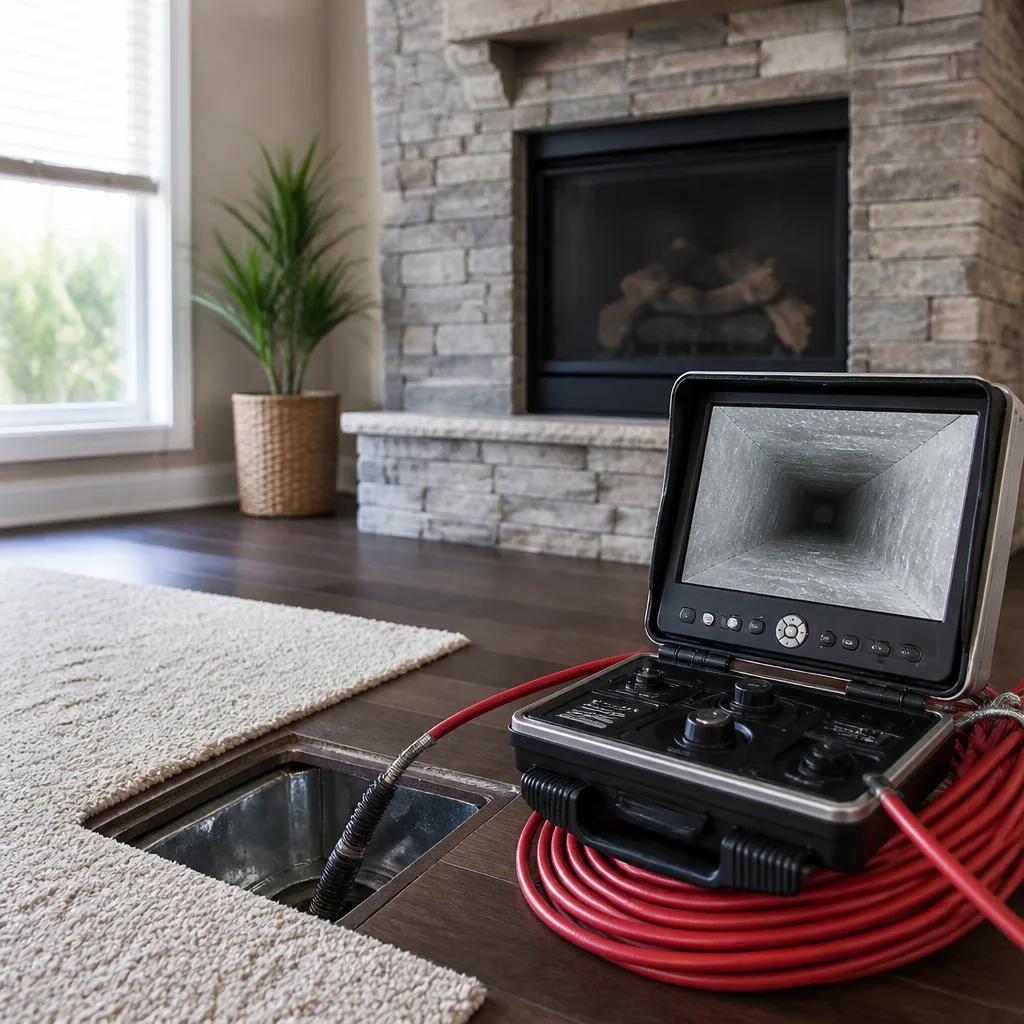 Camera inspection
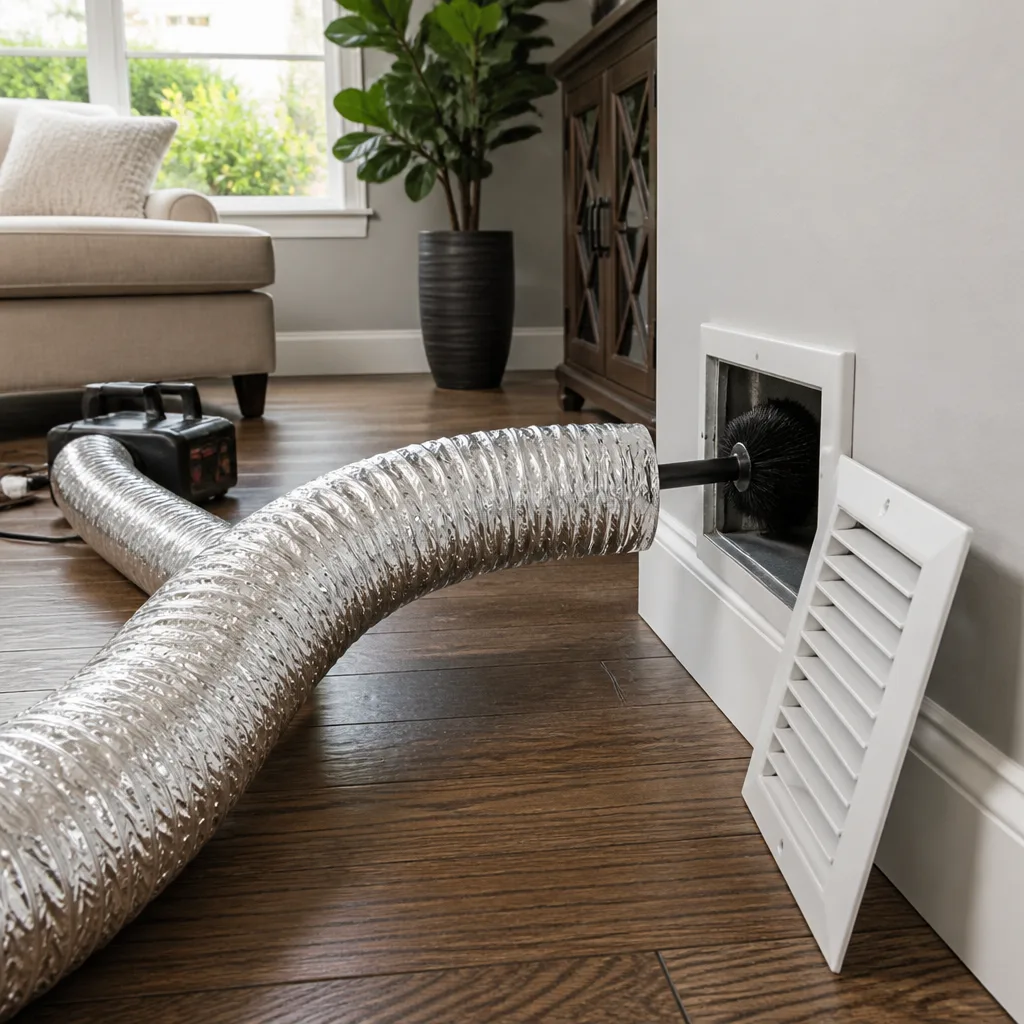 Sanitizing & deodorizing
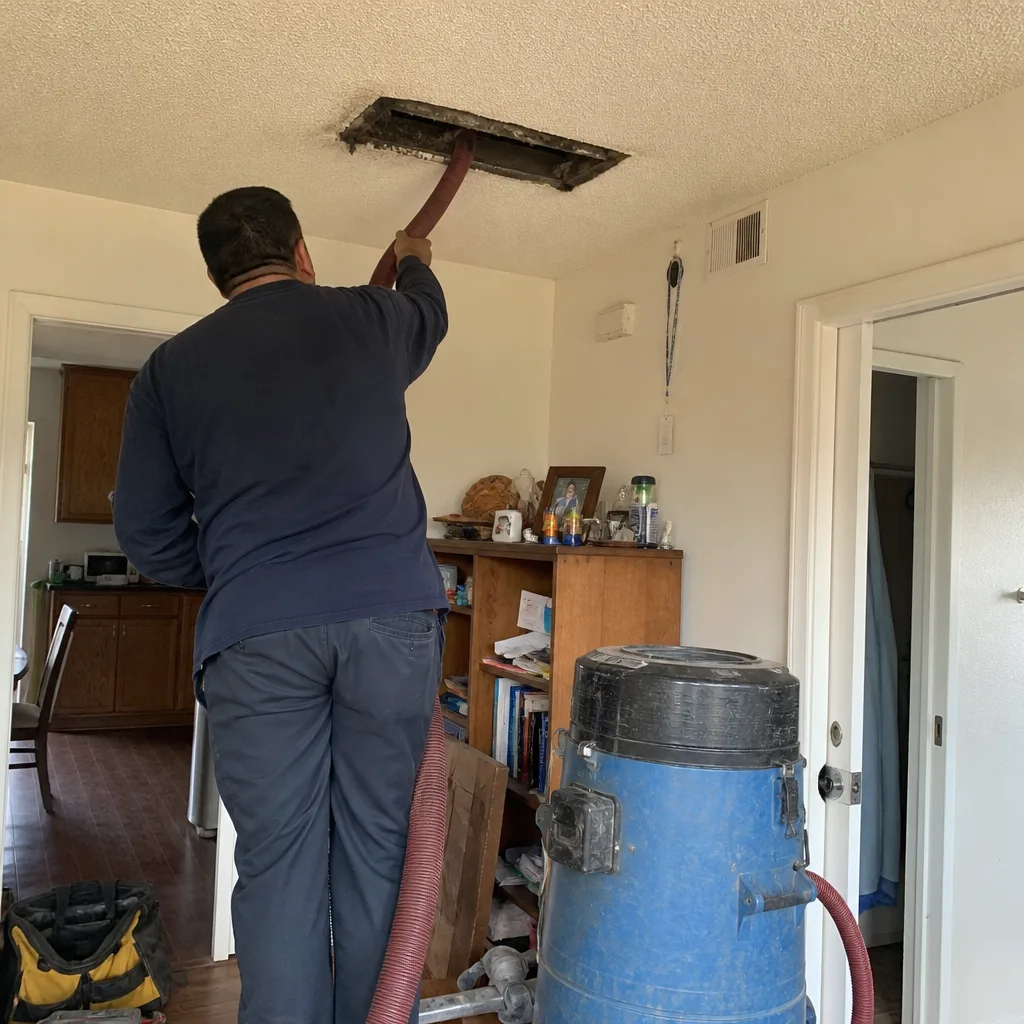
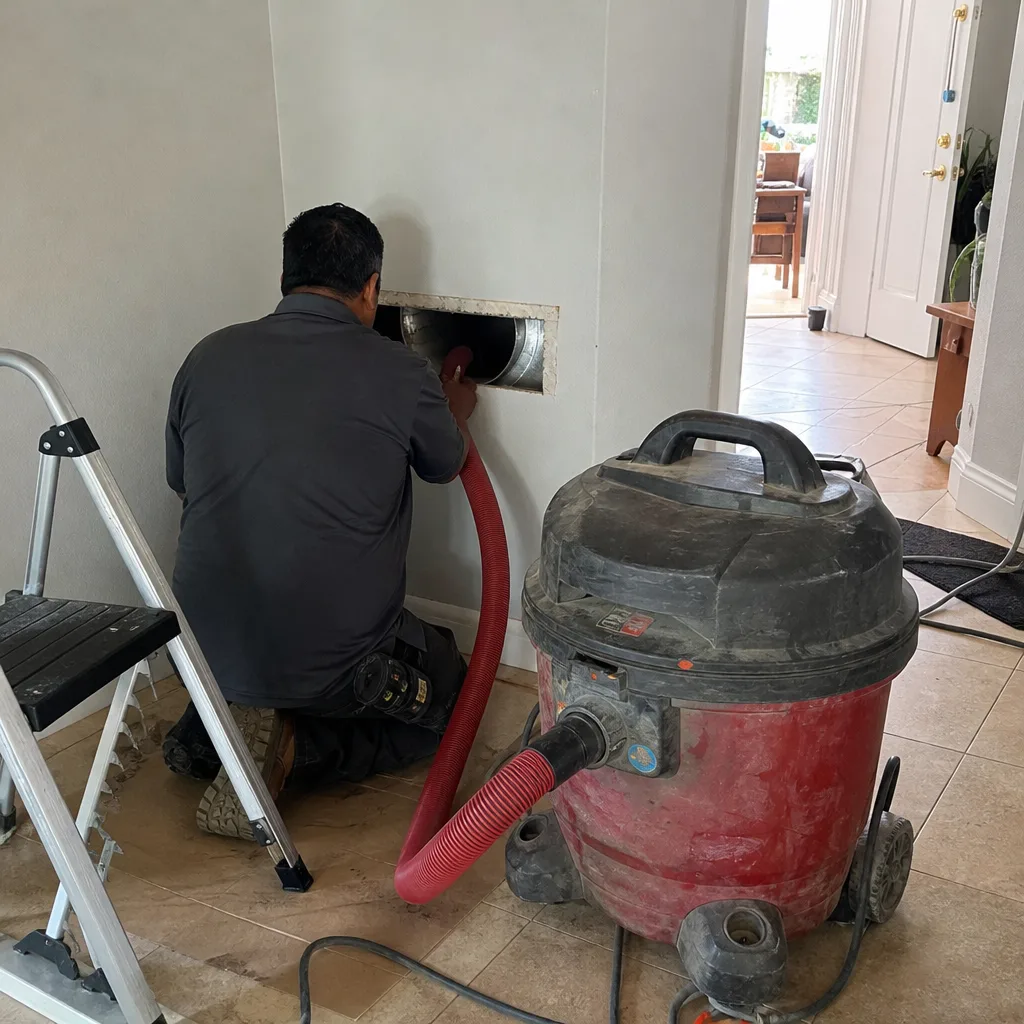
Whole-system duct and dryer vent check with before-and-after photos - you see exactly what came out of your vents
That "$99 whole-house special" is a bait ad - the real number appears once they are in your hallway, or the "clean" is a shop-vac at the register. We photograph the inside of your ducts before and after instead.
DIY vs Professional Air Duct Cleaning: The Inglewood Homeowner’s Decision Guide
A standard shop vac generates roughly 55 to 65 inches of water column suction. A truck-mounted negative pressure duct cleaning system moves 8,000 to 12,000 cubic feet of air per minute. If those numbers sound like they belong to different universes, that’s because they do. They’re not different points on the same scale. They’re different mechanisms entirely. This guide explains what DIY duct cleaning can honestly accomplish in an Inglewood home, where it stops working, and why the decision isn’t really about saving money. For related guidance, see our article on How to Hire an Air Duct Cleaning Contractor in Inglewood: A Step-by-Step Guide. It’s about whether the tool in your garage can physically do the job. By the end, you’ll know exactly what you can handle yourself, what requires professional equipment, and how to avoid making your air quality worse while trying to improve it.
Quick Answer
DIY duct cleaning can handle the accessible parts of your system: return registers, supply vents, the first few inches of visible ductwork, and the filter housing. It cannot clean the interior walls of the duct runs themselves. That requires negative pressure equipment that pulls air through the entire system at thousands of CFM while agitating debris loose. For most Inglewood homes, a hybrid approach works best: you maintain what you can reach, and our Air Duct Cleaning services handle the full-system cleaning every three to five years.
Styles & brands we work with
- Whole-home duct cleaning
- Dryer vent cleaning
- Camera inspection
- Sanitizing & deodorizing
Table of Contents
- What DIY Duct Cleaning Can Legitimately Accomplish
- Where DIY Stops Working: The Physics Problem
- 5 DIY Tasks Worth Doing in Your Inglewood Home
- When Professional Cleaning Is Non-Negotiable
- Honest Cost Comparison: DIY Tools vs Professional Cleaning
- Common Mistakes That Make Things Worse
- When to Call a Professional
- Frequently Asked Questions
What DIY Duct Cleaning Can Legitimately Accomplish
Let’s be straight about what a homeowner with a shop vac, a flashlight, and some patience can actually do inside an Inglewood duct system. The accessible surfaces are real surfaces. Your return grille catches a surprising amount of dust, pet hair, and lint before air even enters the ductwork. The register covers on your supply vents accumulate buildup on the back side where you can’t see it until it’s removed. The first six to twelve inches of duct immediately behind each register collects what we call “edge accumulation” because airflow slows at the edges of the duct wall and drops heavier particles there.
These are not trivial surfaces. In our experience operating Duct Cleaning Inglewood, a home where the occupants vacuum the registers monthly and change filters quarterly shows measurably less loose debris in the duct interior than a neglected system. The maintenance matters. It reduces the volume of what eventually breaks loose and circulates through the living space. But it’s essential to understand what this maintenance does not touch: the interior walls of the main trunk lines and branch runs that run through your attic, crawlspace, or slab. Those surfaces are inaccessible to a homeowner’s tools. The question isn’t whether you’re meticulous. The question is whether your equipment can reach the surface at all.
DIY work also gives you something genuinely valuable: a baseline understanding of your system. When you remove every register in the house, you see which rooms are pulling more debris. When you inspect the filter housing, you learn how quickly your home loads a filter with particulate. That observational data helps you have an informed conversation when you do schedule professional Air Duct Cleaning in Inglewood. You’ll know what you saw, where you saw it, and what questions to ask.
Where DIY Stops Working: The Physics Problem
The core misunderstanding in the DIY duct cleaning debate is that a vacuum is a vacuum. It isn’t. A shop vac creates suction at a single point: the end of the hose. That suction is strong enough to pull loose debris within an inch or two of the nozzle. It is not strong enough to move air through twenty, thirty, or fifty feet of ductwork with enough velocity to scrub a wall. The physics doesn’t change because you bought a longer hose. Air velocity drops sharply with distance from a point source. By the time a shop vac’s pull reaches ten feet into a duct run, it’s barely moving air at all.
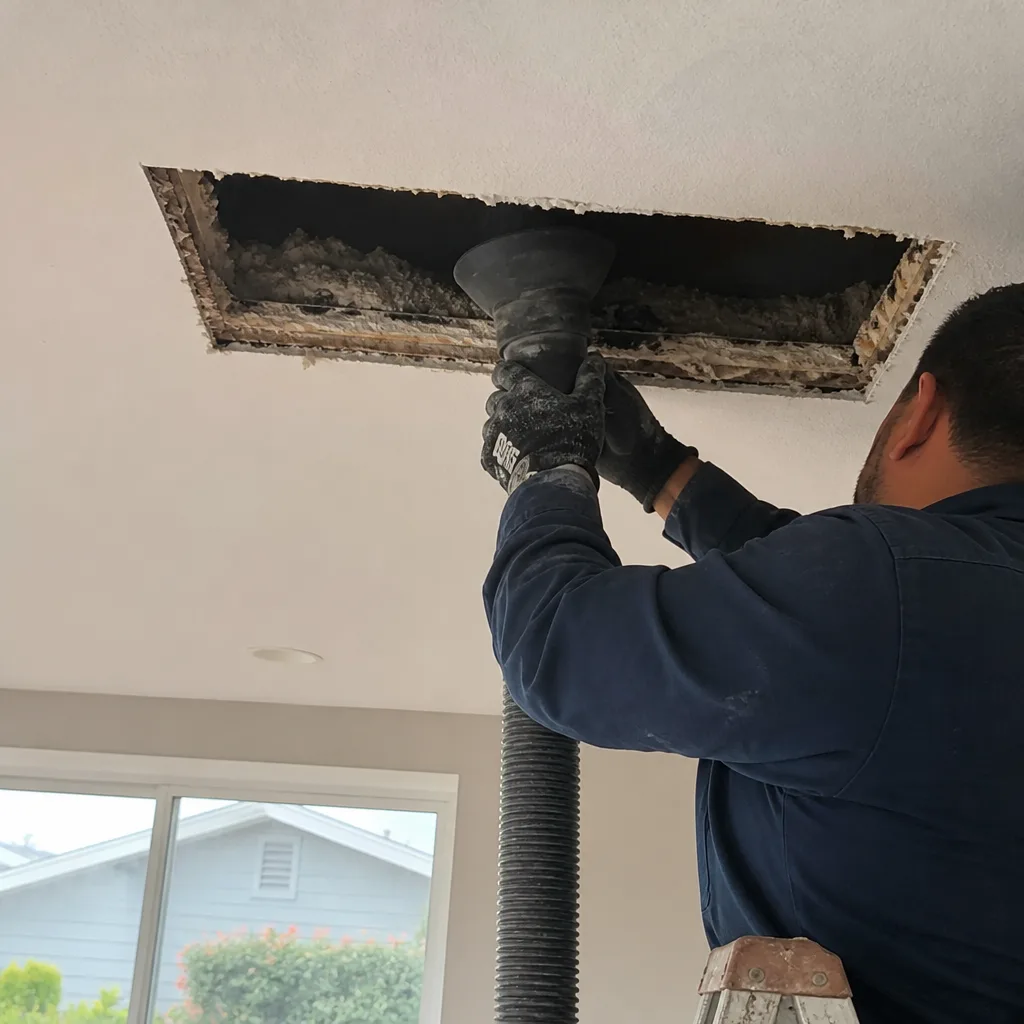
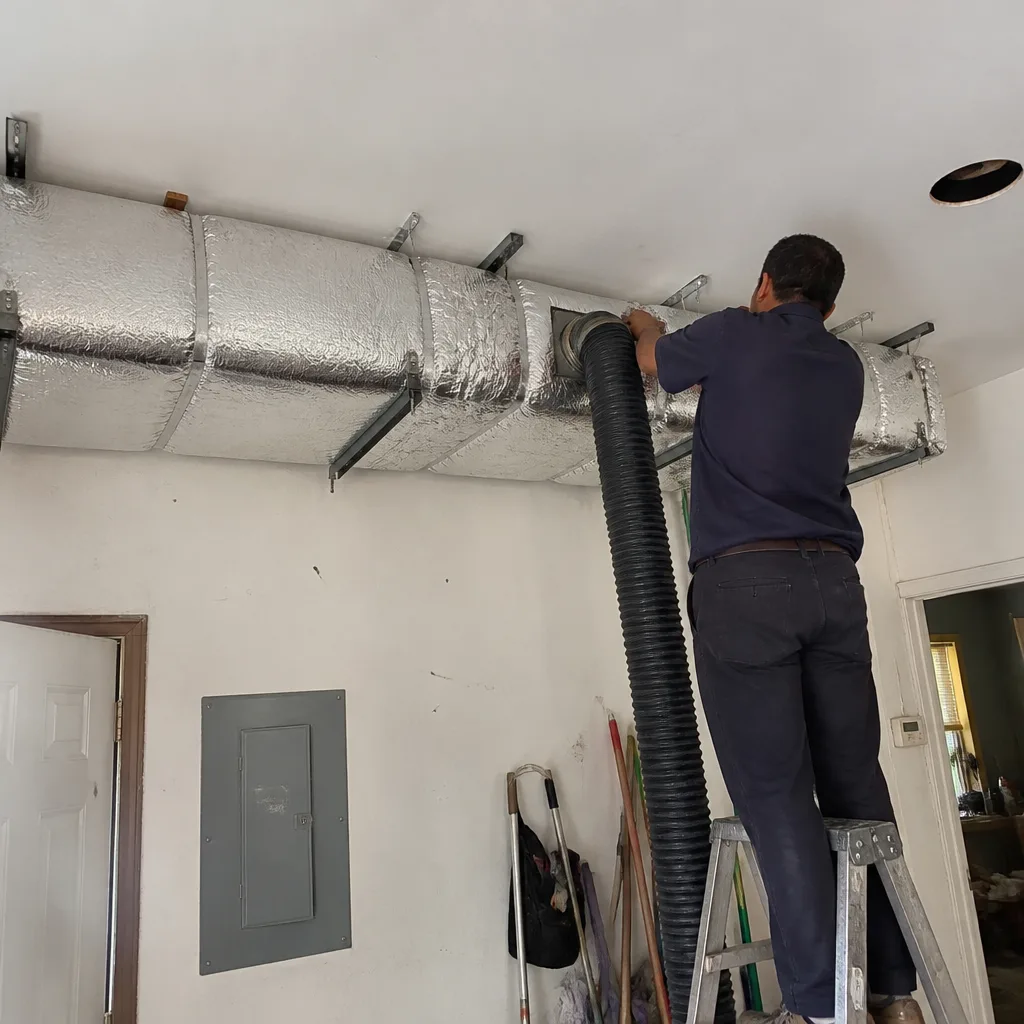
Professional duct cleaning uses a fundamentally different mechanism. A negative air machine connects to the main trunk line and pulls 8,000 to 12,000 CFM through the entire system continuously. That creates a pressure differential across the entire duct network. Simultaneously, rotating brush systems like the Rotobrush or pneumatic agitation tools mechanically dislodge debris from the duct walls. The airflow captures the dislodged material and carries it to the collection point. It’s a two-part system: agitation plus capture. The agitation breaks the mechanical bond that holds dust, pet dander, and construction debris against the duct surface. The airflow, moving at velocities a shop vac cannot generate anywhere except at its nozzle, transports that material out of the system.
Here’s the comparison that matters: a shop vac moves roughly 100 to 150 CFM at the nozzle. A professional Nikro HEPA-vacuum duct cleaning rig moves thousands of CFM through your entire duct network. The difference isn’t a matter of degree. It’s a different category of tool doing a different category of work. In Inglewood, where homes run air conditioning through a significant portion of the year, the duct surfaces accumulate condensed dust that bonds more tightly than loose dust in a cold climate. That bonded material responds to mechanical agitation and high airflow, not to point suction.
The hidden risk of DIY duct cleaning is the dislodging problem. When you insert a brush or even a vigorous vacuum attachment into a duct run, you knock debris off the walls. That’s the point. But without the continuous high-volume airflow to capture what you’ve knocked loose, much of that debris simply settles further down the duct or becomes airborne in your living space. You haven’t removed it. You’ve redistributed it. In a system that’s accumulated years of buildup, that redistribution can actually increase the particulate load in your indoor air rather than reducing it.
5 DIY Tasks Worth Doing in Your Inglewood Home
None of this means you can’t do meaningful work yourself. Here are five tasks that are genuinely within homeowner capability, with step-by-step instructions. These help maintain your system and extend the value of professional cleanings. They do not replace them.
- Register and grille cleaning. Remove every supply register and return grille in your Inglewood home. Soak them in warm water with a mild degreaser. Use a stiff brush to remove buildup from the back side of the louvers. Dry them completely before reinstalling. This removes the layer of dust and kitchen grease (common in Inglewood homes where cooking oils aerosolize) that traps additional particulate. Do this twice a year.
- Filter replacement on a fixed schedule. Check your filter monthly during heavy AC season. In Inglewood’s climate, AC runs heavily from June through October, loading filters faster than winter months. Replace a one-inch filter every 30 to 90 days depending on dust load, pets, and whether you’re running the system constantly. Mark replacement dates on the filter frame with a sharpie.
- Visual inspection through accessible openings. Remove a register and use a bright flashlight to look into the duct run as far as you can see. Look for dust accumulation thicker than a visible coating, debris like drywall chunks or rodent droppings, and any water staining. Photograph what you see with your phone. This gives you a record and gives a professional valuable context before any cleaning visit.
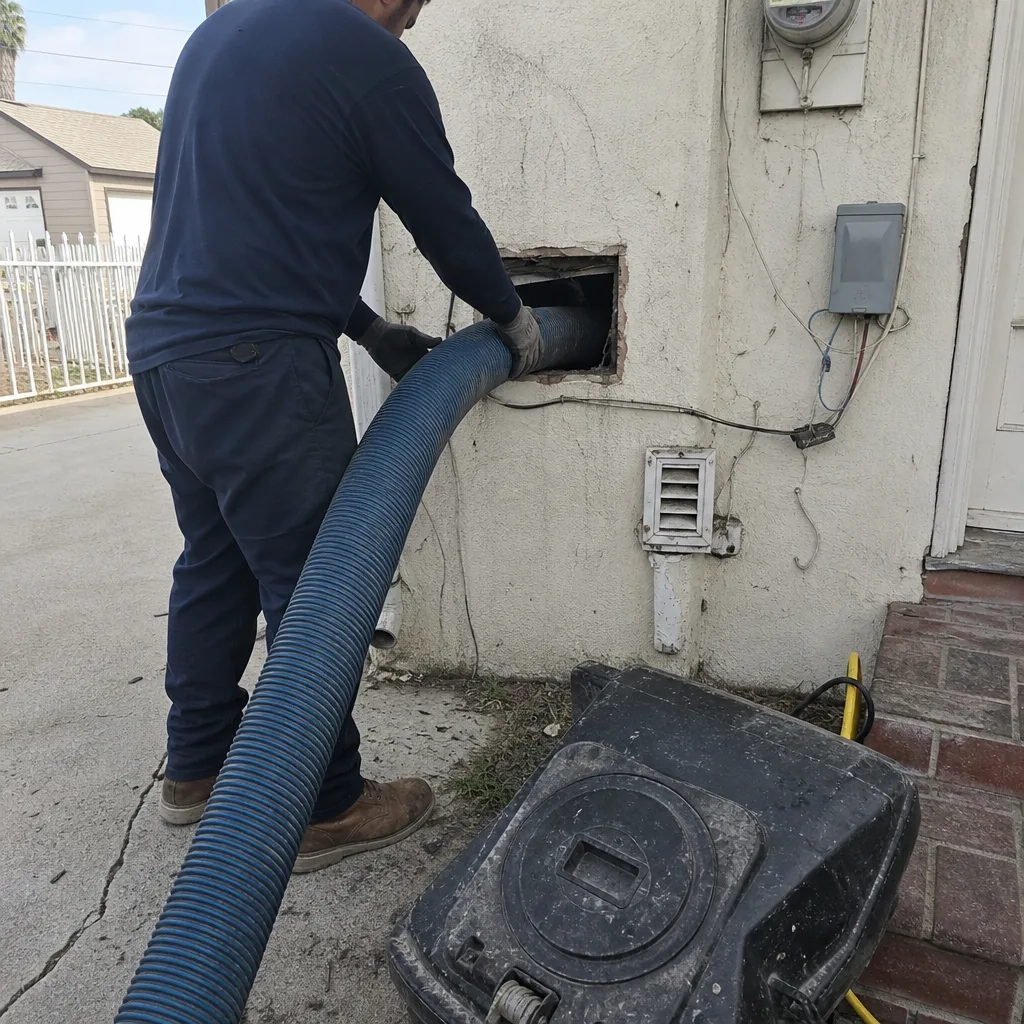
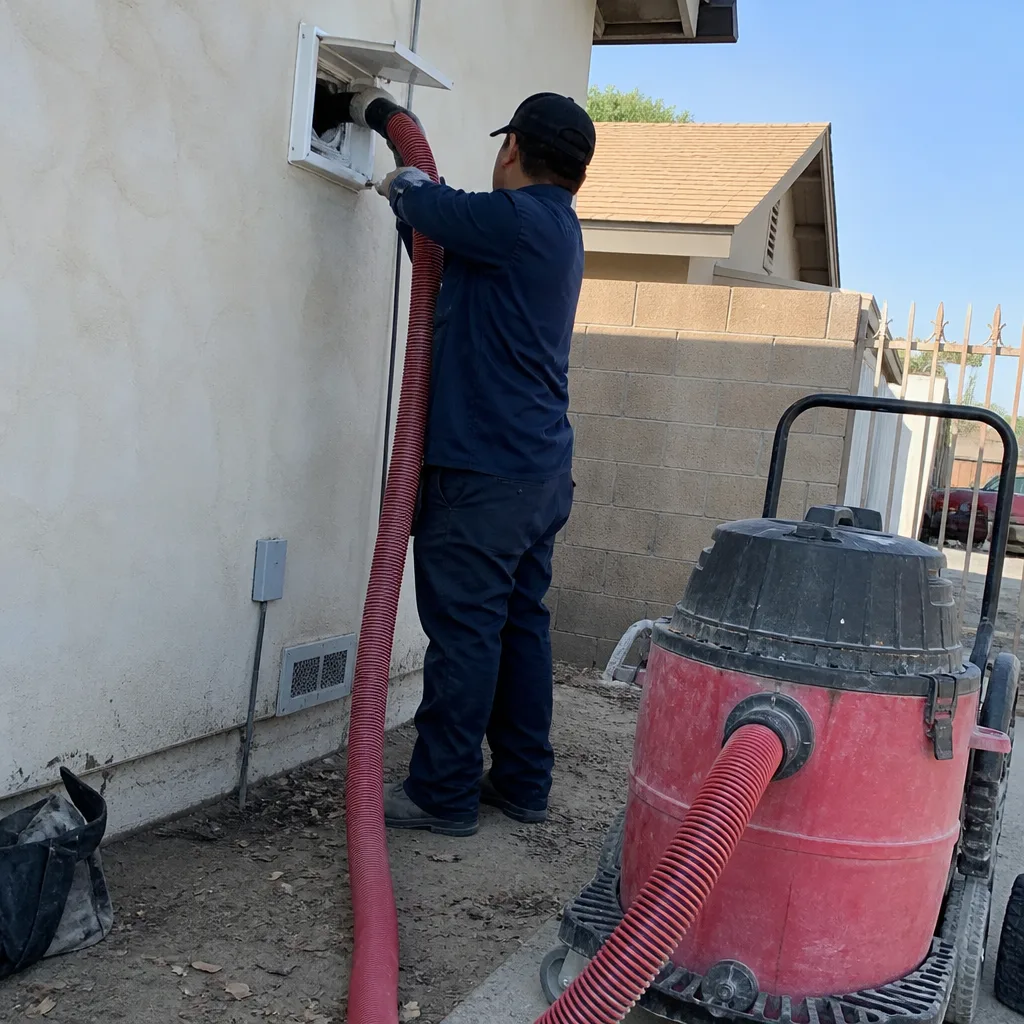
- Dryer vent clearing for accessible runs. If your dryer vents through an exterior wall with a short, straight run (common in Inglewood’s older single-story homes), you can use a dryer vent brush kit to clean the run. Disconnect the dryer, run the brush from the exterior vent inward, and vacuum up what falls out. If your vent runs through a slab or roof, this becomes a different job entirely and deserves a professional from our Dryer Vent Cleaning in Inglewood service.
- Mechanical room hygiene. Clean the area around your air handler or furnace. Vacuum the outside of the equipment, clean the condensate drain line with a mild solution, and make sure return air pathways aren’t blocked by stored items. Dust and debris in the mechanical space eventually finds its way into the airflow. This is low-effort, high-value maintenance.
Each of these tasks has one thing in common: they address surfaces you can physically reach. The moment a task requires cleaning a surface more than a foot or two beyond a register opening, you’ve crossed out of DIY territory and into the physics problem we described above.
When Professional Cleaning Is Non-Negotiable
Some situations are not appropriate for DIY attempts at all. The equipment gap isn’t just about effectiveness. In these scenarios, attempting DIY work can create genuine health and safety problems.
Post-renovation debris. If you’ve had drywall work, flooring, or any construction project in your Inglewood home, fine dust has entered your duct system. Drywall dust is particularly problematic: it’s fine enough to stay airborne, alkaline enough to irritate respiratory tissue, and abrasive enough to damage blower motor bearings over time. A shop vac cannot extract this material from deep within duct runs. Professional equipment with HEPA filtration, like the Abatement Technologies air-filtration systems used for contamination-level jobs, handles this scenario properly. Construction dust is also why many Inglewood homeowners schedule post-renovation cleanings even when they otherwise handle maintenance themselves.
Verified or suspected mold. If you see visible mold growth inside your ducts or at register openings, or if a home inspection flagged mold, do not disturb it with DIY tools. Disturbing mold colonies without proper containment and filtration spreads spores throughout your living space. This is a contamination scenario that requires professional assessment and equipment designed for particulate control. A visual inspection will tell you whether what you’re seeing is mold or just discoloration from accumulated dust. If it’s mold, professional response is the only responsible path.
Rodent or pest activity. Rodent droppings in ductwork are a serious health hazard. Hantavirus, while rare in Southern California, is transmissible through aerosolized rodent waste. If you see droppings, nesting material, or hear activity in your ducts, do not vacuum or disturb the material. A professional with proper respiratory protection and HEPA filtration equipment should handle the removal and cleaning. Our Air Duct Repair in Inglewood team regularly works on systems where rodent activity has also damaged the ductwork itself. The cleaning and the repair often need to happen together.
Systems not cleaned in five-plus years. If your ducts haven’t been professionally cleaned in over five years, the accumulated layer of bonded dust, pet dander, and insect material is substantial. Attempting DIY cleaning on this kind of buildup will dislodge material without capturing it, creating airborne particulate that you’ll breathe until it settles again. The right professional approach generates enough airflow to remove it, point suction cannot.
Visible dust blowing from registers during operation. When the system runs and you see dust particles puffing from supply registers, you have significant accumulation breaking loose inside the duct runs. This won’t resolve with surface cleaning. The source is deep in the system. Only a full negative-pressure cleaning addresses the source rather than the symptom.
Honest Cost Comparison: DIY Tools vs Professional Cleaning
Let’s put real numbers on the table, because the DIY pitch usually starts with the price of a professional cleaning. But the honest comparison isn’t between a shop vac and a professional visit. It’s between what you actually get for each dollar.
A homeowner who wants to attempt meaningful DIY duct maintenance will typically spend:
- Shop vac with HEPA filter: $120 to $250 for a decent unit. A standard filter bag captures larger particles but releases fine dust back into the room. A HEPA-rated filter helps somewhat but still doesn’t solve the airflow-distance problem.
- Dryer vent cleaning kit: $25 to $50 for a brush kit that works on short, straight runs.
- Inspection camera: $60 to $150 for a basic endoscopic camera that connects to a smartphone. This helps with visual inspection but doesn’t clean anything.
- Replacement filters: $15 to $40 per filter depending on MERV rating, replaced quarterly. This matters more than any tool.
Total DIY investment: roughly $220 to $500, with ongoing filter costs. What this buys: clean registers, clean filter housings, visible inspection capability, and a dusty shop vac filter to maintain.
A professional duct cleaning in Inglewood typically ranges from $350 to $600 for a standard home system, depending on square footage, number of systems, accessibility of ductwork, and contamination level. Systems with significant debris, multi-story homes, or post-renovation dust will run higher. What this buys: complete interior cleaning of every duct run using negative pressure and mechanical agitation, HEPA-filtered exhaust, and a record of the work.
The comparison resolves when you ask what each option cleans. DIY cleans the surfaces you can see. Professional cleaning addresses the surfaces you can’t see but breathe through every day. If the goal is reachable-surface maintenance, DIY makes sense. If the goal is improved air quality, reduced dust in the home, and addressing the duct interior, the professional investment is the only option that actually delivers it. Our Duct Cleaning Inglewood home page covers the full scope of what professional cleaning addresses in local homes.
Common Mistakes That Make Things Worse
- Using a leaf blower on duct openings. We’ve seen this in Inglewood homes. The idea is that high air volume will blow debris out of the system. What actually happens: debris dislodges from duct walls and blows into the living space, or gets pushed deeper into branch runs where it won’t come out without professional extraction. Leaf blowers aren’t filtered and they have no collection mechanism. You’re aerosolizing the problem.
- Relying on duct cleaning chemicals or foggers. Products that promise to “kill mold” or “sanitize ducts” with a fog or spray don’t remove contamination. They add chemical residue to duct surfaces. Debris remains in place; you’ve just coated it with a product that itself becomes part of the air you breathe. Physical removal is the only cleaning mechanism that actually cleans.
- Running the HVAC system to “blow out” the ducts. Your blower fan moves 1,200 to 2,000 CFM through the system, which is enough to carry light particles into the home but not enough to dislodge bonded accumulation from duct walls. Running the fan harder just circulates whatever is loose. If your goal is to reduce airborne dust, this does the opposite.
- Attaching brushes to power drills and reaming ducts. Flexible drill-attached brushes can damage duct seams, especially in older Inglewood homes with tape-sealed sheet metal or fiberboard ductwork. A torn seam creates an air leak that pulls attic air (and attic dust, insulation fibers, and pest residue) into the conditioned air stream. The brush might knock some debris loose. The system damage creates a bigger air quality problem than the one being solved.
- Ignoring the return side of the system. Many homeowners focus on supply registers because that’s where the air comes out. But the return side of the system moves the same volume of air and accumulates just as much contamination. In many homes, the return is dirtier. Clean both sides or don’t bother.
- Assuming a single cleaning is permanent. Duct systems in a city where AC runs hard for half the year will re-accumulate. A professional cleaning resets the baseline, but without filter discipline and register maintenance afterward, you’re back to significant accumulation within a few years. The maintenance plan matters as much as the cleaning event.
When to Call a Professional
Be honest about what the situation demands. You’re seeing dust puff from every register when the system starts. You bought a home and have no idea when the ducts were last addressed. You did a renovation and watched drywall dust disappear into the return air. A family member has allergies that flare indoors. Any of these situations justifies a professional assessment. Duct Cleaning Inglewood offers free estimates for Inglewood homeowners. We can inspect the system, show you what’s in the ducts with inspection camera footage, and give you a straightforward price for full-system cleaning using the professional equipment discussed throughout this guide. Call (855) 341-8387 to schedule an estimate. You’ll get an honest answer about what your system needs, not a sales pitch for what it doesn’t.
Frequently Asked Questions
Professional air duct cleaning in Inglewood typically costs between $350 and $600 for a standard single-system home, with price varying by home size, ductwork accessibility, contamination level, and number of systems. Larger homes, post-construction debris, or significant pest activity can push the price higher. Call (855) 341-8387 for a free estimate specific to your Inglewood home, with a flat price agreed before any work begins.
DIY duct cleaning is effective only for reachable surfaces: register covers, grilles, filter housings, and the first few inches of accessible duct opening. It cannot clean the interior surfaces of trunk lines and branch runs where most embedded contamination accumulates, because consumer vacuums don’t generate the airflow volume or distance required. Professional negative-pressure systems move thousands of CFM through the entire duct network, which is a fundamentally different mechanism.
The price difference in air duct cleaning quotes comes down to equipment, time, and what’s actually included. A low-bid quote often reflects a company using portable equipment or a “blow and go” approach that doesn’t address embedded debris, or a teaser price that escalates once someone is on-site. Equipment like Rotobrush rotary-brush systems and Nikro HEPA-vacuum rigs costs tens of thousands of dollars, and meaningful cleaning takes hours, not minutes. A legitimate quote reflects real equipment costs and real labor hours. If one number is dramatically lower than every other quote you receive, ask what equipment they’re using and what the cleaning process includes.
Ask for before-and-after camera footage of your duct interiors. A legitimate professional operation using professional equipment can provide visual proof from inside the duct runs. Ask to see the collection chamber on the vacuum system after the job; if substantial material was removed, the evidence is visible. In our experience, homeowners are often surprised by what comes out of ducts that looked maintained. If a company can’t show you what they removed or won’t provide camera verification, that’s an answer in itself.
Most Inglewood homes benefit from professional cleaning every three to five years, with the interval influenced by air conditioning usage, pets, renovation history, and occupant sensitivity to allergens. For tips on timing cleanings throughout the year, see our guide on Seasonal Air Duct Cleaning Care for Inglewood: Year-Round Homeowner’s Guide. Homes with pets that shed, homes near high-traffic corridors like Century or La Brea where outdoor dust loads are higher, and homes with allergy sufferers will trend toward the shorter end of that range. Homes with excellent filter discipline and no pets may go longer. The inspection camera tells the truth when filters and register cleaning don’t.
You can clean a short, straight dryer vent run yourself with a brush kit if you can access both the exterior vent and the dryer connection. If your Inglewood home has a dryer vent that runs through a wall, slab, or roof with bends in the run, the job requires professional equipment and expertise. Lint accumulation in an inaccessible vent is a serious fire hazard, and a professional dryer vent cleaning addresses the full run, not just the accessible portions. The cost of professional cleaning is substantially lower than the cost of a dryer fire.
The Bottom Line
The DIY versus professional duct cleaning question resolves to equipment capability, not effort or savings. What you can reach, you can clean. What you can’t reach, you can’t, and no consumer tool changes that boundary. In Inglewood homes where air conditioning runs heavy for half the year, duct surfaces accumulate bonded contamination that responds only to the airflow volumes and mechanical agitation that professional systems generate. Do the register cleaning, change your filters, inspect what you can see. Then be honest about what those tasks leave unaddressed. For more guides & resources on maintaining your home’s air quality, explore our blog. The air in your home moves through the entire duct system, not just the parts you can reach. Duct Cleaning Inglewood provides full-system cleaning with professional equipment built for this exact job, plus dryer vent cleaning and duct repair from the same specialized team. Call (855) 341-8387 for a no-pressure estimate and an honest evaluation of what your system actually needs.
Written by the team at Duct Cleaning Inglewood, serving Inglewood since 2015.
See the difference
 Before
 After
 Before
 After
 Before
 After