
Last updated November 2, 2026
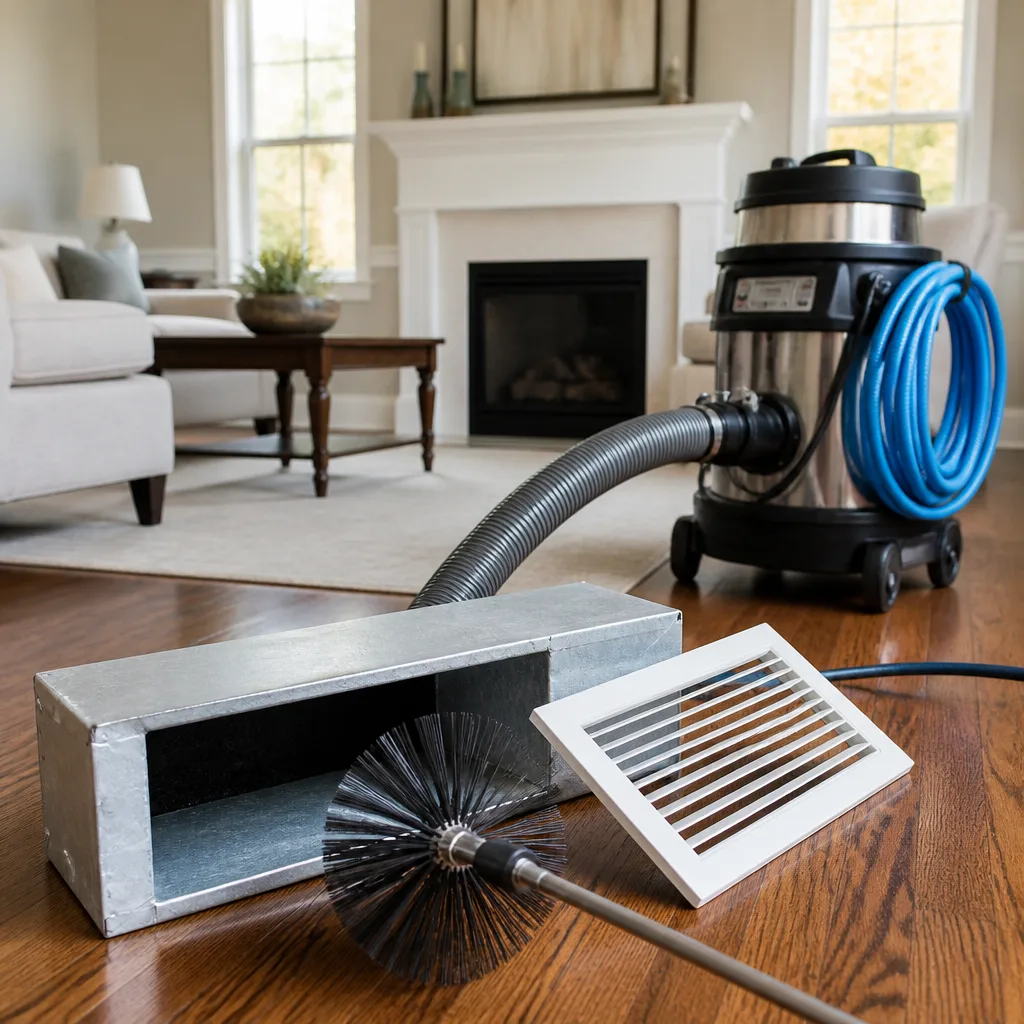 Whole-home duct cleaning
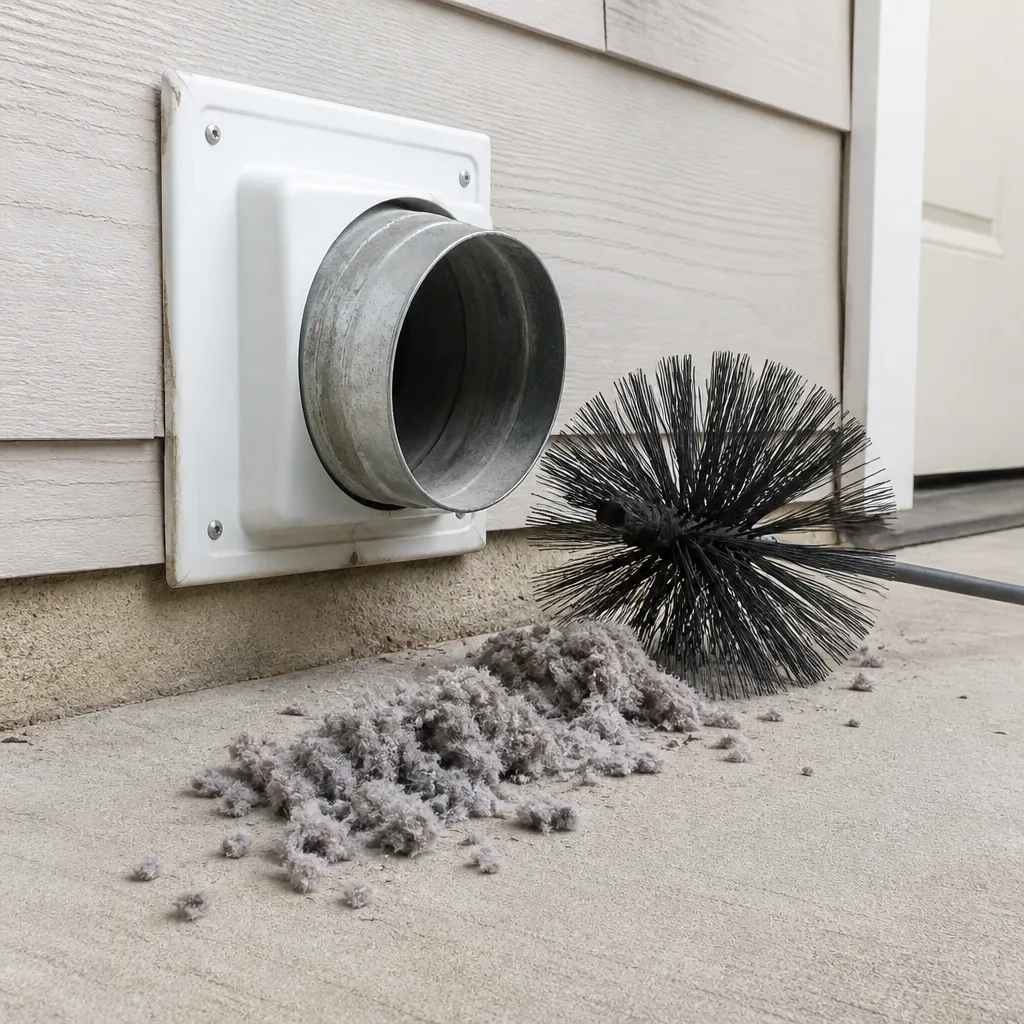 Dryer vent cleaning
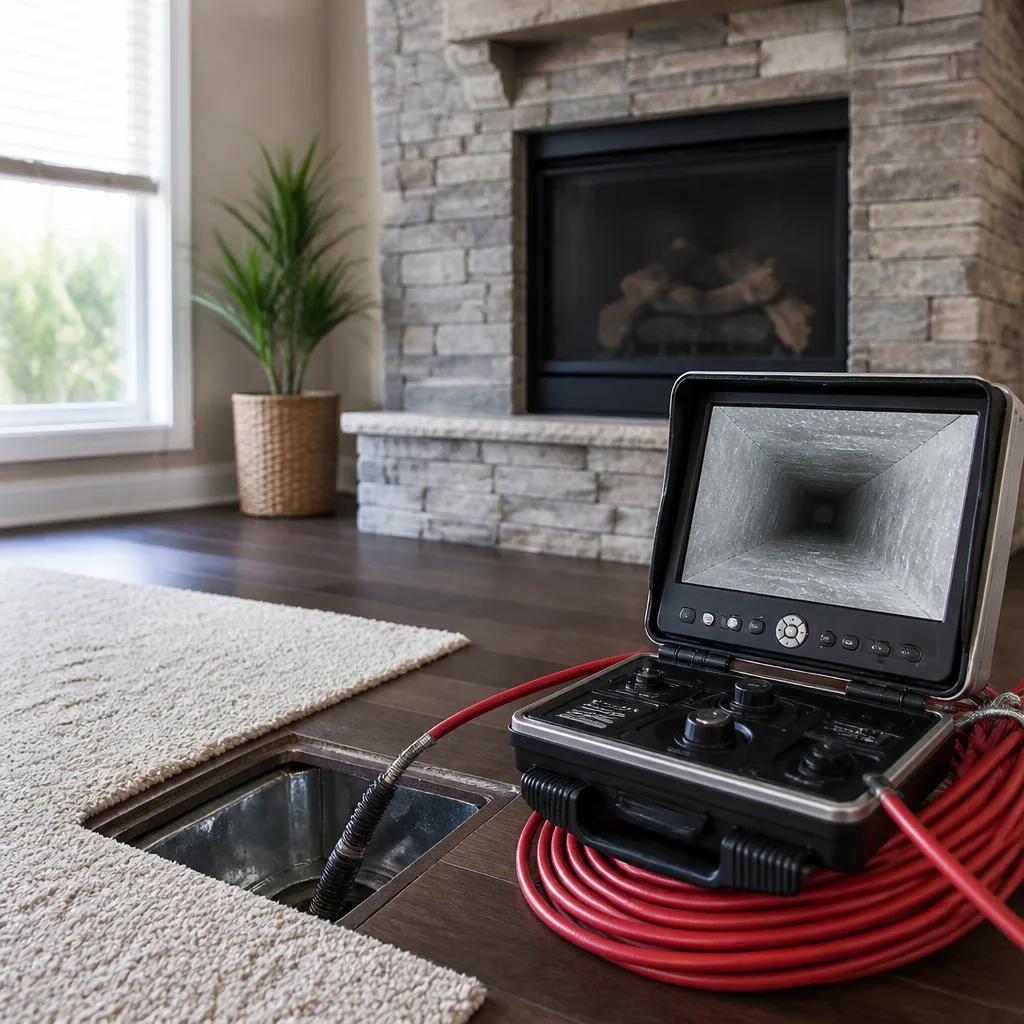 Camera inspection
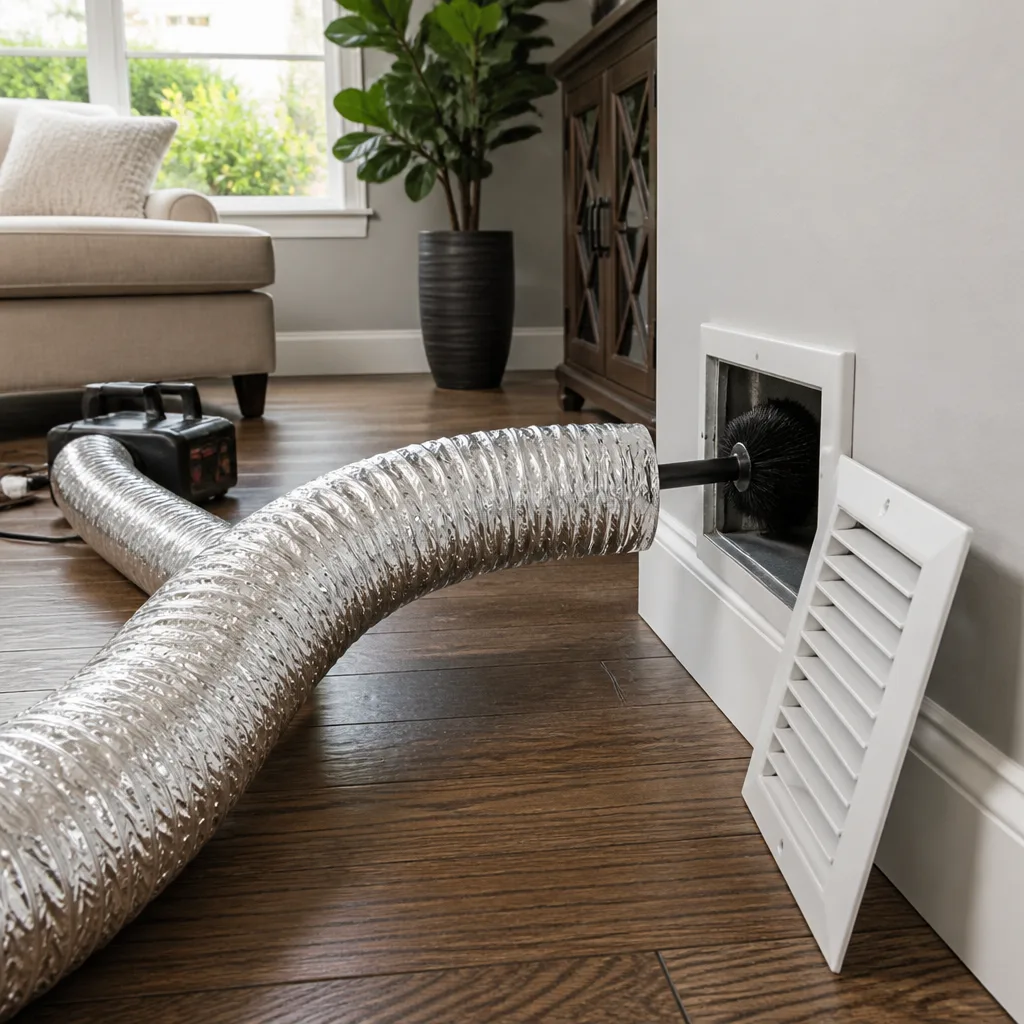 Sanitizing & deodorizing
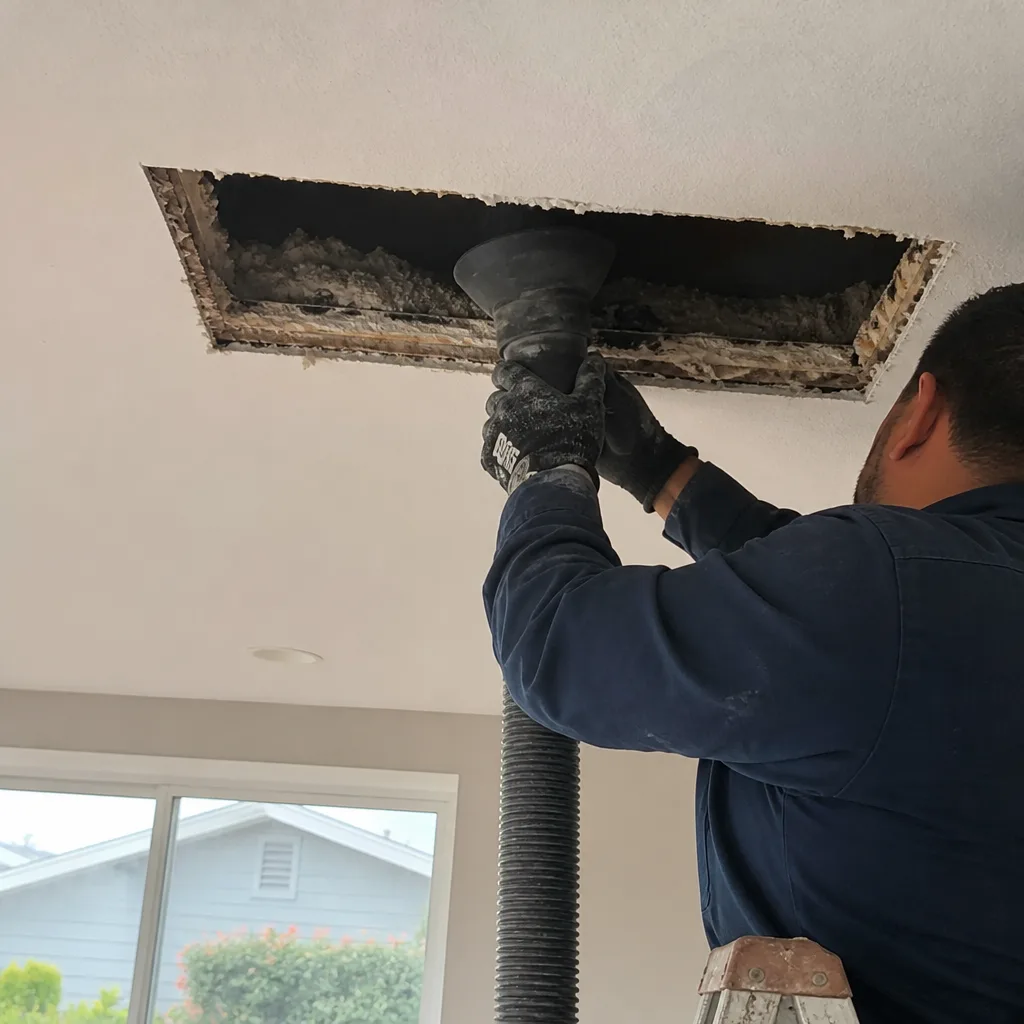
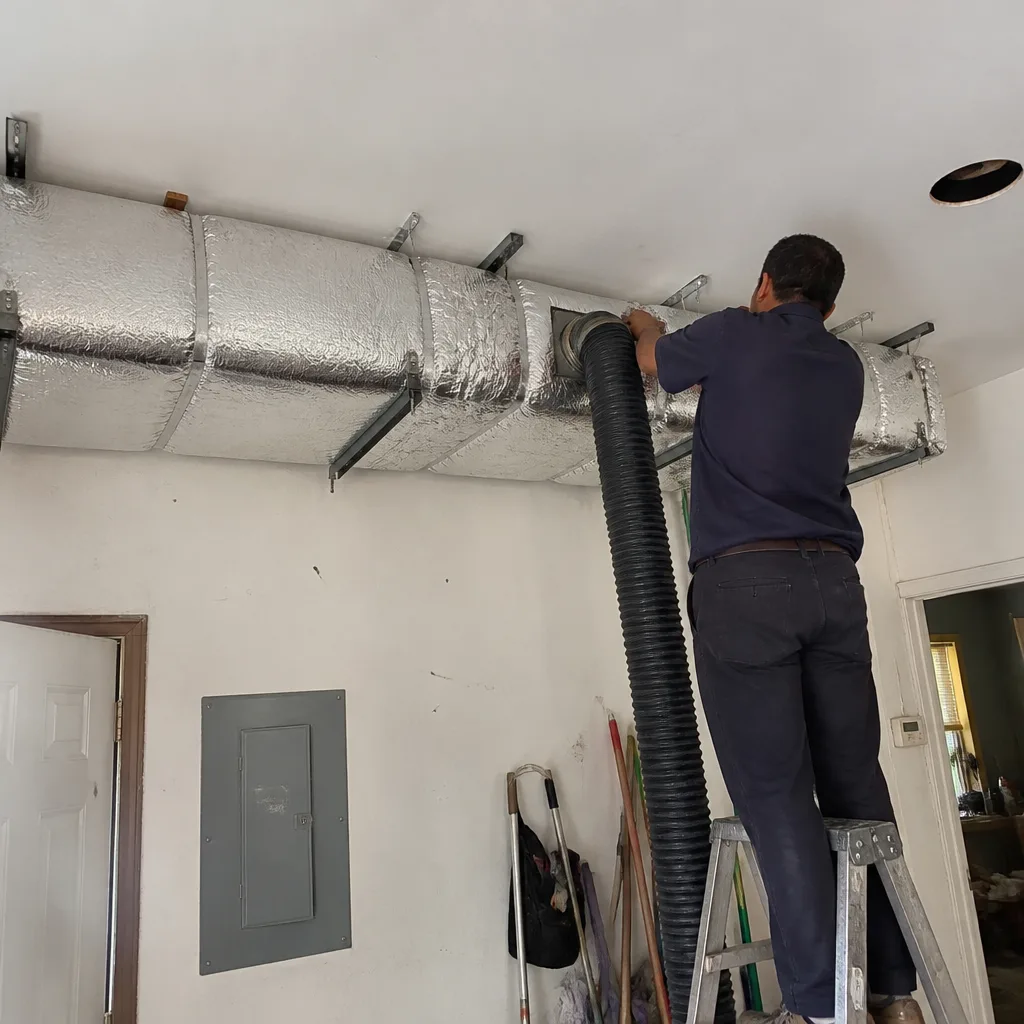
Whole-system duct and dryer vent check with before-and-after photos - you see exactly what came out of your vents
That "$99 whole-house special" is a bait ad - the real number appears once they are in your hallway, or the "clean" is a shop-vac at the register. We photograph the inside of your ducts before and after instead.
Air Duct Cleaning Permits, Codes & Inspections in CA: What You Need to Know
Most homeowners in Inglewood are told duct cleaning is “just maintenance,” and no permit is needed. That’s accurate for the cleaning itself. But the moment a technician cuts into ductwork, installs new sections, or applies mastic sealant to a return plenum, California building code may require an inspection. The line between maintenance and modification is blurry, and plenty of contractors won’t volunteer where it sits. This guide draws that line clearly so you understand exactly when a permit applies, when it doesn’t, and how to protect yourself from unpermitted work that comes back to haunt you at resale.
Quick Answer
Air duct cleaning alone does not require a permit anywhere in California, including Inglewood. However, duct alterations such as cutting into existing ductwork, installing new duct sections, reconfiguring supply or return runs, or applying mastic sealant to plenums can trigger permit and inspection requirements under the California Mechanical Code (CMC) and local amendments adopted by the City of Inglewood and Los Angeles County. Unpermitted duct modifications can surface as material defects during a home sale, so the smart move is to document the scope of work in writing before any cleaning contractor starts cutting.
Styles & brands we work with
- Whole-home duct cleaning
- Dryer vent cleaning
- Camera inspection
- Sanitizing & deodorizing
Table of Contents
- Cleaning vs. Alteration: Where the Permit Line Actually Sits
- What the California Mechanical Code Says About Duct Work
- Inglewood and Los Angeles County Inspection Requirements
- How Unpermitted Duct Modifications Surface at Home Sale
- Duct Sealing (Mastic) vs. Filter Replacement: A Critical Difference
- How to Document Scope of Work Before Any Duct Job Starts
- Common Mistakes to Avoid
- When to Call a Professional
Cleaning vs. Alteration: Where the Permit Line Actually Sits
Here’s the core distinction that most contractors never explain. Cleaning is exactly what it sounds like: pulling debris, dust, and contaminants out of existing ducts without changing the duct system itself. That’s maintenance, and maintenance doesn’t require a permit anywhere in California. You can clean ducts in Inglewood every year for a decade and never need to visit City Hall.
Alteration is different. Alteration means changing the physical duct system: adding a new supply run, extending a return, relocating a register, patching a damaged section with new sheet metal, or reconfiguring ducts during a remodel. When you alter ducts, you’re now working on the building’s mechanical system in a way that affects airflow, pressure balance, and code compliance. That’s regulated work.
The gray zone is the repair middle ground. Like-for-like repairs, where a damaged 12-inch duct section is replaced with an identical 12-inch section in the same location, often fall under maintenance exemptions in many California jurisdictions. But the moment a “repair” changes the size, shape, location, or configuration of a duct run, you’ve crossed into alteration territory. A technician who proposes “just rerouting this duct to fix the airflow” may be describing unpermitted modification work.
Where duct cleaning companies typically operate in the gray zone: a cleaning reveals a collapsed duct or a disconnected joint, and the technician offers to “just patch that up” while he’s in the attic. That patch may be a like-for-like repair requiring no permit, or it may involve re-cutting sheet metal and reconfiguring a run. The homeowner almost never knows which one just happened.
What This Means for Your Duct Cleaning Job
If you’re scheduling a straightforward air duct cleaning in Inglewood, you don’t need to worry about permits for the cleaning itself. You should worry about what happens if the technician finds damage and wants to “fix it” on the spot. Before any cutting starts, ask one question: “Is this a like-for-like repair or an alteration?” If it’s an alteration, the conversation needs to change.
What the California Mechanical Code Says About Duct Work
The California Mechanical Code (CMC), based on the Uniform Mechanical Code, is the primary statewide document governing duct installation, alteration, and repair. Every city in California, including Inglewood, adopts the CMC with local amendments. Here’s what matters for homeowners.
The CMC requires permits for mechanical work that involves installing, altering, or repairing duct systems, with specific exemptions carved out for minor maintenance. The code draws its line at the scope of work: if you’re changing the system, you need a permit. If you’re maintaining the existing system without modifying it, you don’t.
The relevant sections that come up again and again in duct work:
- Duct construction standards: The CMC specifies materials, gauges, sealing requirements, and installation methods for any duct that is built or altered. Modified duct work must meet current code, even if the surrounding house predates it.
- Access and clearance requirements: Ducts must maintain specific clearances from combustibles and structural members. A duct alteration that violates clearance can create a fire hazard and a code violation simultaneously.
- Sealing requirements: The CMC mandates specific sealing methods for duct joints and connections. Mastic sealant or approved tape is required in many applications. This matters because some “duct repairs” performed by non-permitted workers use incorrect materials.
- Fire dampers and smoke control: In multi-family buildings, townhomes, and some larger single-family homes in Inglewood, duct systems may incorporate fire dampers or smoke dampers. Altering a duct that contains these devices without proper inspection can disable a life safety system.
Here’s the part that surprises most homeowners: the CMC doesn’t care who does the work. It cares that the work is done correctly and inspected. A licensed contractor can perform unpermitted work just as easily as an unlicensed handyman. The permit requirement attaches to the work scope, not the worker’s credentials.
Inglewood and Los Angeles County Inspection Requirements
Inglewood operates its own Building and Safety Division, which enforces building codes locally. The city adopts the California Mechanical Code with Inglewood-specific amendments, and it can issue stop-work orders and fines for unpermitted mechanical work.
In practice, here’s how inspection requirements apply to duct work in Inglewood:
- Routine duct cleaning: No permit, no inspection, no interaction with the city at all. This includes Duct Cleaning Inglewood’s core service, using rotary-brush and HEPA-vacuum equipment to remove debris from existing ducts.
- Like-for-like repairs: Often exempt from permits in Inglewood, but the city’s Building Official has discretion. A duct section replacement that matches the original size and configuration may not require a permit, but you should ask your contractor to document the replacement in writing so there’s no dispute later.
- Duct alterations: Permit required. Adding a supply run, relocating a register, upsizing or downsizing a duct, reconfiguring a return air path, or installing new duct work in a remodel all require mechanical permits from Inglewood’s Building and Safety Division.
- Duct sealing that modifies the system: If sealing a leak requires reconstructing a plenum or replacing a section of duct because the existing section is too degraded to seal, that’s alteration, and a permit applies.
Los Angeles County has its own building department serving unincorporated areas, but Inglewood is an incorporated city with its own jurisdiction. Homeowners in Inglewood deal directly with Inglewood’s Building and Safety Division, not the County. This matters because the two agencies have slightly different interpretations of repair exemptions, and the Inglewood office is the authority that governs work in your home.
One more Inglewood-specific consideration: the city’s housing stock skews older. Many homes in Inglewood were built in the 1940s through 1960s, and their duct systems have been patched, spliced, and rerouted by decades of prior owners – learn to spot issues early with our Air Duct Cleaning Warning Signs: An Inglewood Homeowner’s Reference Guide. We regularly encounter duct work in Inglewood that was modified decades ago without permits, long before the current owner ever purchased the home. That’s not an argument to ignore permits; it’s a warning that the duct work you’re cleaning may already carry unpermitted modifications that pre-date you.
How Unpermitted Duct Modifications Surface at Home Sale
When you sell a home in Inglewood, the buyer’s home inspector will examine accessible duct work as part of the standard inspection. Inspectors in this area are trained to spot signs of alteration: mismatched duct gauges, non-standard connections, visible mastic handprints on plenums, and duct runs that deviate from what the home’s original floor plan suggests. When an inspector flags duct work as modified, the first question from the buyer’s agent is almost always: “Where’s the permit?”
Here’s the sequence that follows an unpermitted duct modification discovery:
- The inspector flags the duct work. A note in the inspection report says something like: “Duct work in attic appears altered from original configuration. Recommend verification of permits.”
- The buyer’s agent requests permit history. In Inglewood, permit records are public. A request to the Building and Safety Division reveals whether any mechanical permits were ever pulled for the property.
- No permit record surfaces. The duct work in question has no matching permit, and now the seller has a documented, unpermitted mechanical alteration on their disclosure obligations.
- The buyer’s lender gets involved. FHA and VA loans, both common in Inglewood, have stricter requirements than conventional loans. Unpermitted mechanical work can stall or kill a deal depending on the lender’s appraisal and inspection requirements.
- Remediation gets negotiated. The seller either retroactively pulls a permit and brings the ducts up to current code, or credits the buyer for the cost of doing so after closing. Retroactive permits in Inglewood require an inspection, which may reveal additional code violations in the existing duct work.
The remediation cost varies widely, but here’s a realistic picture of Inglewood’s market. If the duct alteration is minor and happens to be code-compliant, retroactive permitting might cost $500 to $1,500 including inspection fees and any minor corrections. If the alteration is substandard, bringing it into compliance could mean redoing the altered run entirely, which can run $1,500 to $4,000 depending on accessibility and duct size. In a worst-case scenario, where multiple alterations exist and the attic is tight with low clearance, full remediation can exceed $5,000.
The buyer may also simply walk. Unpermitted work injects uncertainty, and uncertainty is the last thing a buyer wants after a home inspection. Sellers in Inglewood who address permit issues proactively, before listing, are in a far stronger negotiating position than sellers who discover the problem after an offer is on the table.
Duct Sealing (Mastic) vs. Filter Replacement: A Critical Difference
Two projects that sound similar but sit on opposite sides of the permit line: duct sealing with mastic, and filter replacement. Understanding this distinction will save you from accepting unpermitted work disguised as routine maintenance.
Duct sealing with mastic involves applying a thick, paste-like sealant to duct joints, seams, and plenum connections to stop air leaks. When is this potentially inspection-triggering? The key is whether the sealing work involves reconstructing or altering the duct system to access the leak. If the technician can apply mastic to an existing seam without modifying the duct, that’s repair work and typically no permit applies. But if the plenum is so degraded that sealing it requires cutting it open, rebuilding it, or replacing sections, you’ve crossed into alteration territory.
Mastic sealing is also where non-specialist cleaners get into trouble. Proper duct sealing requires knowledge of the CMC’s sealing standards, including which sealants are approved for specific applications. Using the wrong sealant, or sealing ducts in a way that traps moisture or impedes airflow, can create new problems while appearing to solve the old one. This is exactly the kind of work that a dedicated duct specialist should perform, because air duct repair in Inglewood done badly becomes a code violation as quickly as work done without a permit.
Filter replacement, by contrast, is the definition of maintenance. Replacing a filter at the return grille or at the air handler requires no permit, no inspection, and no documentation. It’s a consumable item, like changing oil in a car. Even upgrading from a basic fiberglass filter to a higher-MERV filter or adding a filter media cabinet in an existing location is typically maintenance, not alteration. The moment filter work involves cutting into the return plenum to install a new filter rack or modifying the return air path, the permit question reopens.
In our experience in Inglewood, we see the most permit confusion around return-air modifications. Homeowners whose homes feel stuffy or whose systems short-cycle often ask about adding return capacity. That’s a legitimate improvement, but it is almost always alteration work that requires a permit. The work involves cutting into the return plenum, possibly adding a new return duct run, and rebalancing the system. Any contractor who offers to “just add a return” without mentioning permits is either unaware of the code or hoping you are.
How to Document Scope of Work Before Any Duct Job Starts
The best protection against permit liability is a written scope of work that clearly distinguishes cleaning and like-for-like repairs from alterations. Here’s the process we recommend every Inglewood homeowner follow before work begins:
- Request a written scope of work before the job starts. The scope should list exactly what will be done: “Clean supply and return ducts using rotary-brush and HEPA-vacuum equipment.” It should not be vague. If the scope says “clean ducts as needed” or “perform necessary repairs,” push back and ask for specifics.
- Ask the contractor to state, in writing, whether any planned work constitutes an alteration under the California Mechanical Code. A professional duct specialist will answer this directly. A contractor who deflects or says “we don’t really deal with permits for this kind of work” is signaling that permit compliance is not on their radar.
- Require that any discoveries made during the job be documented before further work proceeds. If the technician finds a collapsed duct or a separated joint, the scope of work should include a stop-and-consult provision: no alteration work begins until you’ve been shown the issue and you’ve approved the approach in writing.
- Clarify who pulls permits if alteration work is required. If the answer is “we don’t pull permits,” find a contractor who does. In Inglewood, mechanical permits are pulled by the licensed contractor performing the work, and the permit must be posted at the job site. A contractor who won’t pull a permit for alteration work is telling you they don’t intend to work legally.
- Keep the scope of work document with your home records. When you sell, this document becomes evidence that any duct work performed during your ownership was documented and classified appropriately. If a home inspector later questions the duct work, you have a written record that distinguishes what was cleaned from what was altered.
The permit-liability question is ultimately about who bears responsibility when unpermitted work is discovered. A clearly documented scope of work that assigns alteration work, and its permit requirements, to the contractor protects the homeowner from bearing the full weight of a permit violation years after the fact.
Common Mistakes to Avoid
- Assuming a licensed contractor means permitted work. A C-20 warm-air heating, ventilating and air-conditioning contractor license authorizes HVAC work; it does not automatically mean the contractor pulled the required mechanical permit. Always ask about permits separately from licensing.
- Letting a cleaning technician “fix one thing” while they’re in the attic. The on-the-spot patch job is where most unpermitted alterations happen. If the fix involves cutting, rerouting, or reconfiguring any duct, stop the job and have a formal conversation about scope and permits.
- Ignoring the permit history of a home you’re buying in Inglewood. If the attic shows signs of duct modification (mismatched sections, fresh mastic, newer sheet metal amid older duct work), request the permit history from Inglewood’s Building and Safety Division before closing. The fee for the records request is far less than the cost of remediating unpermitted work after you own the home.
- Assuming “same-size replacement” always exempts a permit. Like-for-like repair exemptions are narrower than most people think. A replacement that changes the duct’s length, routing, or connection points can still be considered an alteration even if the duct diameter is unchanged.
- Hiring a generalist who doesn’t understand duct code. A carpet cleaner with a shop vac attachment is not a duct specialist. Inglewood’s older housing stock demands someone who understands the California Mechanical Code as it applies to duct work, not someone who runs a vacuum through a few registers. Your ducts are the only thing a dedicated duct company does, and that specialization matters when code questions arise.
- Not keeping written documentation of duct work. Years later, when you’re selling your Inglewood home, your memory of what was cleaned versus altered will be fuzzy. Written scope-of-work documents are your protection.
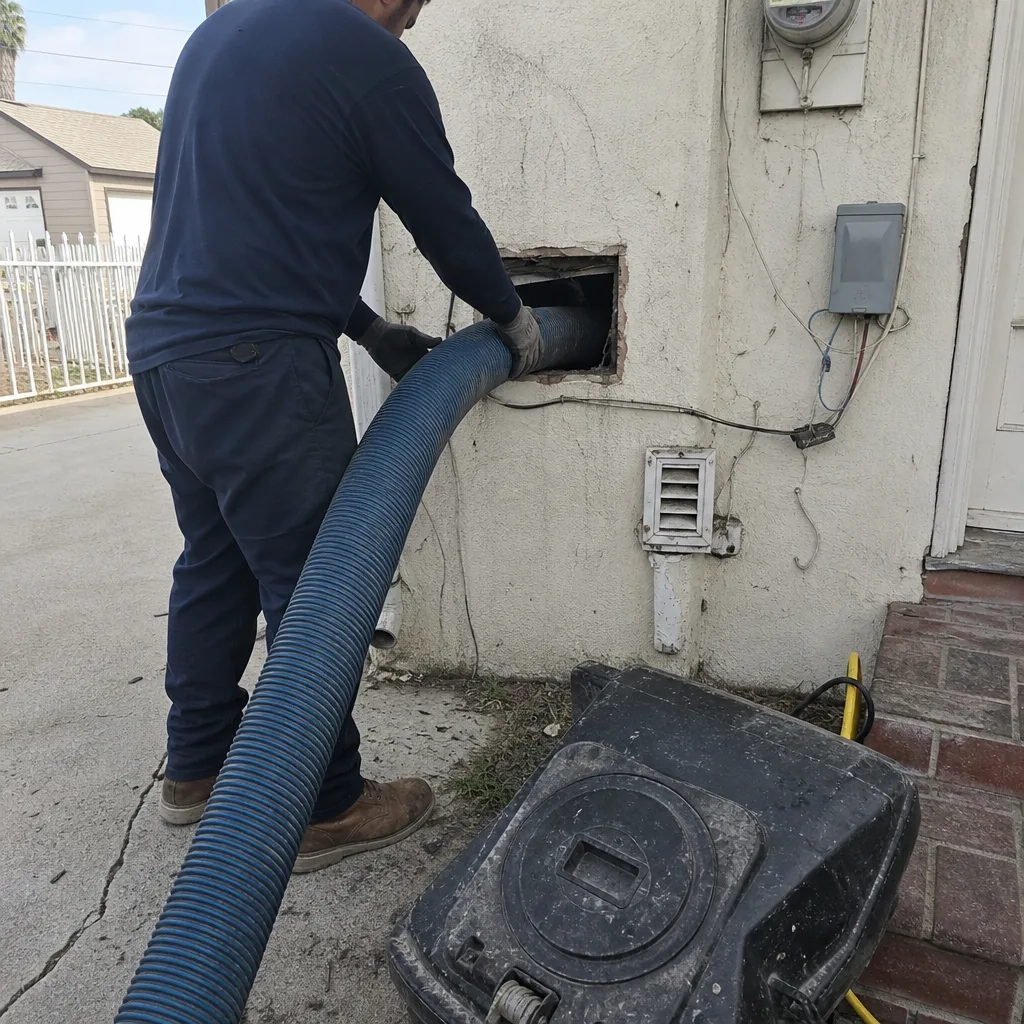
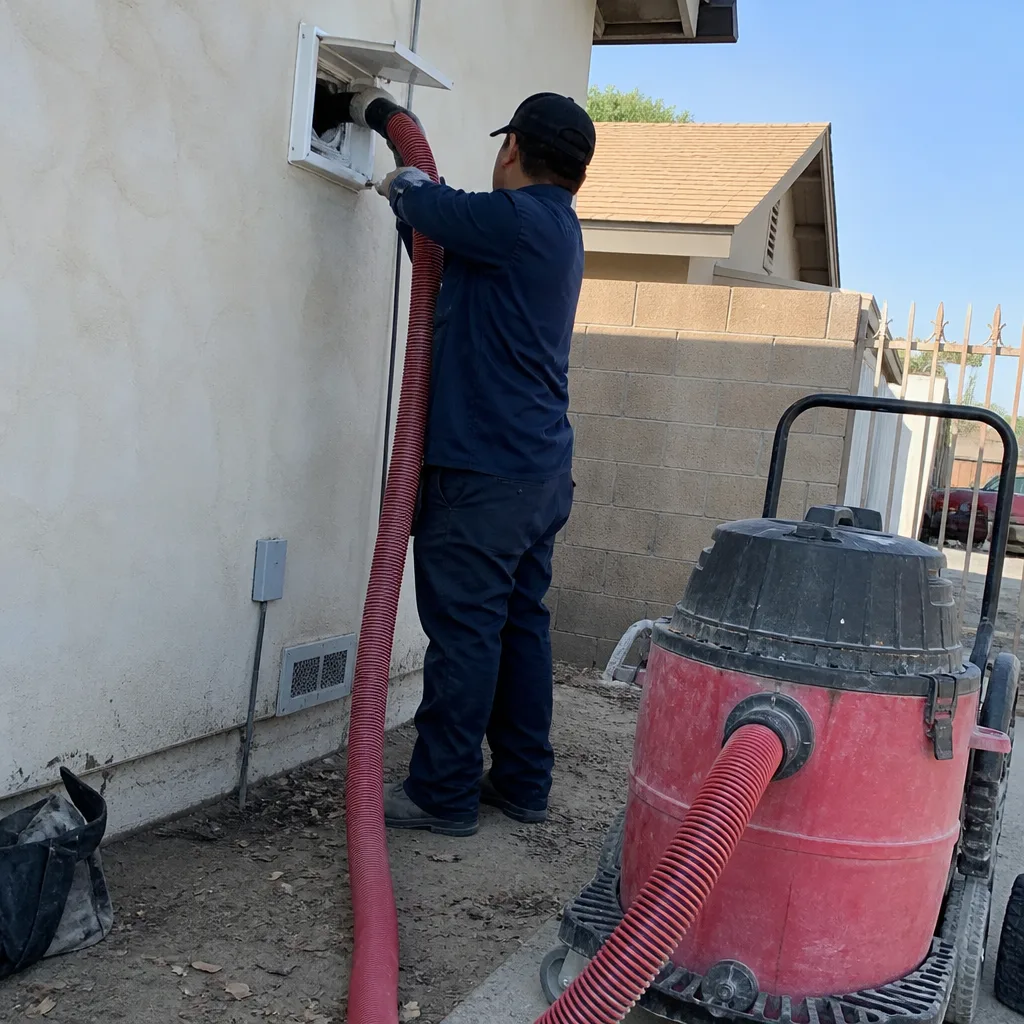
- Failing to verify that a dryer vent cleaning stays within the vent itself. Dryer vent cleaning in Inglewood is maintenance when it involves cleaning the existing vent path. But if the vent is crushed or disconnected and the technician proposes rerouting it, that’s alteration and needs the same permit conversation as duct work.
When to Call a Professional
Call a duct specialist when you’ve noticed poor airflow, excess dust that returns days after cleaning, rising utility bills with no other explanation, or allergy symptoms that flare indoors. In Inglewood’s older homes, duct systems are often original, patched, and underperforming. A professional inspection with proper equipment, not a visual glance, is the only way to know what’s happening inside your ducts. If your ducts show signs of modification (visible mastic, mismatched sections, non-standard connections), call a specialist who understands California Mechanical Code requirements and can tell you whether the existing work is compliant or needs remediation. Duct Cleaning Inglewood offers free estimates in Inglewood and can assess your duct system, including air duct repair needs in Inglewood, before you make any decisions. Call (855) 341-8387 for a free estimate.
See the difference
 Before
 After
 Before
 After
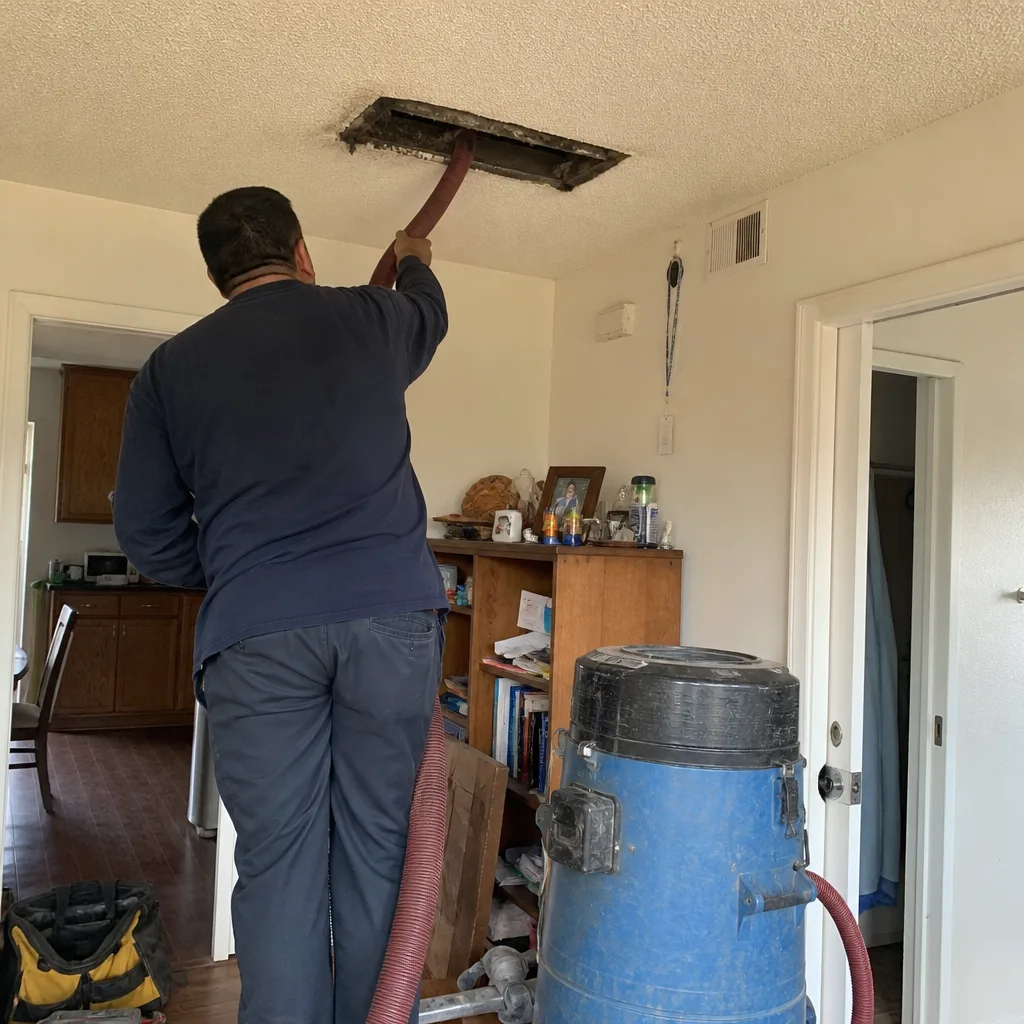 Before
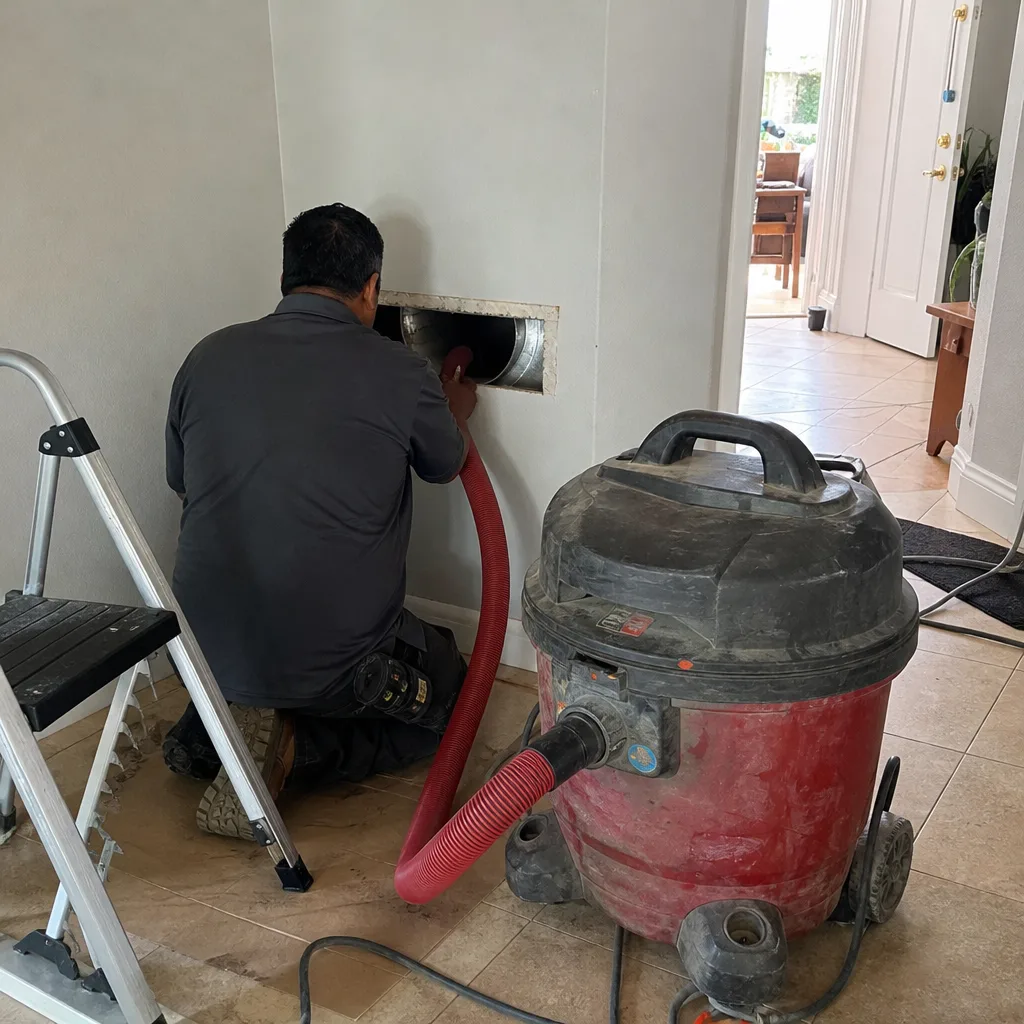 After
Frequently Asked Questions
No. Air duct cleaning that only removes debris from existing ducts using rotary-brush or HEPA-vacuum equipment does not require a permit in California, including Inglewood. The permit requirement attaches to alterations of the duct system, not maintenance of existing ducts. If your cleaning job includes any cutting, rerouting, or reconfiguring of ducts, that portion of the work may require a mechanical permit. Call (855) 341-8387 for an exact assessment of what your job involves.
Duct alterations require a permit in Inglewood. Adding new duct runs, relocating registers, changing duct sizes, reconfiguring return air paths, and any modification that changes the duct system’s physical configuration all require mechanical permits from Inglewood’s Building and Safety Division. Like-for-like repairs that replace a damaged section with an identical one in the same location may be exempt, but the Building Official has discretion. For any job that involves alteration, confirm the permit requirement with your contractor before work begins. Estimates are free at (855) 341-8387.
Look for signs of alteration in accessible duct work: mismatched sheet metal gauges, non-standard connections, fresh mastic on plenums, or duct runs that deviate from the home’s original layout. If you see these signs in your Inglewood home, request the permit history from the city’s Building and Safety Division. A duct specialist can also identify whether existing modifications appear code-compliant or substandard during Air Duct Cleaning services. Call (855) 341-8387 to schedule an inspection of your duct system.
Unpermitted duct modifications can complicate, delay, or kill a home sale in Inglewood. Home inspectors flag altered duct work, buyers request permit records, and lenders (especially FHA and VA lenders) may refuse to finance a home with unpermitted mechanical work. Sellers typically face a choice between retroactive permitting (with inspection and possibly repair costs) or crediting the buyer for remediation. The cost ranges from roughly $500 for minor retroactive permits to over $5,000 for full remediation of substandard work.
Applying mastic sealant to existing duct joints and seams is generally repair work, not alteration, as long as the duct system isn’t modified to perform the sealing. But if the plenum or duct section is too degraded to seal without being cut open, rebuilt, or replaced, that portion of the work becomes alteration and may require a permit. In Inglewood, the distinction hinges on whether the sealing changes the duct system’s configuration. Your contractor should document this classification in writing before starting work.
Hire a specialist. A contractor whose entire focus is duct systems is more likely to understand the California Mechanical Code, recognize when work crosses the line into alteration, and pull permits when required. Generalist contractors who clean ducts as a side service often lack the code knowledge to make correct permit determinations. In Inglewood’s older housing stock, that knowledge gap creates real liability. Call (855) 341-8387 to speak with a specialist about your specific situation.
The Bottom Line
Duct cleaning in Inglewood is maintenance: no permit, no inspection, no city involvement. But the moment duct work crosses into alteration (cutting, rerouting, reconfiguring, adding, or modifying),, California’s Mechanical Code and Inglewood’s Building and Safety Division require permits and inspections. Unpermitted alterations are a ticking liability that surfaces at the worst possible time: during a home sale, when the buyer’s inspector flags the work and the lender demands a paper trail. Protect yourself with a written scope of work, a clear permit conversation before any cutting starts, and a contractor who understands the difference. That’s the entire game. For more guides & resources, explore our blog, or call (855) 341-8387 to discuss your project.
Written by the team at Duct Cleaning Inglewood, serving Inglewood since 2015.