
Last updated November 2, 2026
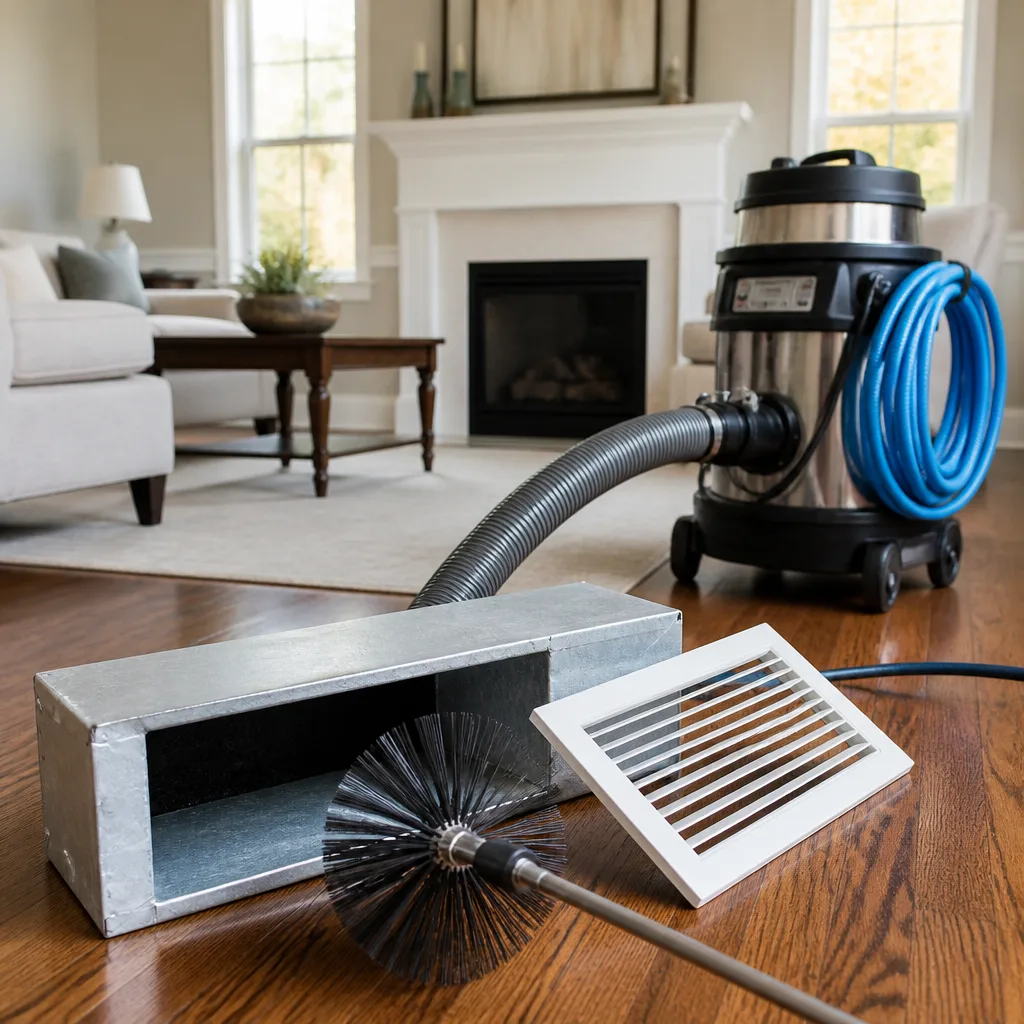 Whole-home duct cleaning
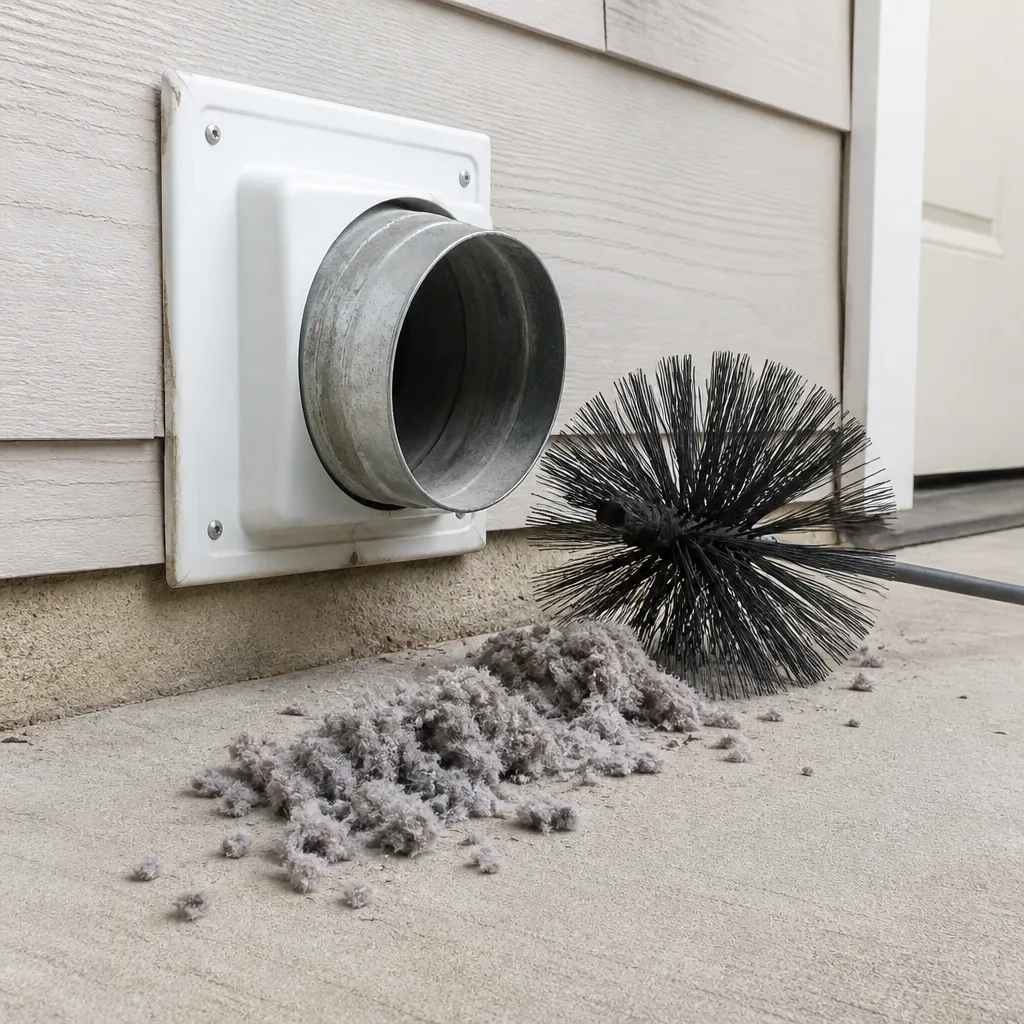 Dryer vent cleaning
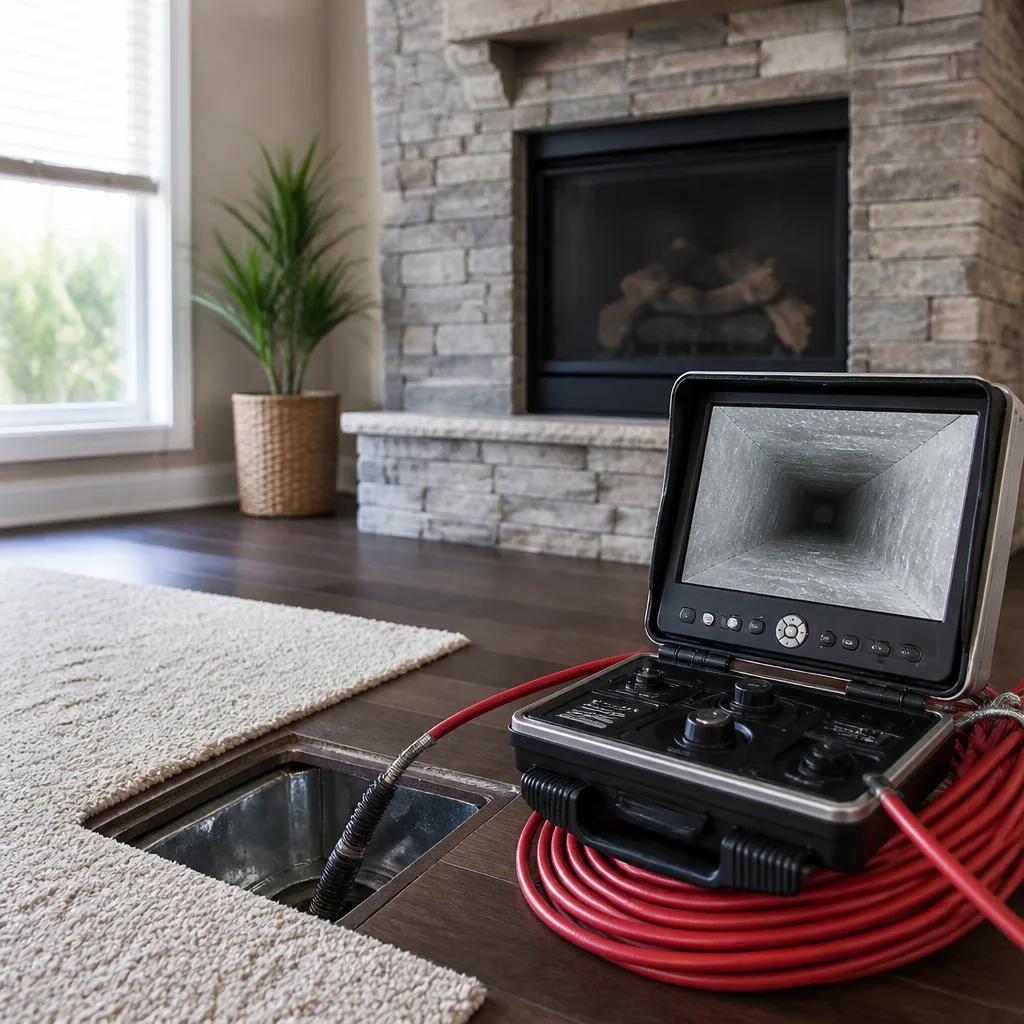 Camera inspection
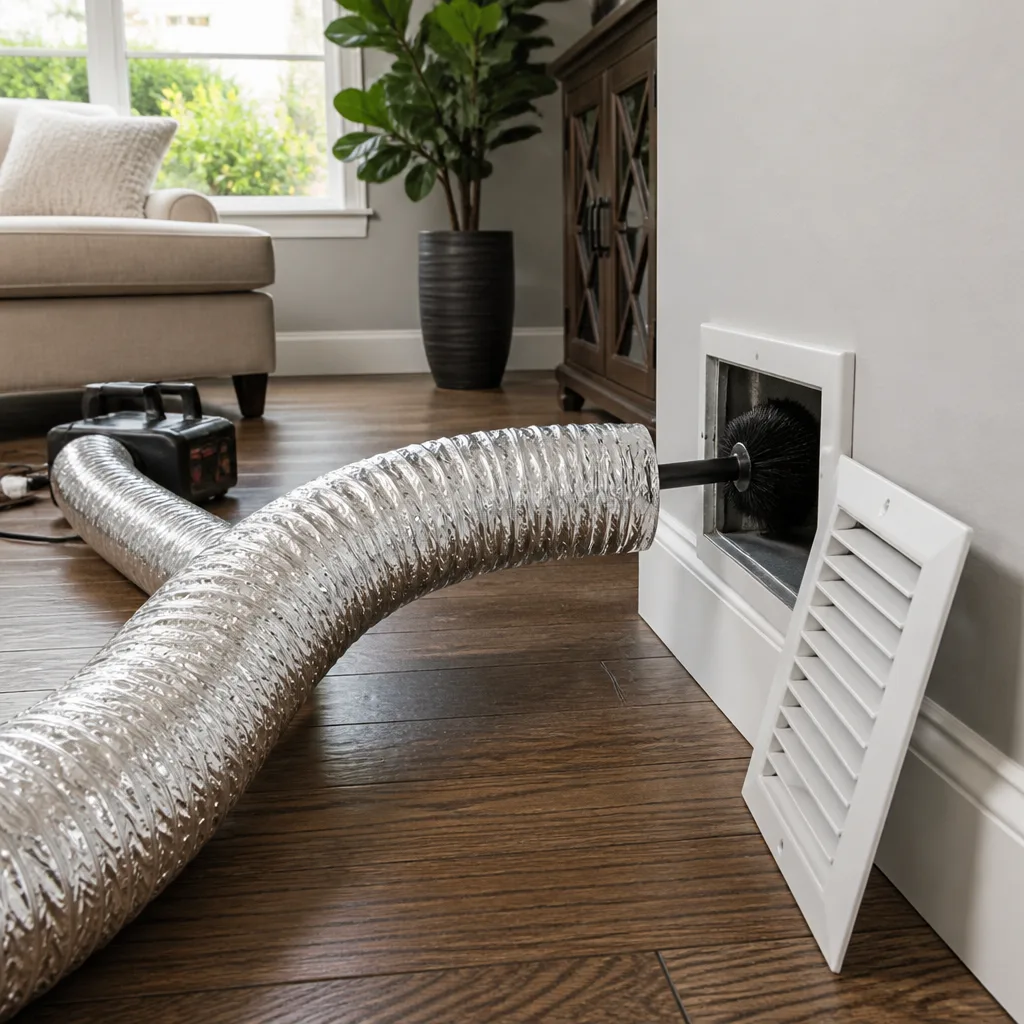 Sanitizing & deodorizing
Whole-system duct and dryer vent check with before-and-after photos - you see exactly what came out of your vents
That "$99 whole-house special" is a bait ad - the real number appears once they are in your hallway, or the "clean" is a shop-vac at the register. We photograph the inside of your ducts before and after instead.
Air Duct Cleaning Troubleshooting: Common Problems and How to Fix Them
If your ducts were “just cleaned” six months ago and you’re already noticing the same musty smell, the technician treated the symptom and missed the source. That’s not a rare occurrence in Inglewood, where coastal humidity and older housing stock combine to make duct contamination a recurring headache for homeowners. This guide walks through the real problems: not just dirty ducts, but why they got dirty, what the warning signs actually mean, and how to tell whether you’re dealing with a duct problem, a filtration failure, or an equipment issue that no amount of duct cleaning will fix. You’ll also learn what to document before you call a technician, because a diagnostic visit without evidence is just an expensive guess.
Quick Answer
Most air duct problems fall into four categories: contamination (dust, mold, debris inside the ducts), airflow restriction (blocked returns, crushed flex runs, closed dampers), pressure imbalance (rooms that never reach temperature, doors that slam on their own), and odor sources (moisture in the liner, dead pests, or a dirty coil upstream of the ducts). Fixing the visible symptom without diagnosing the source means the problem comes back. In Inglewood, where many homes run air conditioning nine months out of the year, untreated duct problems typically show up as dust accumulation, uneven room temperatures, and a persistent stale smell that returns within weeks of a basic cleaning.
Styles & brands we work with
- Whole-home duct cleaning
- Dryer vent cleaning
- Camera inspection
- Sanitizing & deodorizing
Table of Contents
- Duct Contamination vs. Filtration Failure: Reading the Clues
- Why Negative Pressure Imbalances Cause Chronic Dust (Not Just Dirt)
- When a Cleaning Made Contamination Worse: Redistribution Signs
- Locating the Actual Source: Return Plenum, Coil Cavity, Supply Boots, Liner
- What to Document Before Calling a Technician
- Dryer Vent Symptoms That Mimic Duct Problems
- When the Problem Is the Filter, Not the Duct: Honeywell and Aprilaire Systems
Duct Contamination vs. Filtration Failure: Reading the Clues
Here’s the distinction most troubleshooting guides skip: a dirty duct and a failed filter produce different evidence. A duct contamination problem shows as dust accumulating inside the vents themselves, visible gray streaks around supply registers, or dust that reappears within days of wiping surfaces. A filtration failure shows as dust on horizontal surfaces while the registers stay relatively clean, because unfiltered air is bypassing the filter entirely.
The third category is the one that wastes the most money: an HVAC equipment issue, like a coil that’s been sweating into the duct liner or a blower motor pulling dirt from an unfinished crawlspace. None of these improve with duct cleaning alone. A technician who doesn’t distinguish among the three is selling a service, not solving your problem.
Quick Diagnostic Checklist
- Dust on walls near vents, dark streaks on registers: Duct contamination.
- Dust evenly across furniture, registers clean: Filtration failure or bypass around the filter.
- Musty smell that worsens when AC runs, not when heat runs: Moisture inside the duct liner or coil cavity.
- Rooms that never reach temperature on hot Inglewood afternoons: Pressure imbalance or collapsed flex duct, not dirt.
We’ve seen Inglewood homes where the homeowner paid for three cleanings in four years, each time the same complaint: dust on the dresser in the back bedroom. The real problem was a return plenum in the garage drawing air through a gap around the water heater flue. No amount of cleaning fixes that. The gap has to be sealed, then the ducts cleaned, in that order.
Why Negative Pressure Imbalances Cause Chronic Dust (Not Just Dirt)
Negative static pressure is the most underdiagnosed cause of chronic dust complaints in Southern California homes. When your return side pulls harder than your supply side pushes, the house goes slightly negative. Air gets sucked in through every crack: attic hatches, recessed light cans, window frames, the gap under the front door. That incoming air bypasses the filter entirely and drags whatever lives in those spaces into your living areas.
In Inglewood, the clues are consistent across hundreds of homes we’ve inspected. Bedrooms with doors closed run negative because the central return in the hallway can’t pull through the closed door. The fix is an undersized transfer grille or jumper duct above the door, not a more powerful blower. Homes with the furnace in the garage often draw garage air, including carbon monoxide from a car warming up, directly into the return plenum through unsealed duct connections. That’s not a dust issue. That’s a safety issue.
Evidence of Negative Pressure
- Doors that slam shut on their own when the air handler starts.
- A visible puff of dust from outlets or light fixtures when the system kicks on.
- The smell of garage or attic air inside the house during AC operation.
- Drafts around windows and doors that worsen when the system runs.
None of these are fixed by cleaning. The duct system and the house envelope have to be balanced. Once the pressure is corrected, duct cleaning removes the contaminant that accumulated during the imbalance, and it stays gone.
When a Cleaning Made Contamination Worse: Redistribution Signs
A botched duct cleaning doesn’t clean. It mobilizes debris from inside the ducts and deposits it in your living spaces. The signs are specific and hard to miss if you know what you’re looking for.
The most common failure mode is negative-air cleaning with inadequate containment. A technician hooks a vacuum to the main trunk, pokes an agitation device into each register, and hopes the vacuum captures everything loosened. When the vacuum flow rate is lower than the agitation rate, debris gets suspended in the airstream and blown out through every register it passes. The result: your ducts are cleaner, but your walls and furniture are dirtier than before.
Signs of Debris Redistribution
- Fine gray dust on surfaces directly below supply registers, appearing within 48 hours of the cleaning.
- Debris visible inside the register boot when you remove the cover, but clean ductwork deeper in.
- A burning smell during the first heater run after the cleaning, caused by dust blown onto the heat exchanger.
- Your air filter clogging within two weeks of the cleaning, when it used to last two months.
This is exactly the scenario the opening hook describes: someone with professional equipment didn’t contain the system properly. Professional-grade setups, the kind used in commercial remediation like Rotobrush rotary-brush systems and Nikro HEPA-vacuum rigs, maintain negative pressure throughout the entire cleaning process with continuous extraction at the point of agitation. That’s the difference between removing debris and relocating it.
If you suspect a prior cleaning made things worse, document it before calling another company. Photograph the dust on surfaces below registers. Remove one register cover and photograph the boot interior. Check your filter. That evidence tells a competent technician what happened without making you sound like you’re guessing.
Locating the Actual Source: Return Plenum, Coil Cavity, Supply Boots, Liner
Duct contamination doesn’t distribute itself evenly. It concentrates in specific locations based on airflow patterns, temperature changes, and moisture. Knowing which locations correspond to which symptoms saves you from paying for a job that treats the wrong area.
The return plenum is where unfiltered air enters the system. If the filter sits at the air handler and the return plenum has loose seams, you’re pulling unfiltered attic or crawlspace air into the entire system. Contamination here affects every room equally. The return plenum is also where we frequently find construction debris in newer Inglewood homes: drywall dust, paint chips, and even a fast-food wrapper from the framing crew. If your bills suddenly spiked after a renovation, start here.
The coil cavity sits downstream of the blower and upstream of the supply ducts. A coil that has condensation issues grows biological material that the airstream picks up and distributes. If the musty smell is worse when the AC runs and better when the heat runs, the coil cavity is the prime suspect. Cleaning ducts downstream of a dirty coil moves debris around without addressing the source.
Supply boots are the sheet-metal boxes behind each register. They’re often the dirtiest part of the system because they sit in unconditioned space where temperature differentials cause condensation. Debris in a supply boot only affects that one room, which makes it relatively easy to isolate: if one bedroom is dusty and the room next to it isn’t, check the boot.
Duct liner interior is the fiberglass insulation inside older metal ducts. When liner degrades, it releases fibers and traps moisture that turns musty. Liner degradation can’t be cleaned away; the duct section must be replaced. A technician who wraps a camera in the duct and shows you the liner condition is doing their job. One who quotes a cleaning without looking at the liner is not.
What to Document Before Calling a Technician
A diagnostic visit produces a better result when the technician has evidence in hand. You know your house better than anyone who’s about to walk through it for the first time. Write it down.
Documentation Checklist
- Specific rooms and symptoms: Which rooms are dusty? Which are cold? Which smell? Map them. Patterns localize the problem.
- Filter condition and age: Note the filter’s rated MERV and how long it’s been installed. A filter caked with dust after two weeks signals a contamination overload.
- Timeline: When did symptoms start? After a renovation? After a new pet? After a vinyl floor installation? Timing points to the source.
- Previous cleaning records: If you have receipts from a prior cleaning, keep them. A competent technician wants to know what was done, with what equipment, and whether the problem predates that work.
- Photos: Remove a register cover in the most-affected room and photograph the inside of the boot. Photograph dust accumulation near vents. This is your baseline.
- System specs: The air handler’s location, the return layout, whether ducts run through the attic or under the floor. In Inglewood, many older homes route ducts through a crawlspace that’s open to outdoor humidity, which changes the diagnosis entirely.
If a technician doesn’t want to see any of this, that’s an answer in itself. Our team works with our air duct cleaning in Inglewood clients to review this information before recommending a scope of work, because guessing wastes everyone’s time.
Dryer Vent Symptoms That Mimic Duct Problems
One of the most common misdiagnoses we see in Inglewood involves dryer vents being treated as part of the HVAC duct system. They’re not. A clogged dryer vent produces symptoms that homeowners attribute to their central air: musty laundry room smells, elevated humidity, longer cooling cycles, and even lint particles on surfaces near the laundry area.
The easiest way to distinguish a dryer vent problem from an HVAC duct problem is timing. Does the symptom appear when the dryer runs? If the laundry room gets humid and the dryer takes two cycles to dry a load, the dryer vent is restricted. If the whole house smells musty when the AC kicks on, the problem is in the HVAC ducts.
Dryer vents deserve their own cleaning schedule. Lint is combustible, and a restricted dryer vent is a house-fire risk that doesn’t give you much warning. If you can’t remember the last time it was cleaned, it’s overdue. Our dryer vent cleaning in Inglewood service handles this as its own distinct job with its own equipment, because a dryer vent is not an air duct and treating it like one misses the point.
When the Problem Is the Filter, Not the Duct: Honeywell and Aprilaire Systems
Homes with premium air filtration setups, Honeywell and Aprilaire media cabinets especially, present a unique troubleshooting challenge. The filtration system masks duct contamination by catching particles before they reach the living spaces, until the filter itself becomes the performance problem.
A Honeywell or Aprilaire media filter that loads up with debris restricts airflow across the whole system. The blower works harder, static pressure rises, and the symptoms look exactly like dirty ducts: weak airflow at registers, longer run times, higher energy bills. But cleaning the ducts in this scenario does nothing, because the restriction is at the filter.
The telltale sign is a filter that clogs unusually fast. When a media filter rated for six to twelve months loads up in four to six weeks, you have two things happening: a high-dust environment and a filter doing exactly what it was designed to do. That’s the time to ask where the dust is coming from, not just swap the filter and move on. Duct contamination, unsealed returns, or a pressure imbalance are usually the upstream source.
Conversely, if the filter looks clean but the ducts are coated, the filtration is bypassing. Filter frames that don’t seal, gaskets that have compressed, or a filter installed backwards can all allow unfiltered air to slide around the media and into the supply side. Since our technicians work with Honeywell and Aprilaire systems regularly, air duct repair in Inglewood calls often involve correcting these bypass issues before any cleaning begins.
Common Mistakes to Avoid
- Cleaning ducts without identifying the source of contamination. This is the single most expensive mistake. If the return plenum is pulling attic air, the ducts will be dirty again within a year regardless of how thorough the cleaning was.
- Trusting a low-bid operator with consumer-grade equipment. In Inglewood, you’ll see flyers offering whole-house duct cleaning for under a hundred dollars. A shop vac attached to a register doesn’t clean ducts; it relocates debris into your living room. Professional equipment like Nikro HEPA rigs and Rotobrush systems maintains extraction throughout the process.
- Replacing filters with higher MERV ratings to compensate for dirty ducts. A dense filter on a system that wasn’t designed for it chokes airflow and raises static pressure, making every symptom worse. Fix the duct problem first, then evaluate filtration needs.
- Sealing every duct leak you find with foil tape. Duct tape, despite the name, is not a duct-sealing product. It dries out, loses adhesion, and falls off within a few years. Mastic sealant or foil-backed tape rated for HVAC use is the correct product, and even then, application matters. Some leaks require professional repair, not a patch.
- Assuming a musty smell means mold in the ducts. Most musty HVAC odors in Inglewood trace back to moisture in the coil cavity or a drain pan that isn’t draining properly, not mold growing inside the ductwork itself. A camera inspection costs less than an unnecessary mold remediation.
- Cleaning ducts in a house with a known pressure imbalance. The imbalance keeps pulling contamination from the source. Fix the imbalance first, then clean. Any technician who recommends cleaning before addressing pressure issues is selling a service, not solving your problem.
- Waiting for visible dust before scheduling a dryer vent cleaning. Lint restriction builds gradually, and by the time you notice symptoms, the vent is already a hazard. Schedule it on a calendar, not on a complaint.
See the difference
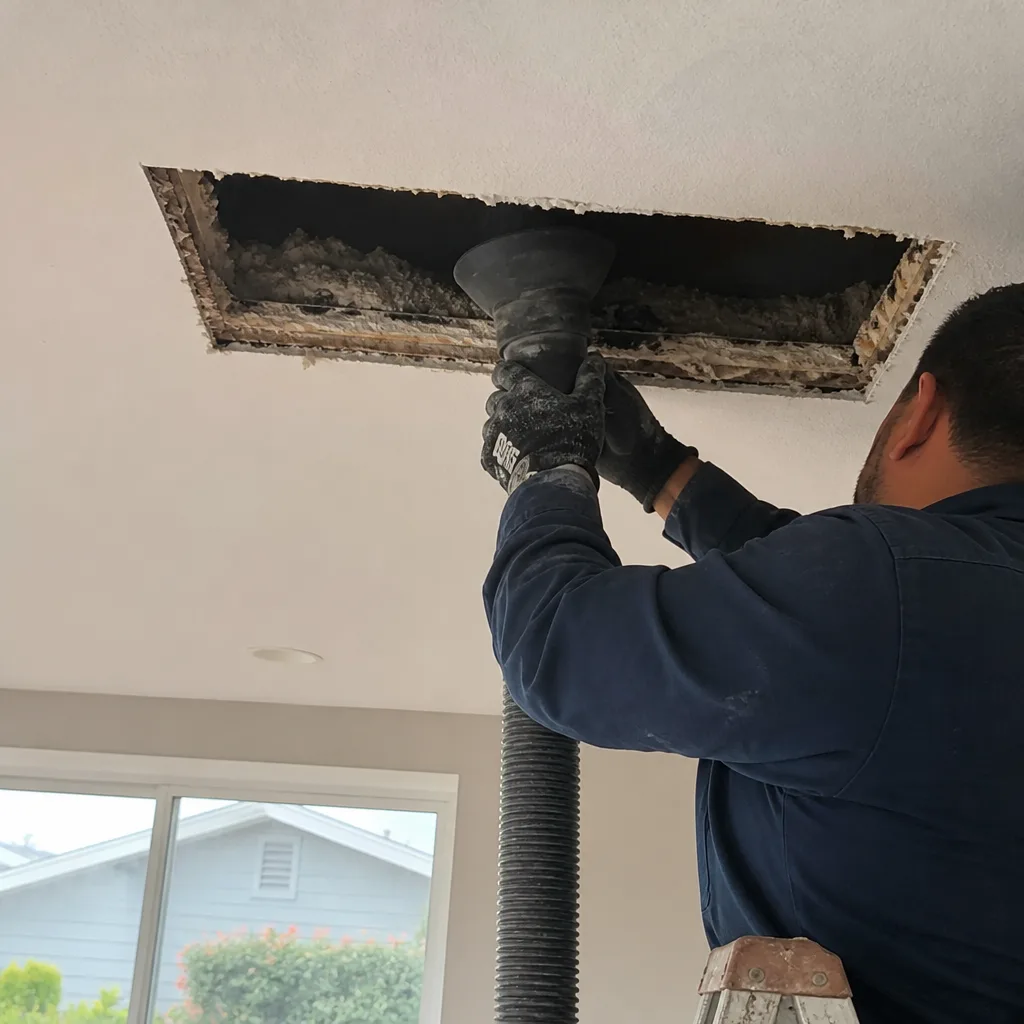 Before
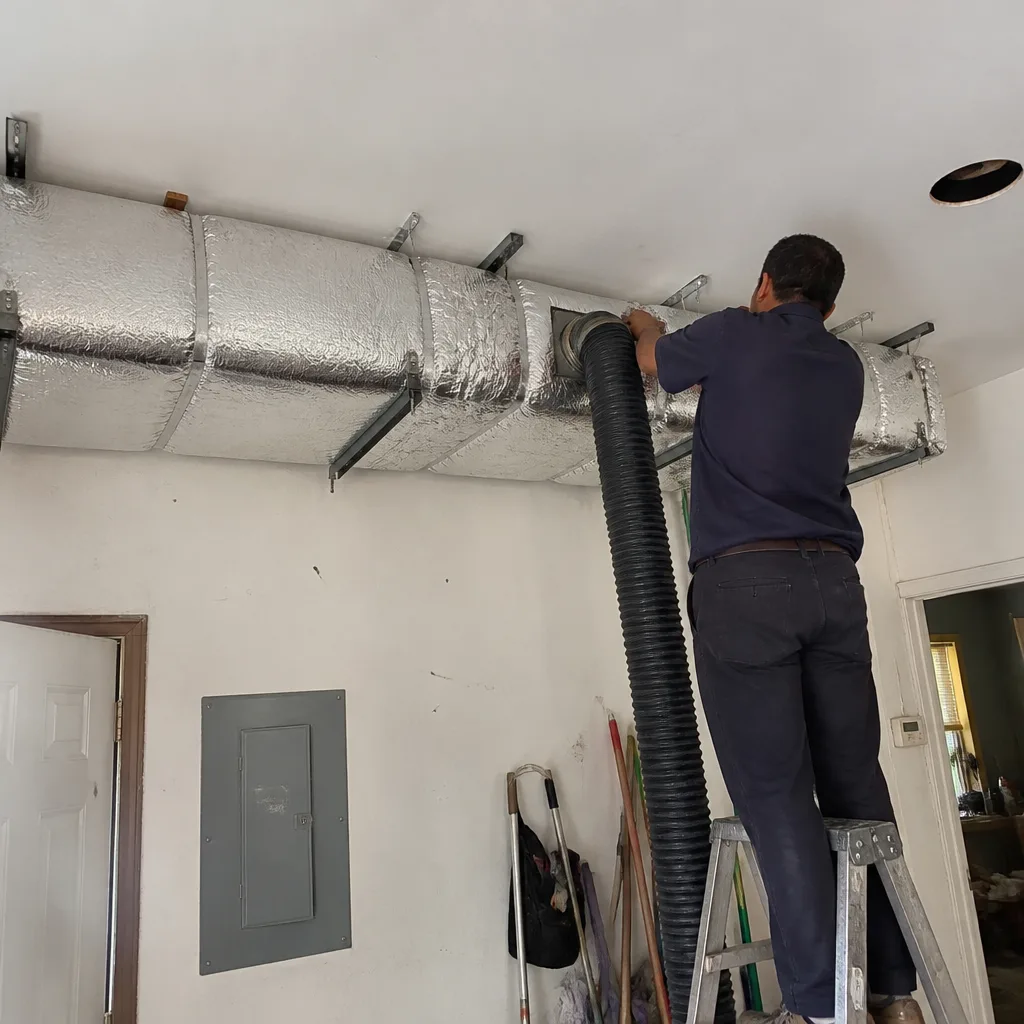 After
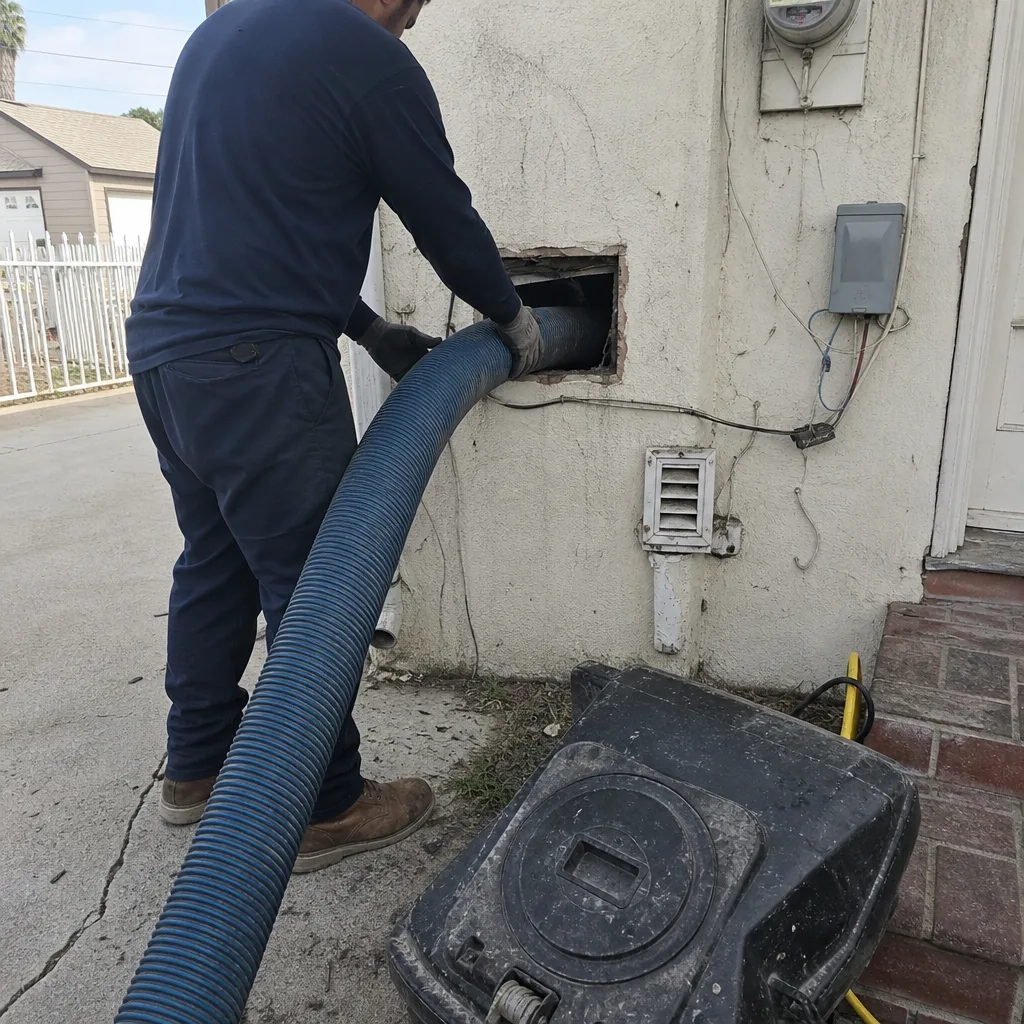 Before
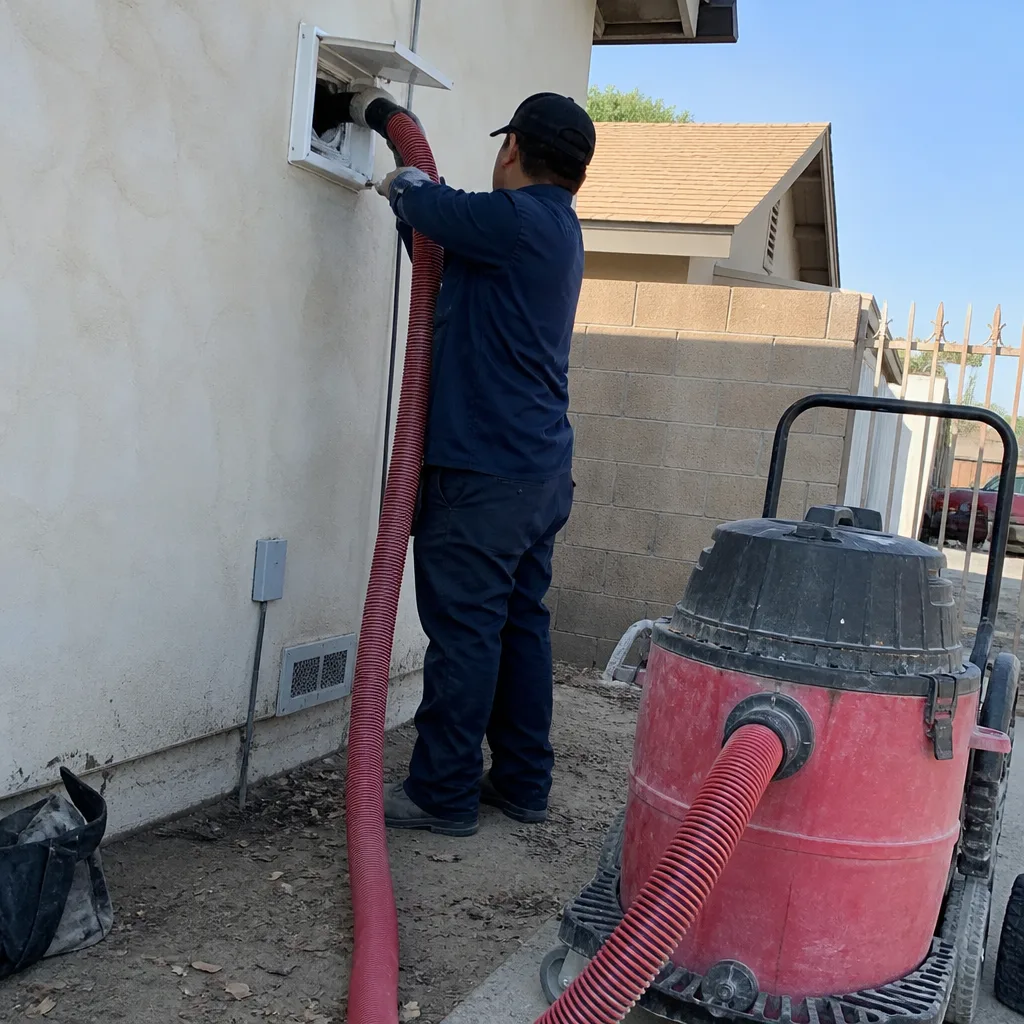 After
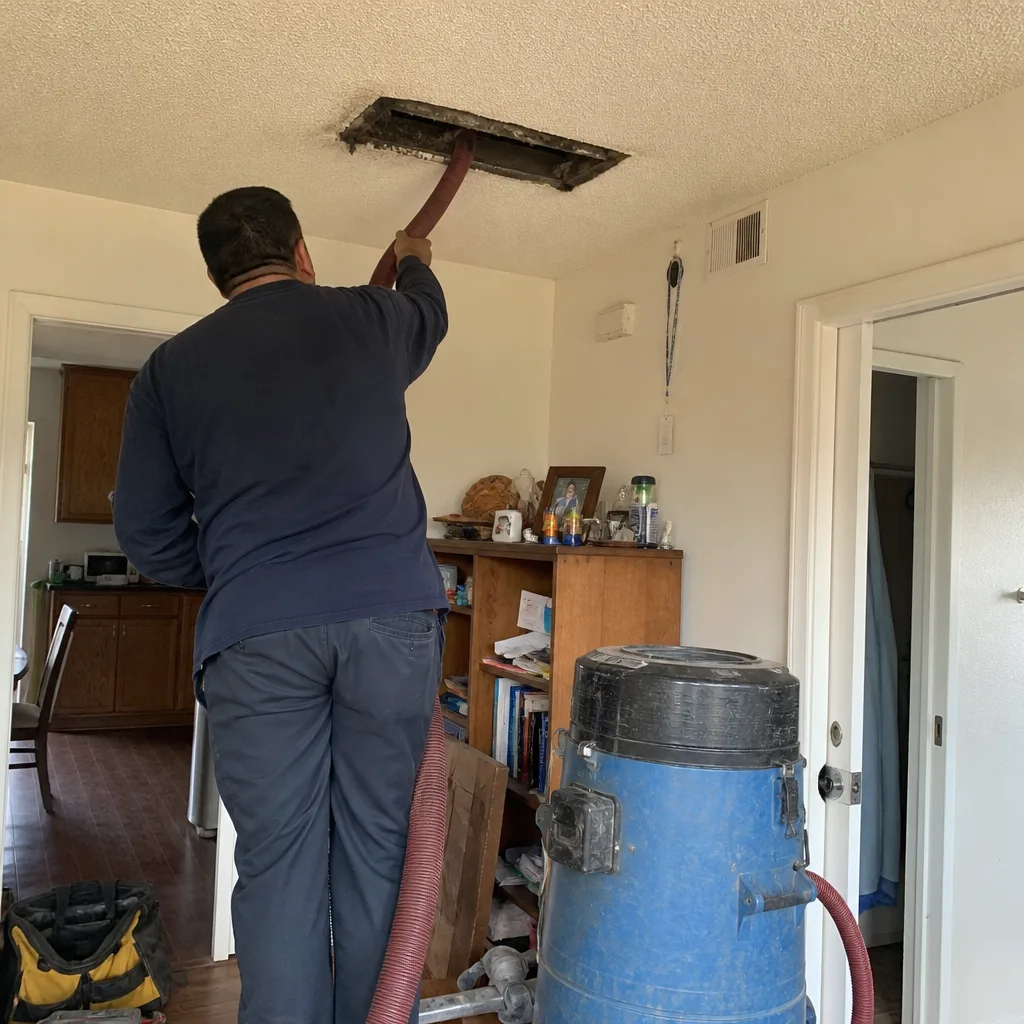 Before
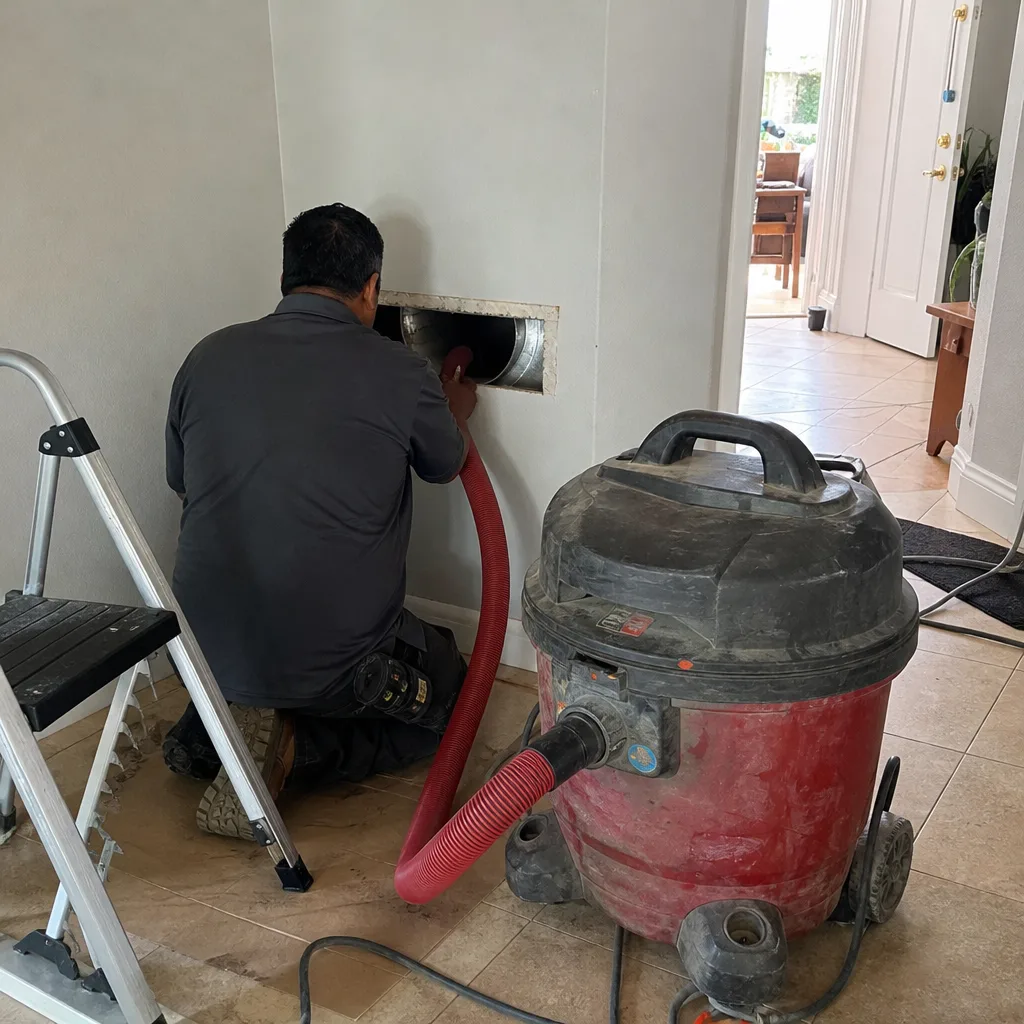 After
When to Call a Professional
Some problems reveal themselves and then sit there politely while you decide what to do. Others compound. If you have a musty smell that changes with AC operation, visible debris inside the register boots, rooms that never reach temperature no matter how long the system runs, or signs that a previous cleaning redistributed dust rather than removing it, you need a diagnostic visit from someone who works exclusively on duct systems, not a generalist who fits ducts in between furnace replacements. Duct Cleaning Inglewood offers free estimates in Inglewood, and our technicians arrive with the same professional-grade equipment used in commercial remediation: Nikro HEPA-vacuum rigs, Rotobrush rotary agitation, and Abatement Technologies filtration tools for contamination-level jobs. If you’re not sure whether your problem is a duct issue, a filtration issue, or an equipment issue, the estimate is how you find out. Call (855) 341-8387 to schedule.
Frequently Asked Questions
Recurring contamination within six to twelve months of a cleaning means the source was never addressed. The most common culprits in Inglewood homes are unsealed return plenums pulling attic or garage air, a leaking duct connection in unconditioned space, or a pressure imbalance that draws unfiltered air into the living areas. Find and fix the source first, then clean. A reputable technician will tell you this before quoting a cleaning.
Whole-house air duct cleaning in Inglewood typically runs $450 to $900 depending on the size of the home, the number of registers, and the degree of contamination. Homes with accessible ductwork and standard contamination sit at the lower end; homes with significant debris, pet dander saturation, or post-construction dust run higher. Be wary of quotes under $200 – at that price, the equipment can’t maintain proper extraction, and you’ll pay more later to fix the redistribution. Call (855) 341-8387 for an exact quote, and ask about our flat-rate pricing per system before we start. Estimates are free.
Request before-and-after photos of the duct interior, specifically the return plenum, coil cavity, and supply boots. Any competent duct cleaning company will provide them. You should see a visible difference in the surfaces that were contaminated. If the technician can’t or won’t show you the interior of your ducts before and after, that’s a red flag. Cameras fit inside residential ductwork, and a company using professional equipment has one.
Most Inglewood homes benefit from a full Air Duct Cleaning every three to five years, though homes with shedding pets, recent renovations, or residents with respiratory conditions may need it more often. The better question is whether your ducts need cleaning at all right now. If there’s no visible contamination, no odor, and your filter isn’t loading up unusually fast, cleaning is unnecessary. If a company pushes a cleaning without evidence of contamination, get a second opinion.
The price difference almost always comes down to equipment and scope. Low-bid operators use portable vacuums or shop vacs that cannot maintain negative pressure across the entire duct system while agitating debris loose. The result is partial cleaning at best and debris redistribution at worst. Professional-grade setups, Rotobrush rotary-brush systems paired with Nikro HEPA-vacuum rigs, cost real money to own and operate, and that’s reflected in honest pricing. You’re not paying for a name. You’re paying for extraction that actually removes the material.
Duct cleaning removes accumulated allergens, dust, and particulate matter from your ductwork, which reduces what your system recirculates through the living space. In Inglewood, where windows stay closed during the warm season and the AC runs continuously, that recirculation is constant. But if allergies are severe and ongoing, the source may be your filtration, not your ducts. A Honeywell or Aprilaire media filter with the right MERV rating for your system, combined with verified-clean ducts, addresses both halves of the problem.
The Bottom Line
Most duct problems are symptoms of something upstream: an unsealed return, a pressure imbalance, a degraded liner, or a filter that’s fighting a losing battle. Cleaning the ducts without diagnosing the source means the dust comes back, the smell comes back, and you’re out the cost of another cleaning a year later. The fix path is always the same: identify the source with evidence, correct the source, then clean the system with equipment that actually extracts what it loosens. In Inglewood, where air conditioning runs for most of the year, a properly diagnosed and corrected duct system pays for itself in cleaner air, lower energy use, and fewer repeat service calls. See our Duct Cleaning Inglewood home page to learn how we approach the whole system, or call (855) 341-8387 for a free estimate.
Written by the team at Duct Cleaning Inglewood, serving Inglewood since 2015. For more guides & resources, visit our blog.