
Last updated November 2, 2026
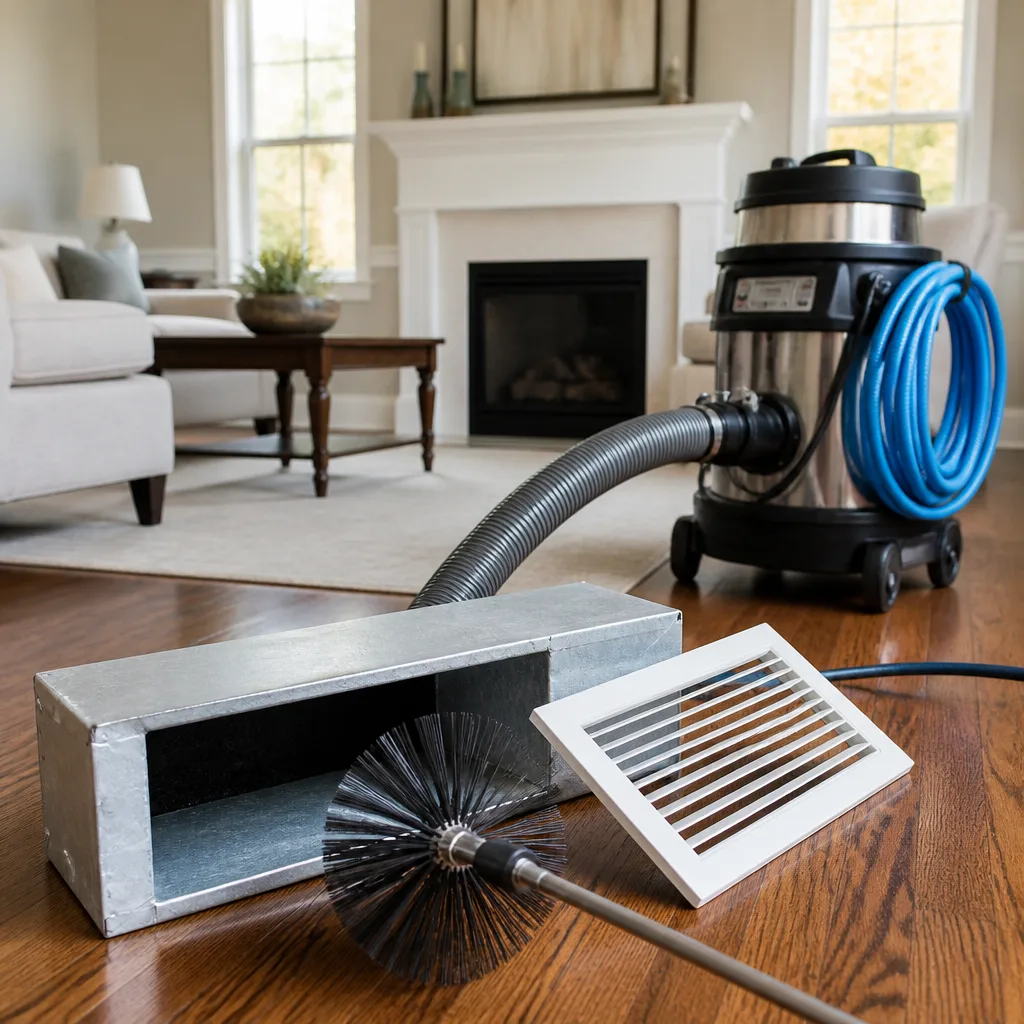 Whole-home duct cleaning
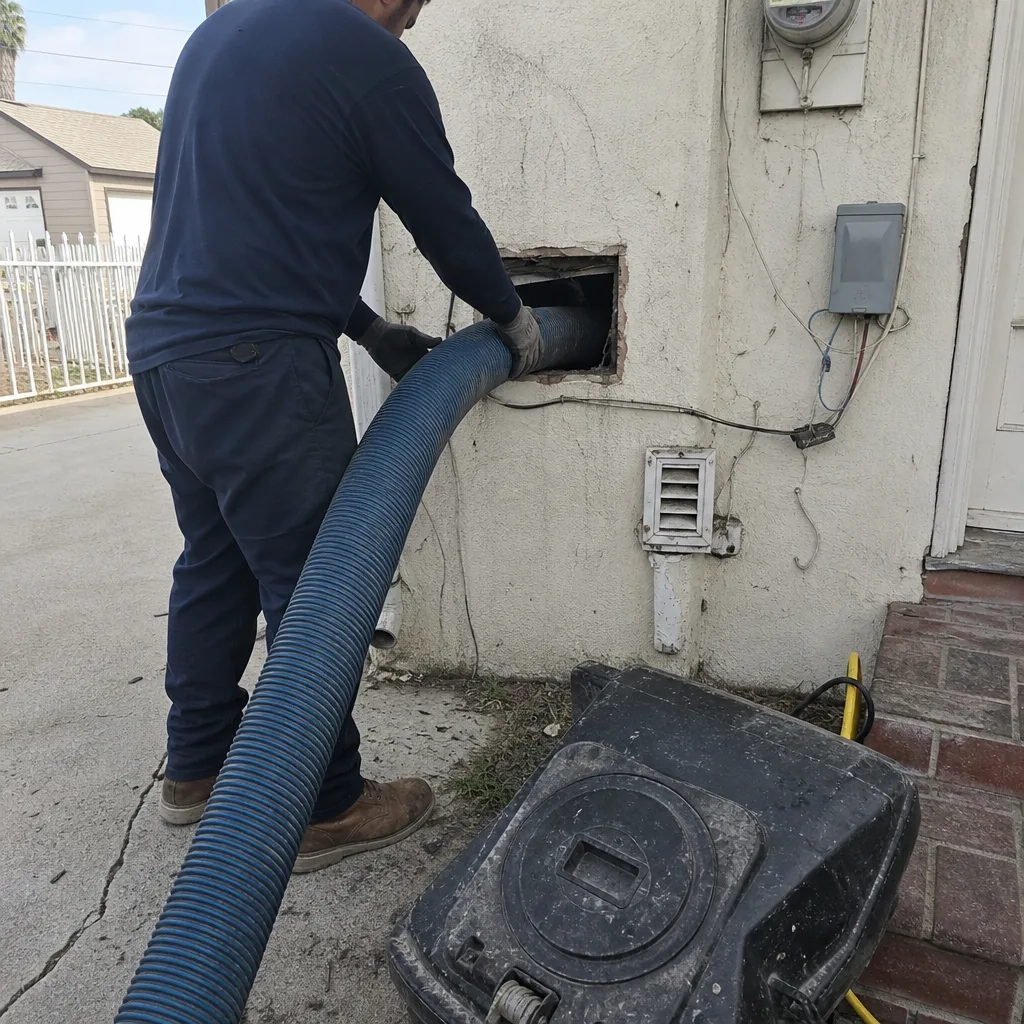
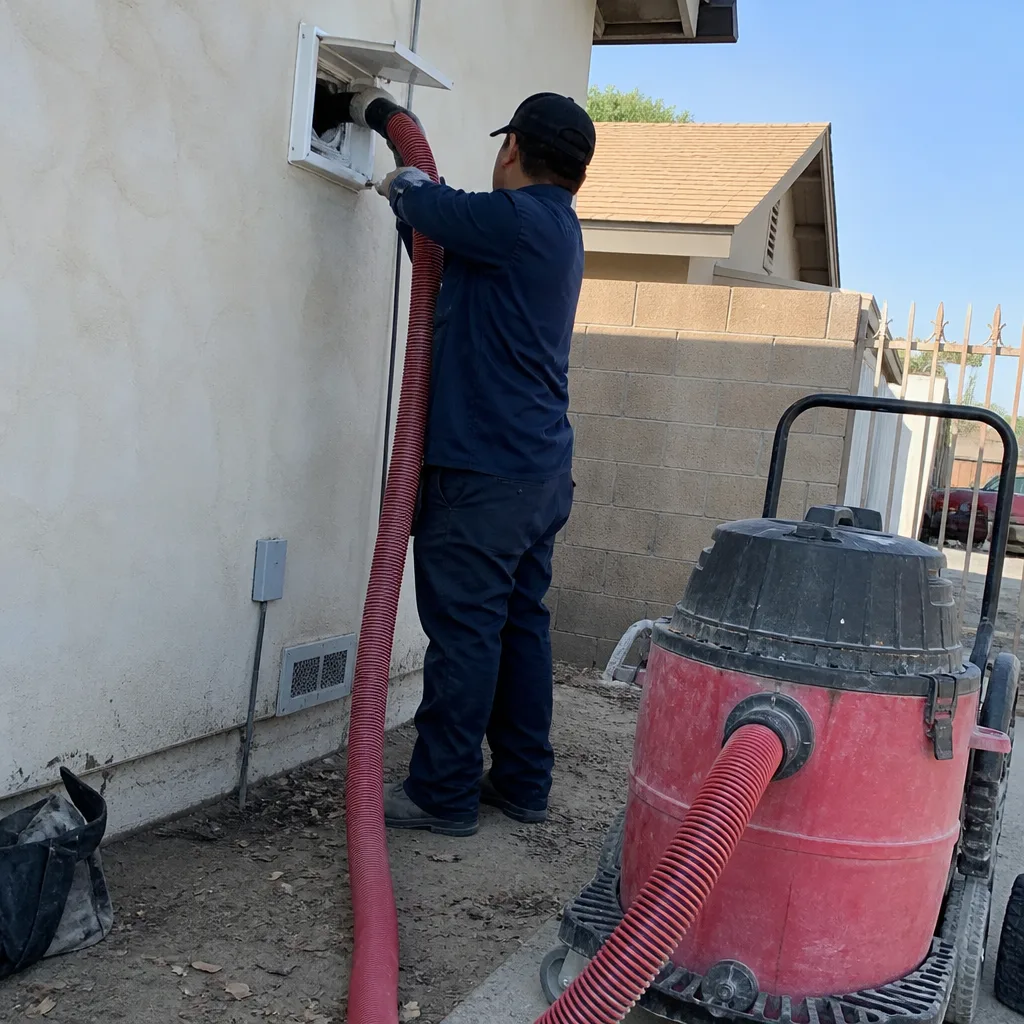
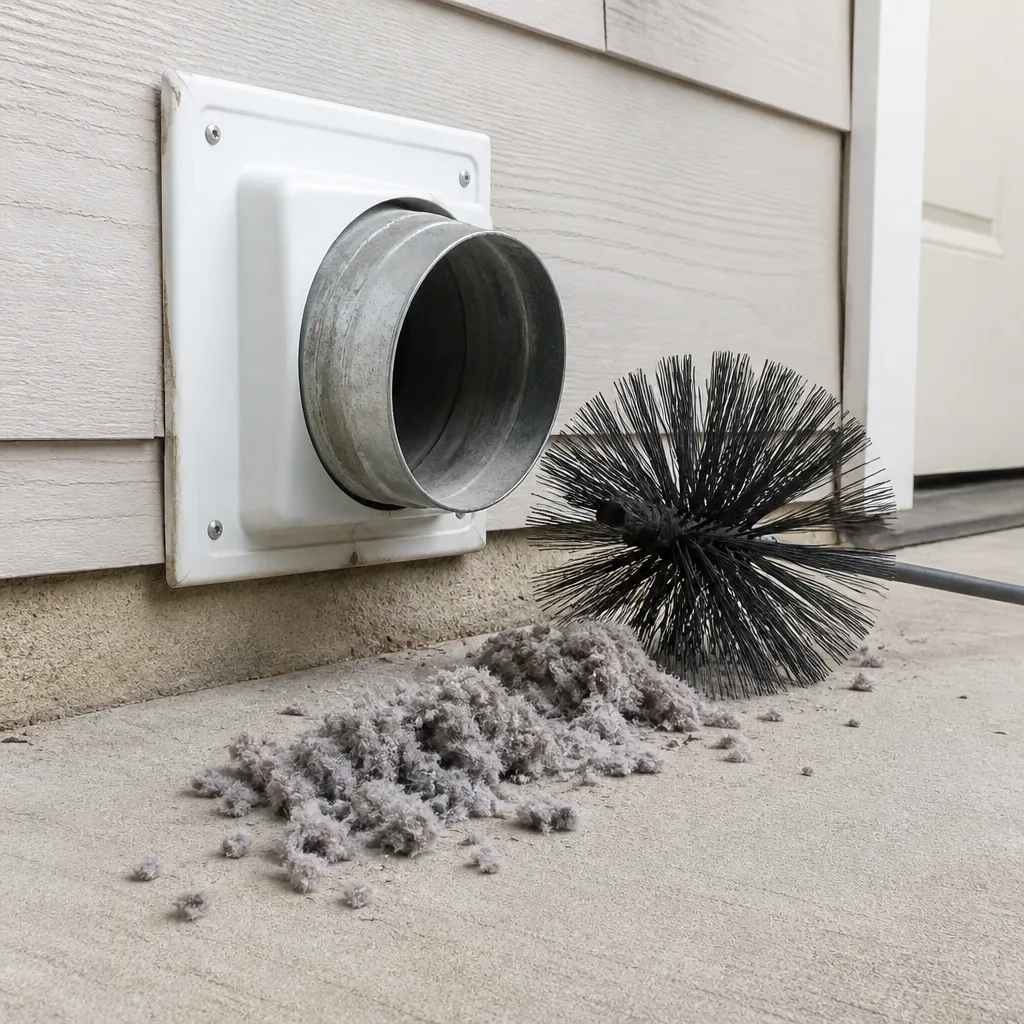 Dryer vent cleaning
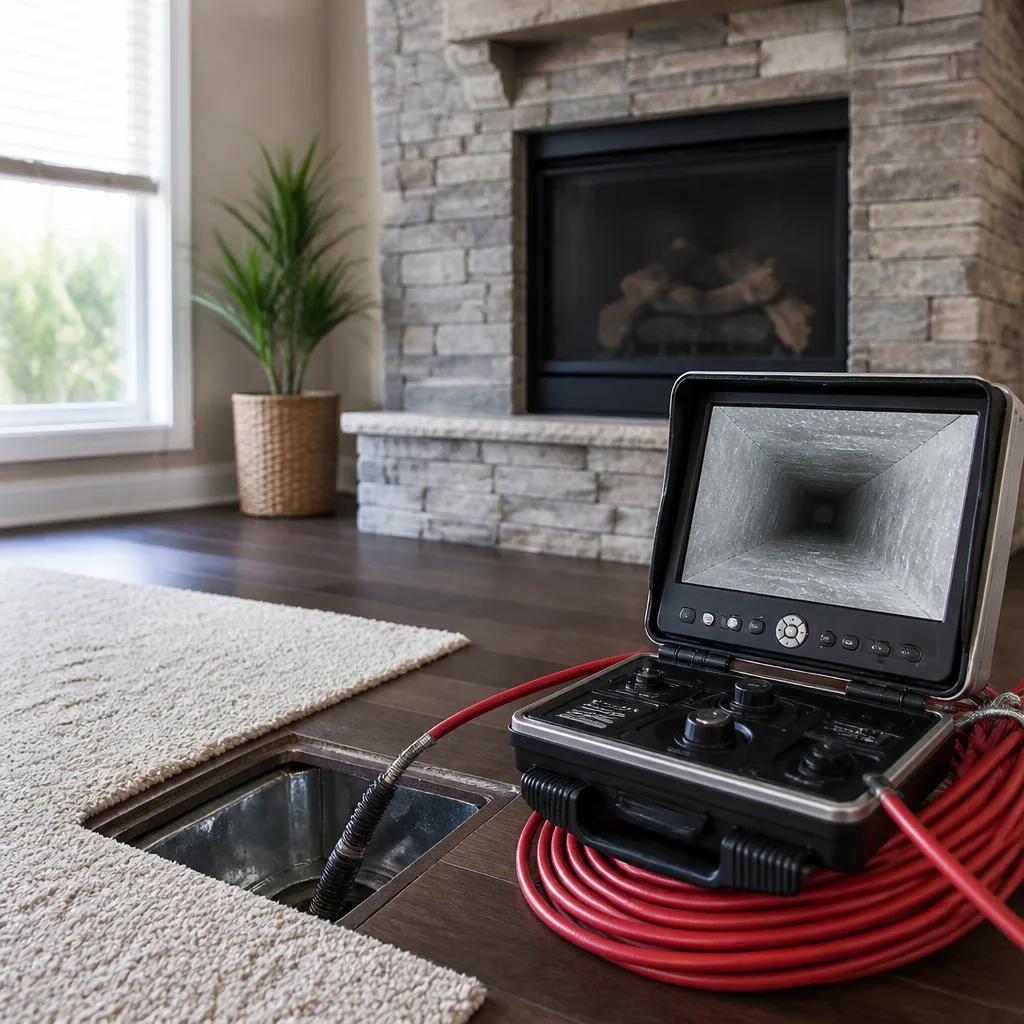 Camera inspection
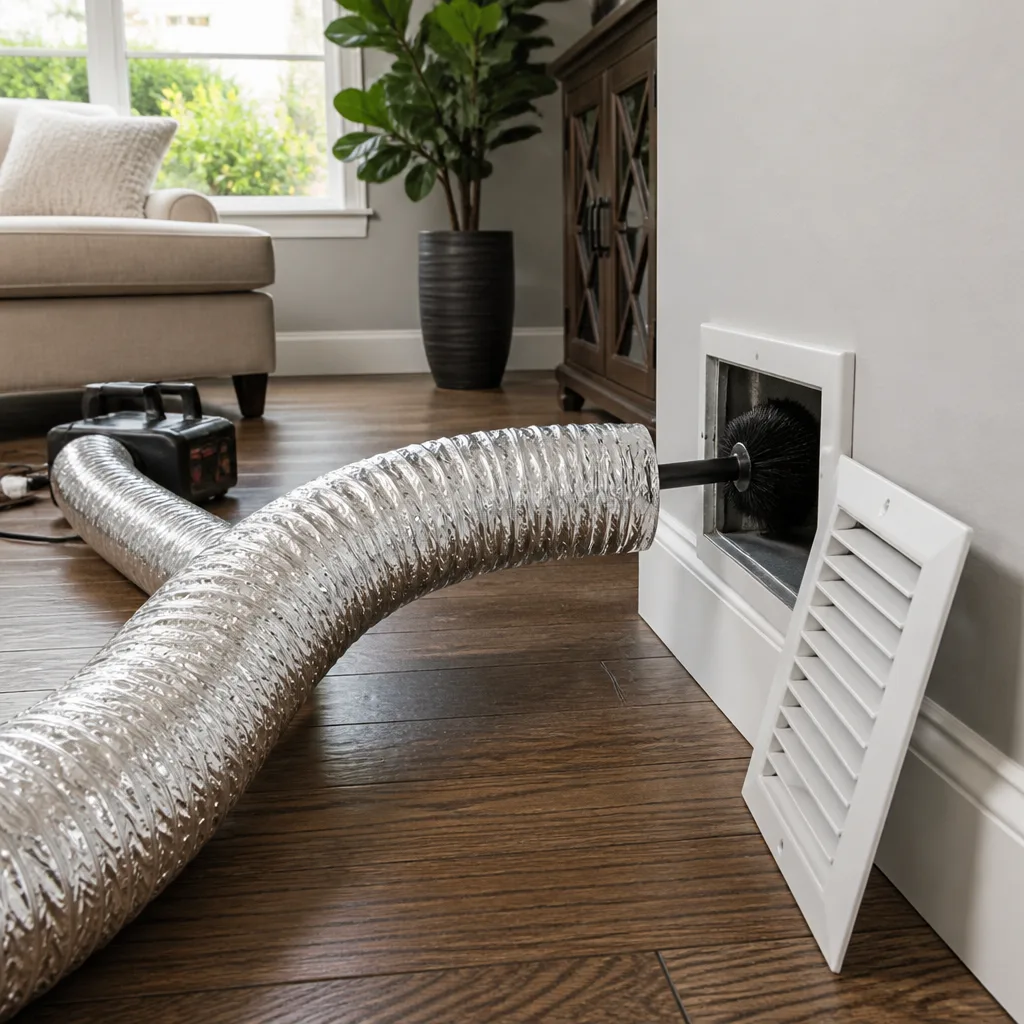 Sanitizing & deodorizing
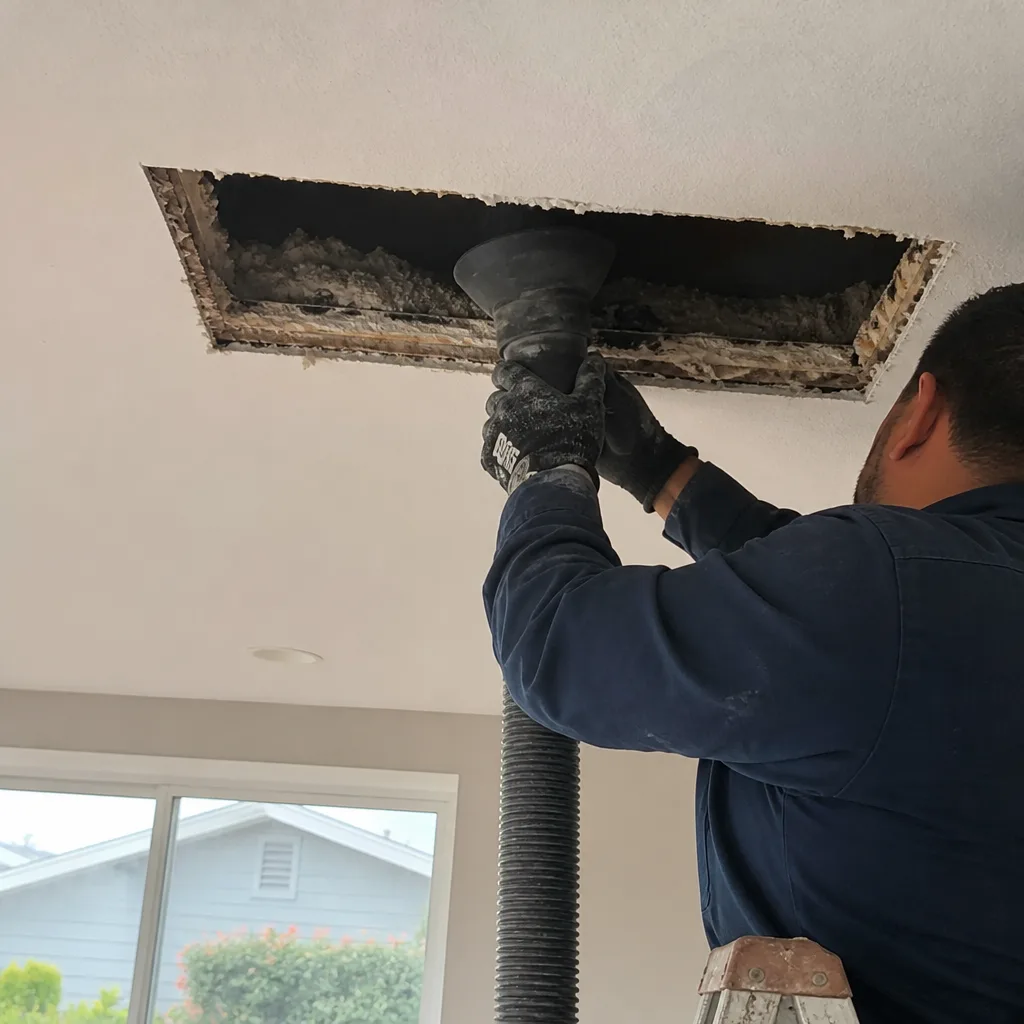
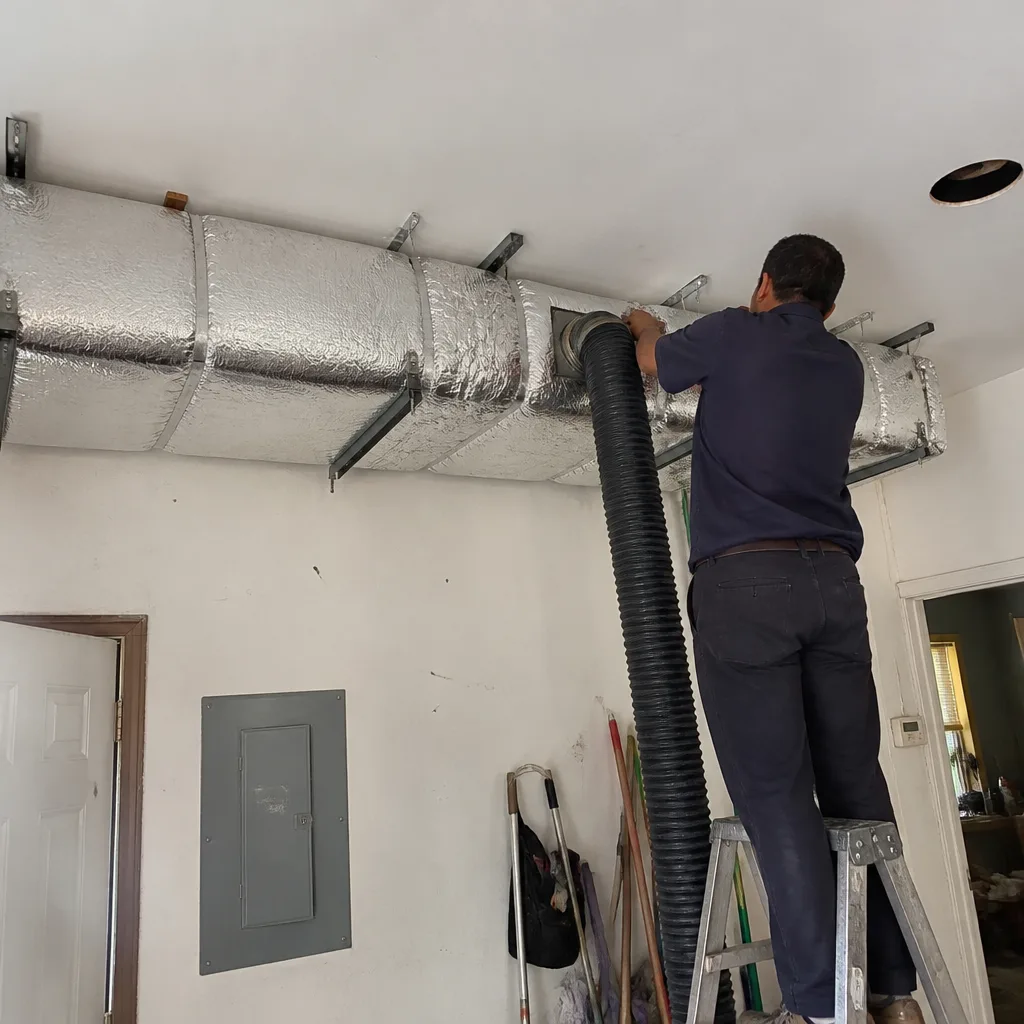
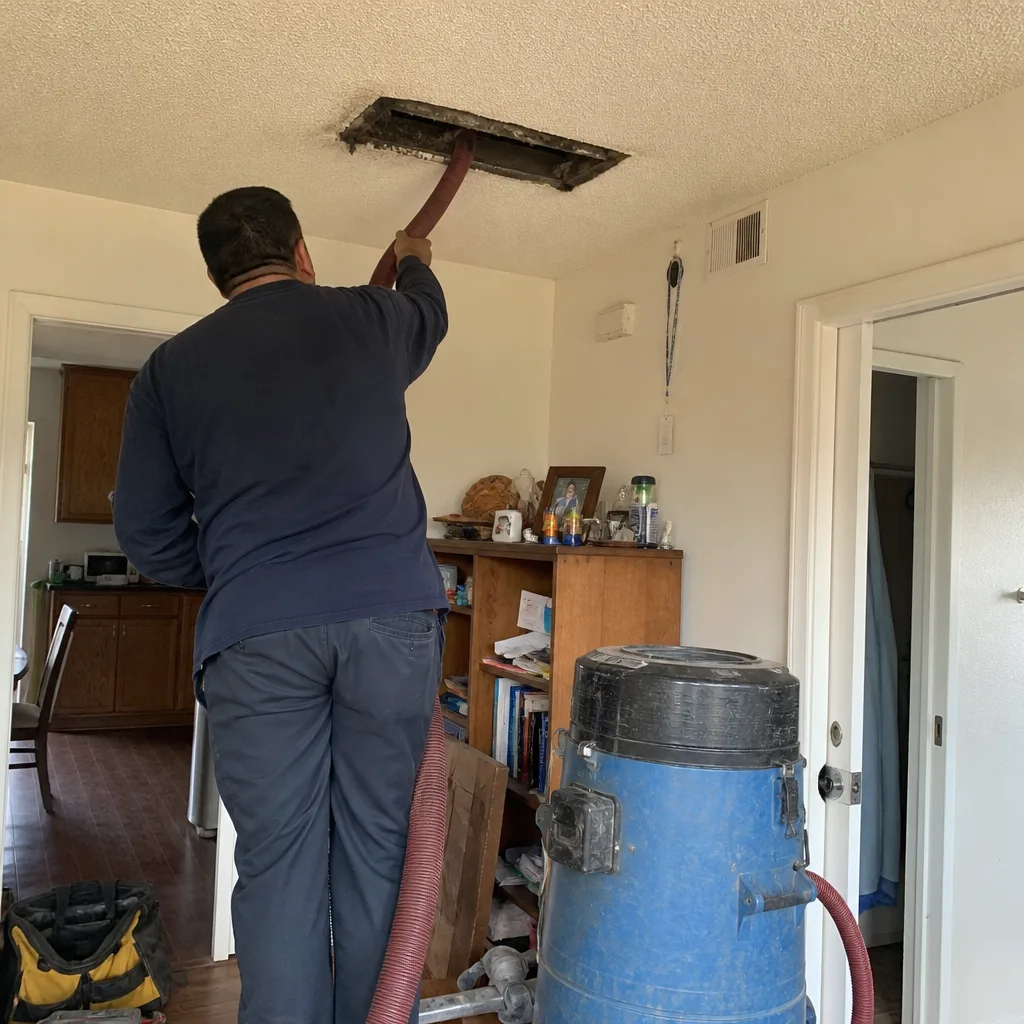
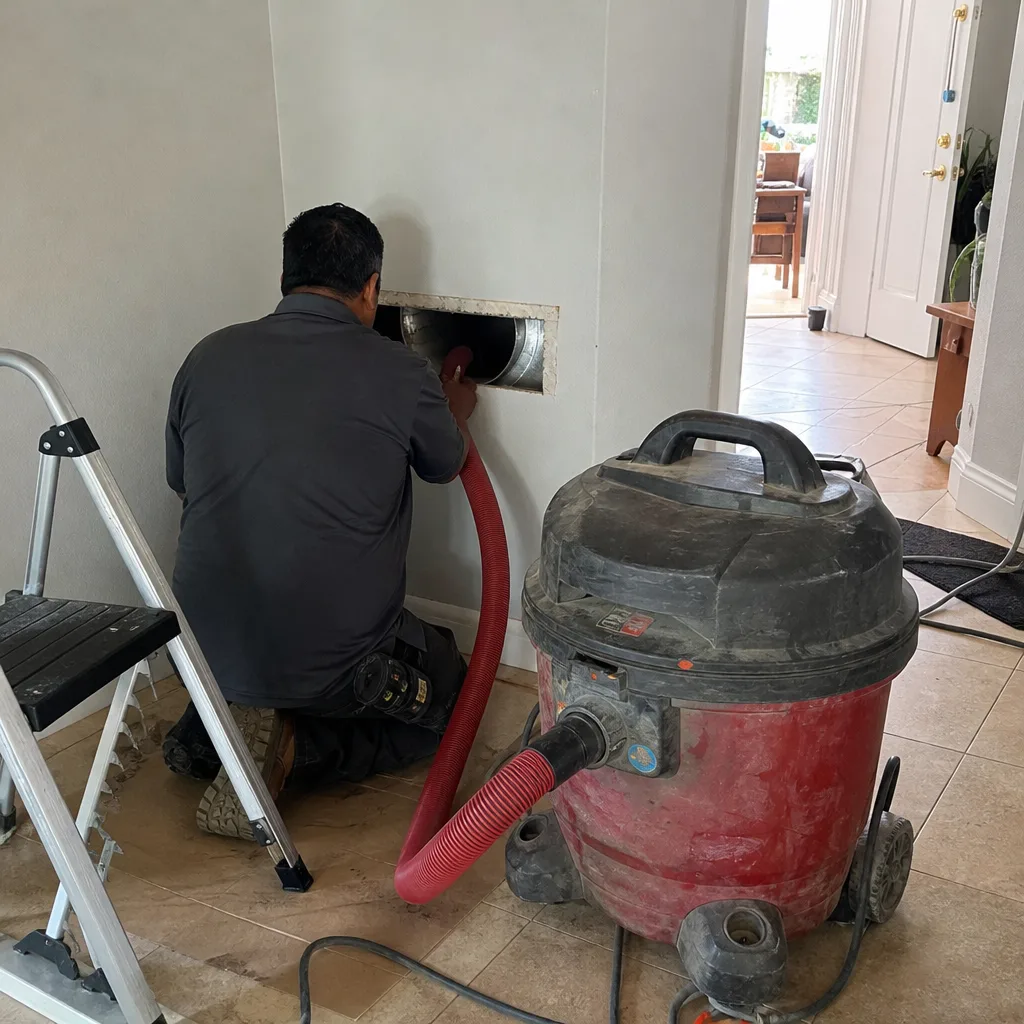
Whole-system duct and dryer vent check with before-and-after photos - you see exactly what came out of your vents
That "$99 whole-house special" is a bait ad - the real number appears once they are in your hallway, or the "clean" is a shop-vac at the register. We photograph the inside of your ducts before and after instead.
How to Hire an Air Duct Cleaning Contractor in Inglewood: A Step-by-Step Guide
California’s Contractors State License Board doesn’t issue a license specifically for duct cleaning. That single fact explains why the Inglewood market is flooded with generalists, handymen, and carpet cleaners who added “ducts” to their truck magnet last Tuesday. Virtually anyone can buy a shop vac and start quoting jobs. This guide – and our Seasonal Air Duct Cleaning Care for Inglewood: Year-Round Homeowner’s Guide – walk you through the exact credentials that matter, the questions that expose amateurs, and the on-site checks that verify the work was real. If you’re in Inglewood and tired of guessing, you’re in the right place.
Styles & brands we work with
- Whole-home duct cleaning
- Dryer vent cleaning
- Camera inspection
- Sanitizing & deodorizing
Quick Answer
To hire a legitimate air duct cleaning contractor in Inglewood, verify their CSLB license classification (usually C-20 Warm-Air Heating, Ventilating and Air-Conditioning) at cslb.ca.gov, confirm they use negative-air or rotary-brush equipment rather than consumer shop vacs, demand a pre-job inspection before any quote is finalized, and insist on a flat-rate price per system agreed before work starts. Skip anyone who quotes over the phone sight unseen or pushes add-ons before measuring your ductwork.
Table of Contents
- Why Inglewood’s Duct Cleaning Market Is Different
- Step 1: Verify the CSLB License (And Why Classification Matters)
- Step 2: The Five Questions That Expose Generalists
- Step 3: What a Legitimate Pre-Job Inspection Includes
- Step 4: Reading the Quote Line-by-Line
- Step 5: Post-Job Verification Checklist
- Common Mistakes to Avoid
- When to Call a Professional
- Frequently Asked Questions
- The Bottom Line
Why Inglewood’s Duct Cleaning Market Is Different
Inglewood sits in a basin that traps particulate matter. Between the 405 and the 105, homes accumulate a specific mix of brake dust from freeway traffic, fine construction debris from the ongoing development around SoFi Stadium and the new transit corridor, and the standard indoor dust that every SoCal home produces. But here’s what most homeowners don’t realize: the soil around Inglewood is fine and dry, and it works its way into return ducts through every door and window opening. This isn’t just cosmetic dust. It’s abrasive, and over years it degrades flex duct connections while coating evaporator coils and blower motors.
The market itself has a structural problem. Because duct cleaning isn’t a licensed trade in California, companies from adjacent industries flood the space. HVAC installers clean ducts as a sideline while hunting for a furnace replacement. Carpet cleaners advertise “$49 duct specials” designed to get a technician in the door for a much larger invoice. Property managers in the Inglewood rental market often go with the lowest bidder because tenant turnover hides the quality variance. For homeowners in neighborhoods like Morningside Park, Century Heights, or up near the Forum, the result is the same: wildly inconsistent work quality and a deep skepticism about the entire trade. That skepticism is healthy. The right questions turn it into a filter.
Step 1: Verify the CSLB License (And Why Classification Matters)
Start here: go to cslb.ca.gov, click “Check a License,” and enter the contractor’s name or number. Two minutes. That’s the entire verification process. But knowing which classification to look for changes everything.
In California, duct cleaning falls under classifications that cover HVAC work. The most relevant is:
- C-20: Warm-Air Heating, Ventilating and Air-Conditioning Contractor. This classification authorizes the contractor to fabricate, install, and service warm-air heating and ventilation systems, including the cleaning of those systems. If a company holds a C-20, they’re legally permitted to work on your ducts.
- C-21: Building Moving/Demolition. Occasionally misquoted by clueless contractors. Irrelevant to ducts. If this is their only classification, walk away.
- No classification at all, but “licensed and insured” language. This is a red flag. In California, it’s illegal for a contractor to perform work over $500 without a license. Duct cleaning routinely exceeds that. The language is theater.
Here’s the important nuance: a C-20 doesn’t prove someone is a duct specialist. It proves they can legally work on ventilation systems. A C-20 HVAC company that installs furnaces and cleans ducts “on the side” is legally allowed to do the work. But their equipment, training, and incentives are oriented toward replacement, not restoration. This is why the equipment questions in Step 2 matter so much. The license filter removes the illegal operators. The equipment filter removes the misfocused ones.
We recommend checking two additional things while on the CSLB site: the license status (Active is required) and the bond information (contractors must carry a $25,000 contractor bond). If the bond is expired or the license is suspended, the contractor cannot legally work in Inglewood. This takes two extra clicks and eliminates an entire category of risky hires.
Step 2: The Five Questions That Expose Generalists
After the license check, the next step is the quote call. These five questions, asked in order, will identify whether you’re dealing with a dedicated duct operation or a generalist before anyone steps foot in your home.
- “What kind of equipment do you use?” A specialist will answer immediately with specific names: Rotobrush, Nikro, Abatement Technologies. A generalist will say “powerful vacuum” or “industrial equipment.” Read our full Duct Cleaning Inglewood home overview to understand why specific equipment names signal commitment. If the answer is vague, hang up.
- “Do you handle dryer vent cleaning and duct repair in-house, or do you subcontract?” A dedicated team covers the full duct ecosystem. If they say “we can refer you to someone” for dryer vents or repairs, they’re not full-system. We cover dryer vent cleaning in Inglewood and air duct repair in Inglewood with the same crew that cleans. One team, one visit, one standard.
- “What does your pre-job inspection include?” A legitimate company describes a systematic walkthrough: removing specific register covers, checking the return drop, inspecting the plenum, testing static pressure in some cases. A bait-and-switch operator says “we just need the square footage” or “we’ll assess when we arrive.” More on inspections in Step 3.
- “How is your pricing structured?” The correct answer is some version of “flat rate per system, agreed before work starts.” The wrong answer is “per vent” or “depends on what we find.” Per-vent pricing is the classic upsell structure. A flat rate lines up with our approach: one price for the entire duct system, quoted after inspection, no surprises when the invoice arrives.
- “Are you a duct company or an HVAC company?” This is the disarm question. Watch how they answer. An HVAC company will tell you they’re “full-service” and mention furnace installations or AC repairs. That’s a company that cleans ducts as a doorway to replacement. Your ducts are better served by a company where ducts are the only trade. Every job, every technician, every piece of equipment dedicated to duct systems.
Notice what these questions do. They don’t ask about price first. They ask about equipment, scope, process, and focus. Those answers tell you what the price means. A $99 duct special from a generalist with a shop vac is overpriced. A $350 flat-rate cleaning from a team with a Nikro HEPA rig and a Rotobrush rotary brush system is a fair value – see our Air Duct Cleaning Cost Breakdown: The Inglewood Homeowner’s Reference for 2026 for full pricing context. The price only makes sense in context of the capability.
Step 3: What a Legitimate Pre-Job Inspection Includes
No competent duct cleaner should quote you blind. A legitimate pre-job inspection is systematic, visible, and thorough. Here’s what it includes.
- Register removal and visual inspection. The technician pops off at least two or three supply registers in different parts of the home and looks inside with a bright light. They’re checking for visible debris, mold staining, disconnected sections, and flex duct that’s crushed or sagging. If they hold a flashlight to a register without removing it, that’s not an inspection.
- Return drop and plenum check. The return side sees the most concentrated debris. The technician should open the return grille, inspect the filter housing, and check the return drop where it connects to the main duct lines. Dust accumulation here indicates what’s deeper in the system.
- Dryer vent assessment. If the home has a dryer, the exhaust run should be evaluated. Long runs, especially in older Inglewood homes where the laundry is located centrally rather than on an exterior wall, accumulate lint that air duct cleaning doesn’t address. Our technician checks this as part of every inspection because ductwork and dryer vents are interconnected systems.
- Photographs. This is what separates specialists from opportunists. A legitimate technician documents what they see, shows you the images on the spot, and uses them to explain what needs cleaning versus repair versus leaving alone. If a contractor won’t show you what they’re seeing, ask why.
The red flags are easy to spot. A contractor who quotes a per-vent price without removing a register hasn’t inspected anything. A contractor who “doesn’t need to see the ducts” because they “do this all day” is preparing to upsell you on arrival. A contractor who won’t show before-and-after photos during the inspection lacks either equipment or incentive to demonstrate their work. In Inglewood’s competitive market, any legitimate operator will document the condition of your system and explain their findings.
Step 4: Reading the Quote Line-by-Line
A legitimate duct cleaning quote in Inglewood is structured simply. Here’s how to parse it.
What a flat rate should include:
- Full supply and return duct system cleaning (all main lines, all branch runs, all registers)
- Supply and return plenum cleaning
- Blower and evaporator coil cleaning (if accessible)
- Filter inspection and replacement recommendation
- Post-job system reassembly and register reinstallation
- Waste removal and site cleanup
What may be legitimate add-ons:
- Dryer vent cleaning (a separate system with separate equipment requirements)
- Duct repair work (sealing disconnected sections, replacing crushed flex, fixing leaks)
- Mold or contamination treatments (should be quoted separately, after a specific finding)
What is a predatory upsell:
- “Sanitizing” with a fogger or spray that costs hundreds and has no measurable air quality benefit
- A “microbial treatment” discovered after a 5-minute pre-job walkthrough that wasn’t in the inspection report
- Pressure to replace the whole duct system during a cleaning visit, with a “today only” discount
- Per-vent extras that suddenly “need” to be added once the van is in your driveway
The structural issue in the Inglewood market is the coupon funnel. A company advertises a $49 whole-house cleaning, then the technician arrives and “discovers” that every register needs an add-on, the coils are filthy, the sanitizer is essential, and suddenly the invoice is $1,200. The flat-rate-per-system model short-circuits this entirely. Agree on one price for the entire duct system before any work begins. If the contractor balks at a flat rate, they’re planning to escalate. Our flat rate includes the complete system cleaning, and we never introduce new line items mid-job.
Step 5: Post-Job Verification Checklist
This is the step most guides skip, and it’s the one that proves whether the work actually happened. Negative pressure cleaning uses a powerful vacuum to pull debris through the ductwork while agitation tools dislodge what’s caked on. The vacuum side matters. A shop vac connected to one register doesn’t create system-wide negative pressure. A Nikro HEPA unit does. Here’s how to verify.
- Before-and-after photos of the same register. The technician should photograph the inside of each access point before cleaning and again after. Ask to see the after images before you pay. If they can’t show you the difference, ask why.
- Visual debris removal. After the job, look inside a few registers that showed heavy buildup during the inspection. You should see bare metal or duct board, not a dust film. If the same debris remains in the same places, the agitation didn’t happen.
- Airflow check. Turn the system on after the job. Air should flow noticeably better from every register, especially ones that were weak before. If airflow is unchanged, something wasn’t cleaned or the system has a different problem (disconnected run, crushed flex, blocked filter).
- The filter test. If your filter was dirty before the job, it should still be clean after. If it’s suddenly filthy post-cleaning, you were charged for work that didn’t happen, and the dust simply redistributed.
- Odor check. A musty smell that persisted before should noticeably diminish after a proper cleaning. If the smell returns within days, the contamination source wasn’t addressed or the cleaning was superficial.
None of these tests require technical expertise. They require five minutes and a willingness to look. Contractors who are proud of their work will invite you to inspect. Contractors who are not will rush you to sign the invoice.
Common Mistakes to Avoid
- Hiring based on price alone. In the Inglewood market, the spread between a legitimate cleaning and a bait-and-switch coupon is often a few hundred dollars. The coupon will cost more by the time the van leaves. Always compare equipment, process, and flat-rate structure before comparing price.
- Skipping the license check. The CSLB lookup takes two minutes. Every year, Inglewood homeowners hand money to unlicensed operators and have zero recourse when the work is shoddy or the “technician” never returns.
- Accepting a quote without an inspection. Every legitimate job starts with a visual assessment. If someone quotes you sight unseen, they’re not quoting your ductwork. They’re quoting a script.
- Confusing a clean filter with clean ducts. A filter change is useful, but it does nothing for the dust packed into your return lines or the debris coating your coils. We work with Honeywell and Aprilaire filtration systems and can tell you the same thing a filter manufacturer will: the filter protects the equipment, not the ducts.
- Hiring a generalist for specialty work. An HVAC installer who cleans ducts as a courtesy will clean them to a courtesy standard. A dedicated duct operation cleans to a restoration standard. The difference is visible in the before-and-after photos.
- Paying for work you can’t verify. If the contractor won’t show you before-and-after documentation, you’re buying trust without evidence. Demand to see what you paid for.
- Ignoring the dryer vent. The dryer vent is part of the duct ecosystem. It’s the leading cause of dryer fires in American homes, and a routine air duct cleaning doesn’t touch it. Ask whether the contractor handles both; if they don’t, you’re hiring a second company for a connected system.
When to Call a Professional
Some situations shouldn’t wait. If you’ve lived in your Inglewood home for five or more years and never had the ducts cleaned, schedule an inspection. If you renovated recently, especially in any of the older Inglewood housing stock where plaster dust and construction debris find their way into returns, get the system checked. If your energy bills have climbed without an obvious cause, restricted airflow from dust-loaded coils is a frequent culprit. If allergies are worse at home than elsewhere, your ducts may be circulating what you’re reacting to. In any of these cases, the air duct cleaning process in Inglewood starts with an inspection, not a quote. Duct Cleaning Inglewood offers free estimates throughout Inglewood. Call (855) 341-8387 and we’ll assess your system, show you what we find, and quote a flat rate for the full cleaning before any work begins.
Frequently Asked Questions
For a typical single-family home in Inglewood, expect to pay between $300 and $600 for a complete supply and return system cleaning from a legitimate operator using professional equipment. Homes with multiple systems, extensive flex duct runs, or significant contamination may run higher. The key is that the price should be flat-rate for the entire system, quoted after an inspection, and agreed before work starts. Any per-vent pricing structure is designed to escalate. For an exact quote on your system, call (855) 341-8387 and we’ll inspect first.
Cheap quotes usually come from operators using consumer-grade equipment (shop vacs or small portable vacuums with no negative-pressure capability), employing per-vent pricing that escalates on arrival, or operating without a CSLB license. The low number on the coupon is a customer acquisition cost, not an honest price. A company with a Nikro HEPA rig and Rotobrush agitation equipment has real operating costs, and those costs buy a real cleaning. If a quote is dramatically below market, the difference is made up somewhere (equipment, licensing, or surprise add-ons).
Demand before-and-after photos of the same register positions. A legitimate contractor documents the work and invites you to inspect afterward. You should also test airflow from each register before and after (it should improve), check that your filter didn’t suddenly load with dust (indicating debris was stirred but not removed), and visually confirm that visible dust coating inside return registers is gone. If any of these checks fail, the negative-pressure cleaning likely wasn’t performed properly.
In Inglewood’s dry, particulate-heavy air environment, most homes benefit from cleaning every three to five years. Homes near the freeways, with pets, after renovations, or with residents who suffer allergies may need it sooner. It’s not an annual service, and any contractor telling you it is should raise suspicion. The right approach is an inspection that assesses actual accumulation, not a calendar-based upsell. If your previous cleaning was more than five years ago and you haven’t inspected since, schedule a look.
No. A C-20 license means the contractor is legally permitted to work on ventilation systems and has met minimum requirements for experience, examination, bonding, and insurance. It doesn’t mean they specialize in duct cleaning, own professional-grade agitation and vacuum equipment, or document their work thoroughly. It’s the first filter, not the last. The equipment questions and inspection requirements in this guide are the quality filters.
The service is legitimate when performed correctly by a dedicated operator with proper equipment. The confusion comes from the number of low-quality or dishonest operators in the Inglewood market. A proper negative-pressure cleaning with rotary brush agitation produces visible, verifiable results: debris removed, airflow improved, filter loads reduced. A shop-vac crew produces an invoice. The EPA doesn’t recommend duct cleaning on a routine schedule for everyone, but it does recommend cleaning when there’s visible mold growth, vermin infestation, or significant debris accumulation. An inspection tells you which category you’re in.
The Bottom Line
Hiring the right Air Duct Cleaning services contractor in Inglewood comes down to four filters: a valid CSLB license with the correct classification, professional-grade equipment that creates negative pressure and agitates duct surfaces, a pre-job inspection that documents what’s actually in your system, and a flat-rate quote agreed before the van parks in your driveway. Generalists fail one or more of these filters quickly. Specialists pass all four without hesitation. The questions in this guide take fifteen minutes to ask and they save you from the two most expensive outcomes: paying for a cleaning that didn’t happen, or paying for an upsell that shouldn’t have existed.
Written by the team at Duct Cleaning Inglewood, serving Inglewood since 2015. Explore more guides & resources.
See the difference
 Before
 After
 Before
 After
 Before
 After