
Last updated November 3, 2026
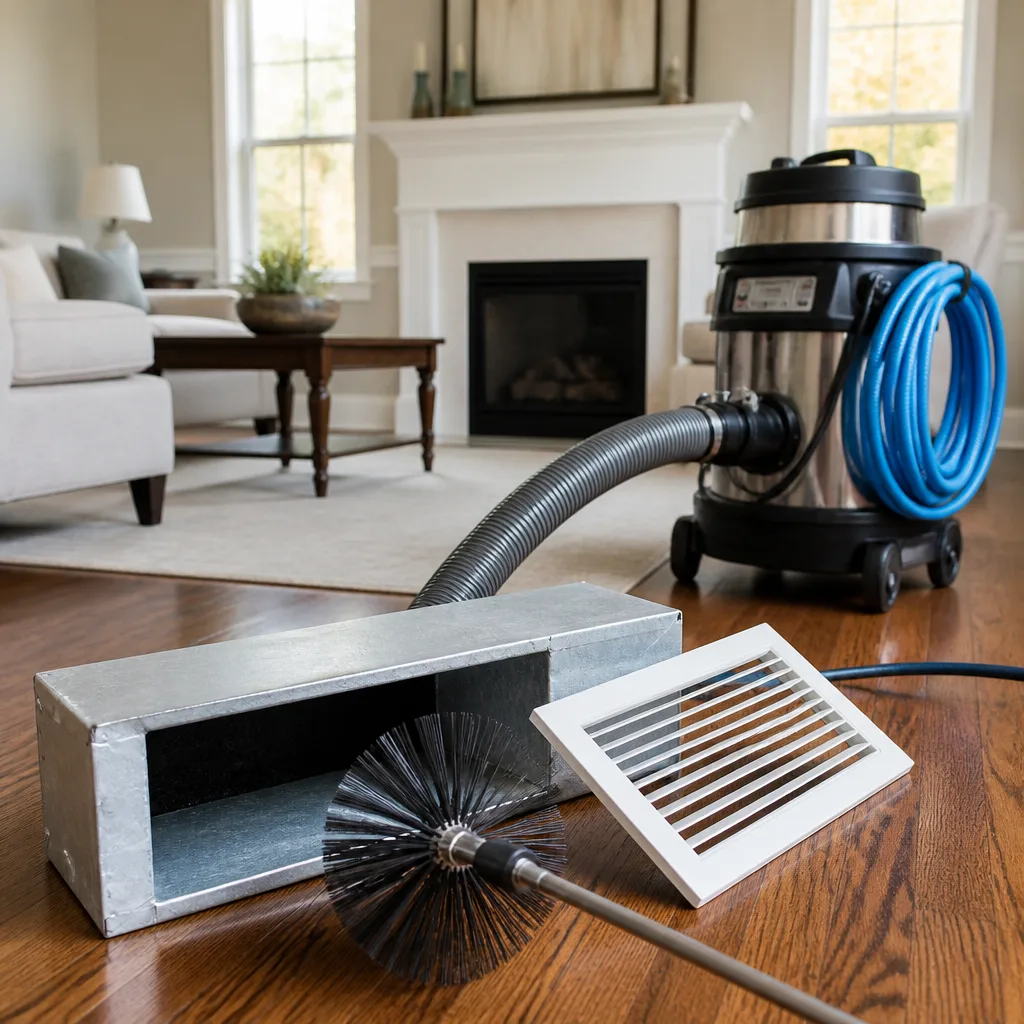 Whole-home duct cleaning
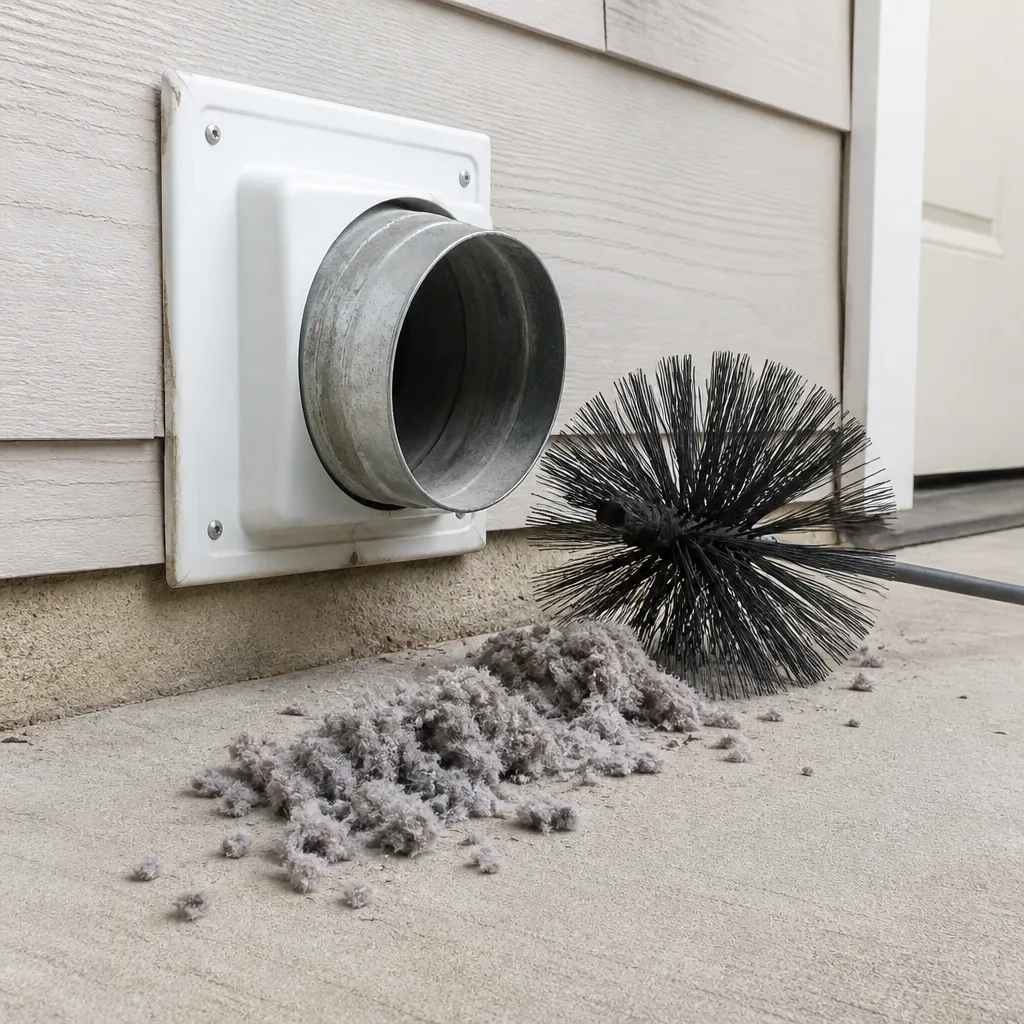 Dryer vent cleaning
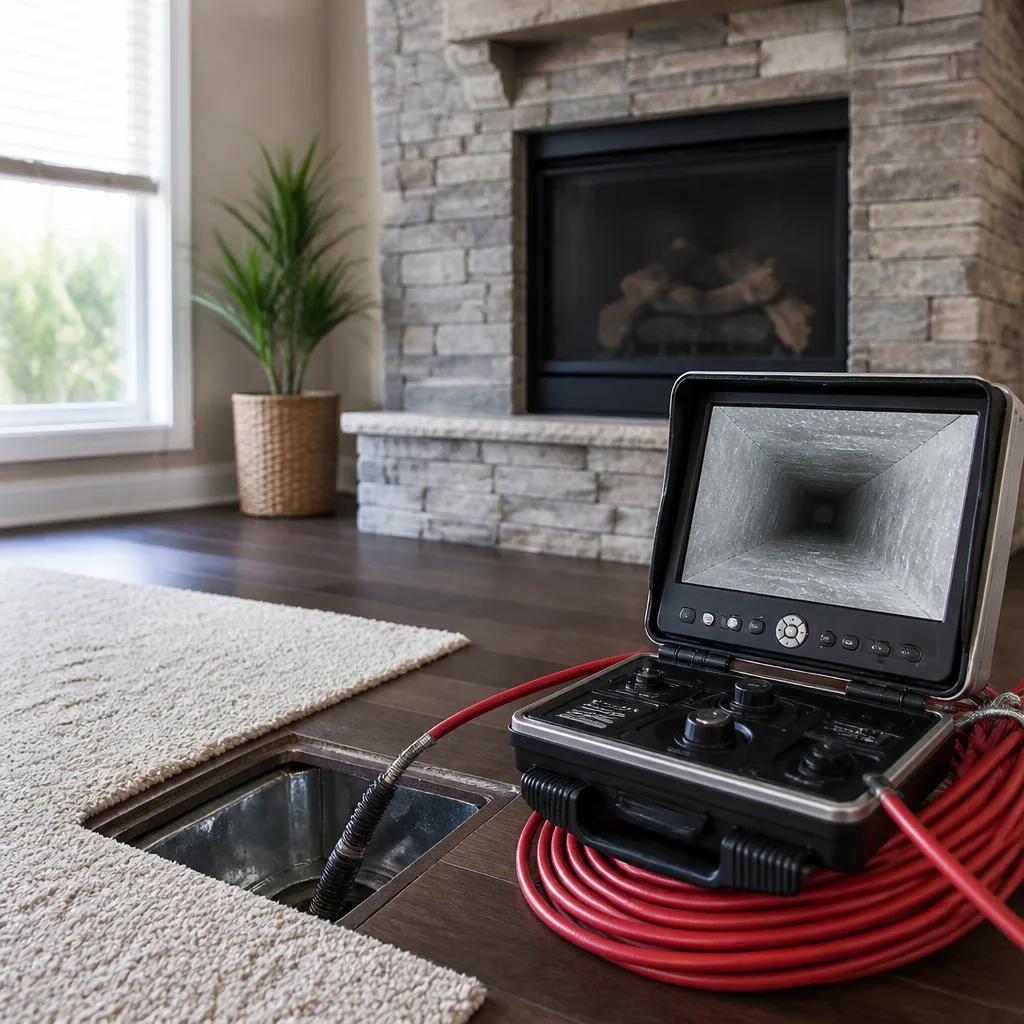 Camera inspection
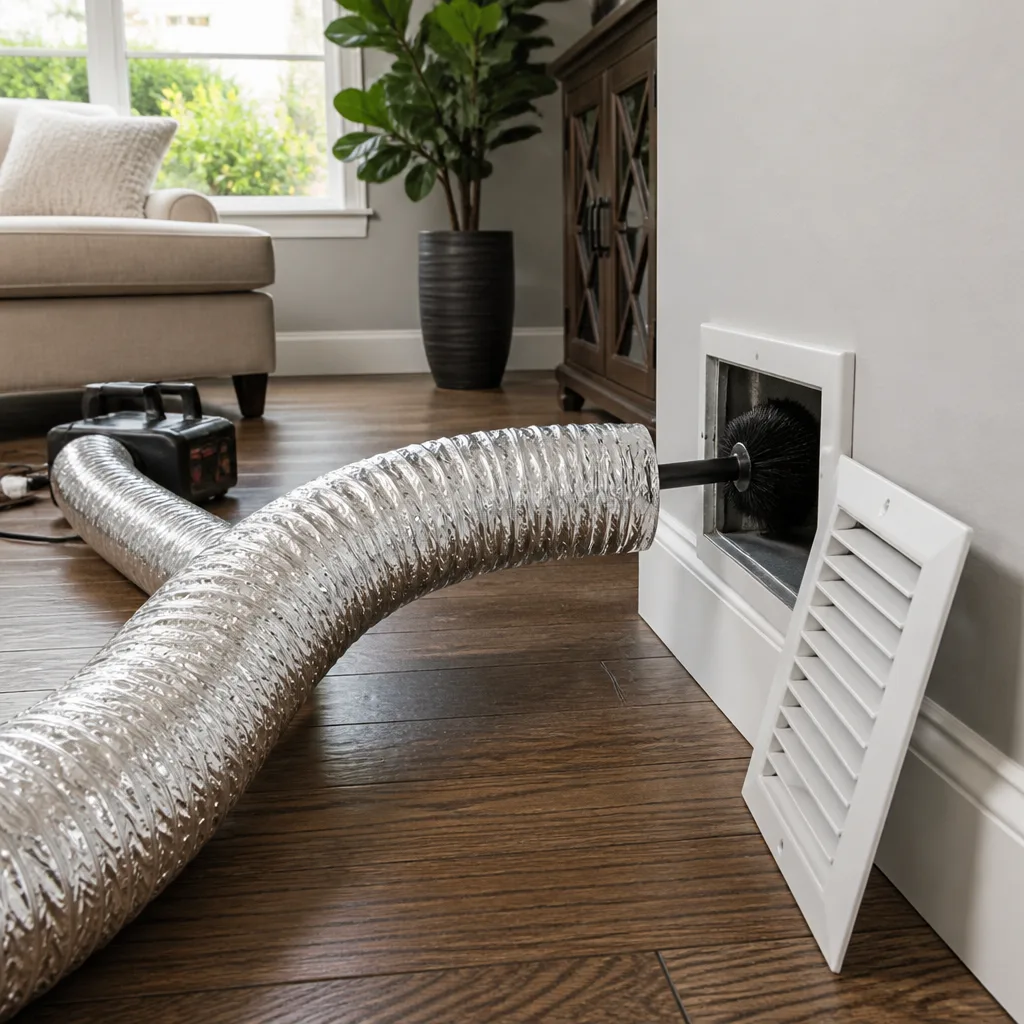 Sanitizing & deodorizing
Whole-system duct and dryer vent check with before-and-after photos - you see exactly what came out of your vents
That "$99 whole-house special" is a bait ad - the real number appears once they are in your hallway, or the "clean" is a shop-vac at the register. We photograph the inside of your ducts before and after instead.
The Complete Air Duct Cleaning Guide for Inglewood Homeowners
Most Inglewood homes built before 1980 have duct systems that were never designed to handle modern HVAC airflow rates. The original contractors sized those ducts for furnaces that moved maybe 800 cubic feet per minute. Today’s systems push 1,200 to 1,400 CFM through the same channels. That pressure differential pulls more particulate through every gap, joint, and return-air pathway, which means the “standard cleaning checklist” most national guides publish was written for a house that isn’t yours. This guide covers what actually accumulates in Inglewood ducts, how it gets there, what professional cleaning can and cannot do, and how to verify the work was done properly. For more guides & resources, explore our blog.
Quick Answer
Our Air Duct Cleaning services in Inglewood mean removing accumulated dust, debris, microbial growth, and construction particulate from your home’s supply and return ductwork using professional negative-pressure extraction equipment. For most Inglewood homes, a full-system cleaning takes 3 to 6 hours and should happen every 3 to 5 years, sooner if you’ve renovated, have pets, or live near the 405 or Century Boulevard corridors where heavier particulate settles faster. The process should include cleaning the supply ducts, return ducts, registers, plenums, blower compartment, and coil if accessible.
Styles & brands we work with
- Whole-home duct cleaning
- Dryer vent cleaning
- Camera inspection
- Sanitizing & deodorizing
Table of Contents
- Why Inglewood Ducts Are Different From the Rest of LA County
- How the Marine Layer and Coastal Humidity Change What Builds Up in Your Ducts
- Older Housing Stock: What Pre-1980 Duct Systems Require
- Surface Blowout vs. Negative-Pressure Extraction: What Actually Works
- What You Can Check Yourself Before Calling Anyone
- How Professional Duct Cleaning Actually Works, Step by Step
- How to Read a Post-Cleaning Inspection Report
- Common Mistakes to Avoid
- When to Call a Professional
- Frequently Asked Questions
- The Bottom Line
Why Inglewood Ducts Are Different From the Rest of LA County
Inglewood sits in a specific microclimate band that most generic duct-cleaning content ignores completely. We’re close enough to the coast that the marine layer rolls in most evenings between May and September, but far enough inland that daytime temperatures climb into the 80s and 90s. That daily temperature swing matters for your ductwork. As your attic heats up during the day, the air inside your ducts expands and pushes outward through every seam and joint. When the marine layer arrives and temperatures drop, that same air contracts and pulls outside air backward through those same gaps. Your duct system breathes twice a day, every day, all summer.
What that means practically: Inglewood ducts accumulate a different profile of contamination than homes in, say, Pasadena or Riverside. We see more fine particulate from brake dust and tire wear (proximity to the 405 and 105 freeways), more atmospheric moisture cycling through the system, and more biological activity in the duct lining because of that moisture. In our experience working on homes across the city, from the neighborhoods near Inglewood Park Cemetery down to the streets around Morningside Park, the pattern is consistent: coastal-adjacent homes show faster microbial buildup than inland homes with the same HVAC runtime.
This isn’t a scare tactic. It’s a mechanical reality of where Inglewood sits on the map. Any duct cleaning plan for this city has to account for it.
How the Marine Layer and Coastal Humidity Change What Builds Up in Your Ducts
The marine layer does something specific to duct systems that dry inland air does not. When the fog rolls in, relative humidity inside your attic can climb to 70 or 80 percent, even while your living room stays at 50. That humid air gets pulled into your return ducts through attic registers, attic access hatches, and small gaps in the duct connections themselves. Inside the duct, that moisture meets the accumulated dust film that coats the interior surface.
Dust is mostly organic. Skin cells, pet dander, pollen fragments, fabric fibers. When you add consistent moisture, that organic material becomes a growth medium. We’ve pulled sections of return duct from Inglewood homes where the interior looked like a petri dish, a dark speckled film that tests positive for mold spores, while the homeowner had no idea because the supply side looked fine. The return side is where contamination enters; the supply side is where it spreads.
Here’s what accumulates differently in Inglewood ducts compared to inland LA County:
- Biological film: The marine layer’s nightly humidity cycle creates condensation on the duct interior, especially in uninsulated or poorly insulated metal ducts. That condensation activates dormant spores in accumulated dust and converts dry particulate into a damp biofilm that’s much harder to remove.
- Fine particulate from freeway corridors: Homes near the 405, the 105, or along La Brea Avenue and Century Boulevard collect a denser load of ultra-fine particulate. This material is smaller than 2.5 microns, passes through most residential filters, and settles inside ductwork because airflow slows in those channels.
- Soot from older furnaces: Pre-1980 Inglewood homes often still run original or early-replacement furnaces. Incomplete combustion produces fine soot that enters the duct stream and coats everything downstream. If you’ve ever pulled a register and seen black streaking on the white-painted boot, that’s soot, not mold.
- Construction debris from flipper renovations: Inglewood’s real estate market has seen a lot of cosmetic flips in the last decade. Drywall dust, paint overspray, and flooring debris get sucked into the return ducts during renovation and stay there because new owners or tenants never see it.
This is why the “blow a brush through and call it done” approach fails in Inglewood. The contamination profile here requires moisture-aware cleaning, not just particulate removal.
Older Housing Stock: What Pre-1980 Duct Systems Require
A significant portion of Inglewood’s single-family housing stock dates to the 1940s through 1960s. Those homes were built with materials and methods that directly affect how duct cleaning should be handled. The two big issues: flex duct retrofits and asbestos-wrapped metal ducts.
Flex Duct Retrofits
Many older Inglewood homes originally had rigid metal ductwork. Over decades of HVAC replacements, contractors often patched or extended those systems with flexible duct, the silver accordion-style tubing you see in attics. Flex duct is fine in principle, but it degrades. The inner plastic liner breaks down after 15 to 20 years of thermal cycling, which is accelerated in Inglewood’s hot attic environments. When that liner fails, fiberglass insulation particles from the duct wall enter the airstream.
Here’s what matters for cleaning: aggressive rotary brushes can tear through aged flex duct liners. A professional cleaning company needs to assess the condition of flex duct before choosing brush type and rotation speed. At Duct Cleaning Inglewood home, we inspect duct material and condition before any brush touches the system. That’s not a sales pitch; it’s the difference between cleaning a duct and destroying one.
Asbestos-Wrapped Metal Ducts
Some Inglewood homes built before 1978 have metal ducts wrapped in asbestos-containing insulation, particularly on furnace trunks and main supply plenums. The asbestos is generally safe when the wrap is intact. The hazard arises when cleaning companies disturb that wrap, either with brushes or by moving duct sections during so-called “deep cleaning.” Dislodged asbestos fibers are a documented health hazard, and cleanup falls under strict California regulations.
Here’s the protocol any Inglewood homeowner should insist on: if your home is pre-1978 and you have metal ducts with white or gray fibrous wrap in the attic, the cleaning company must identify it and either avoid disturbing it or recommend testing before any work proceeds. A professional operation will flag it during the visual inspection. A low-bid crew with a shop-vac rig won’t even know to look.
Older Register Designs
Pre-1980 Inglewood homes often have floor registers instead of wall or ceiling registers. Floor registers collect debris differently. Dust, pet hair, food crumbs, and fine settle onto the register face and fall through the grille into the boot below. Over decades, that boot fills with a compacted layer of debris that’s physically different from the light dust film in newer ceiling-register systems. Removing it requires removal of the register, removal of the boot debris by hand or vacuum, and cleaning the visual interior of the first few feet of duct. If a cleaning company only runs a brush through the main trunk and never addresses the boots, the homeowner sees little or no air quality improvement.
Surface Blowout vs. Negative-Pressure Extraction: What Actually Works
The mechanical reality of duct cleaning is simple to understand but widely misrepresented in advertising. There are two fundamentally different approaches, and they produce fundamentally different results.
Surface Blowout (What Cheap Companies Do)
A surface blowout uses compressed air or a spinning brush inserted through a register opening while a shop-vac-style collection device sits at another register opening or at the return. The idea is that the agitation loosens dust and the vacuum catches it. In practice, this method only reaches the first few feet of duct near each register. The dust deeper in the system gets loosened but not captured and eventually settles back down. Worse, the positive air pressure can force fine particulate through existing leakage points directly into your living space or attic. If you’ve ever had a “duct cleaning” and noticed more dust in your home afterward, this is why.
The equipment matters here. A consumer-grade blower or a carpet-cleaning truck-mounted vac retrofitted for ducts does not produce enough static pressure to create meaningful airflow through an entire residential duct system. It cleans the visible part and leaves the rest.
Full Negative-Pressure Extraction (What Actually Cleans a Duct System)
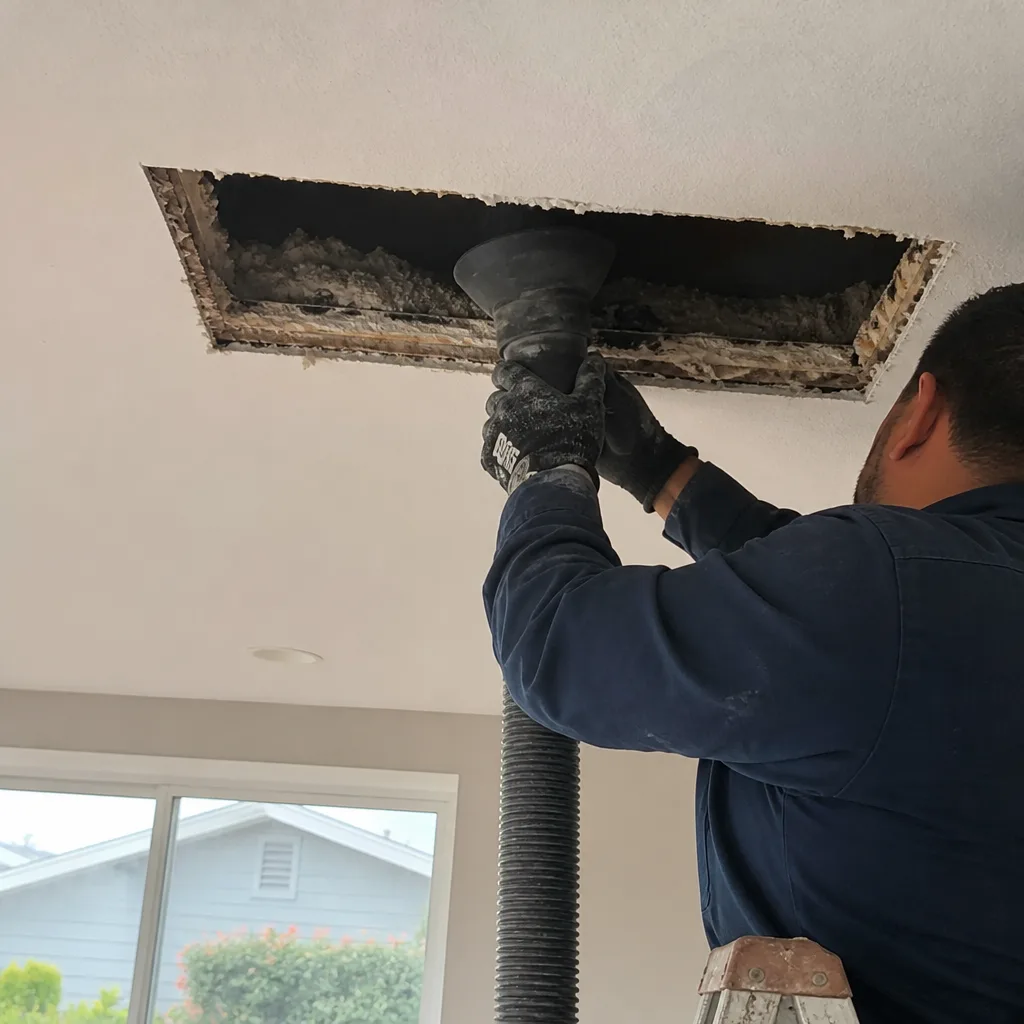
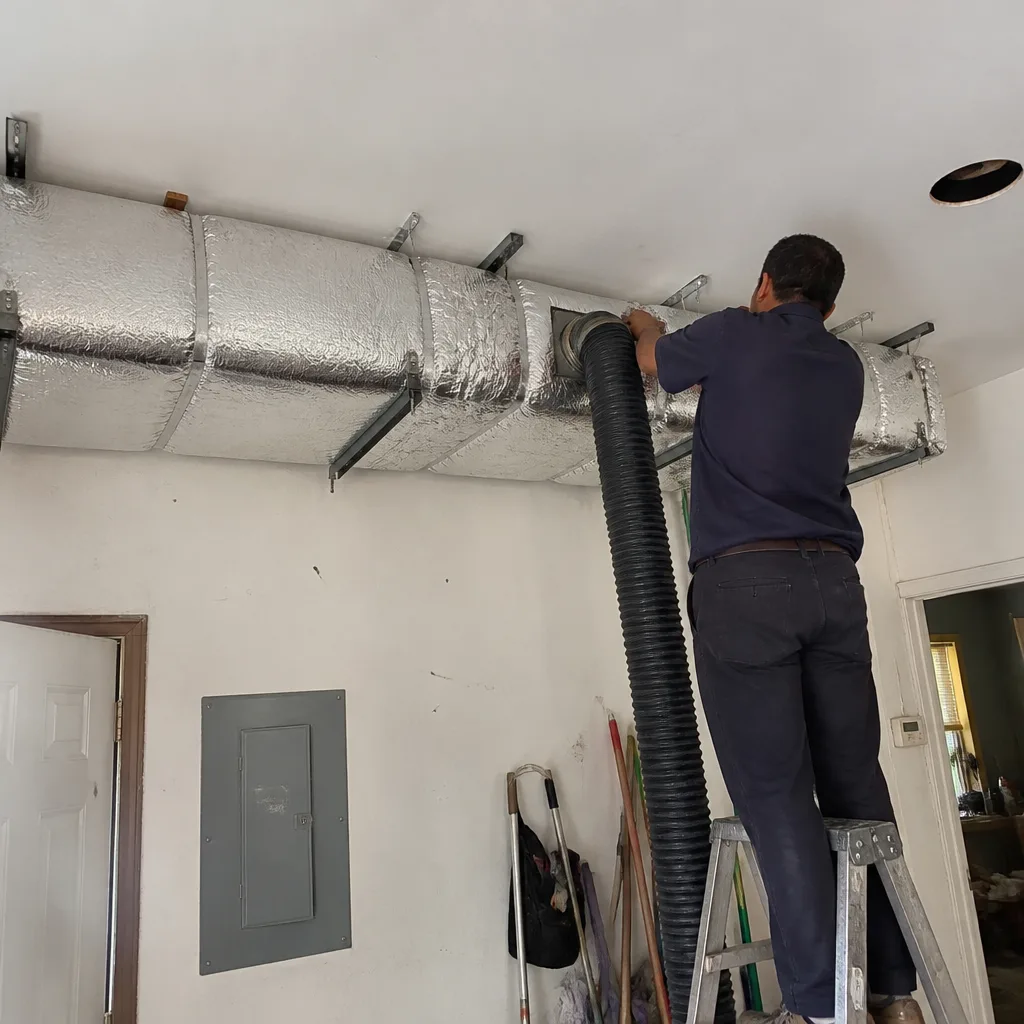
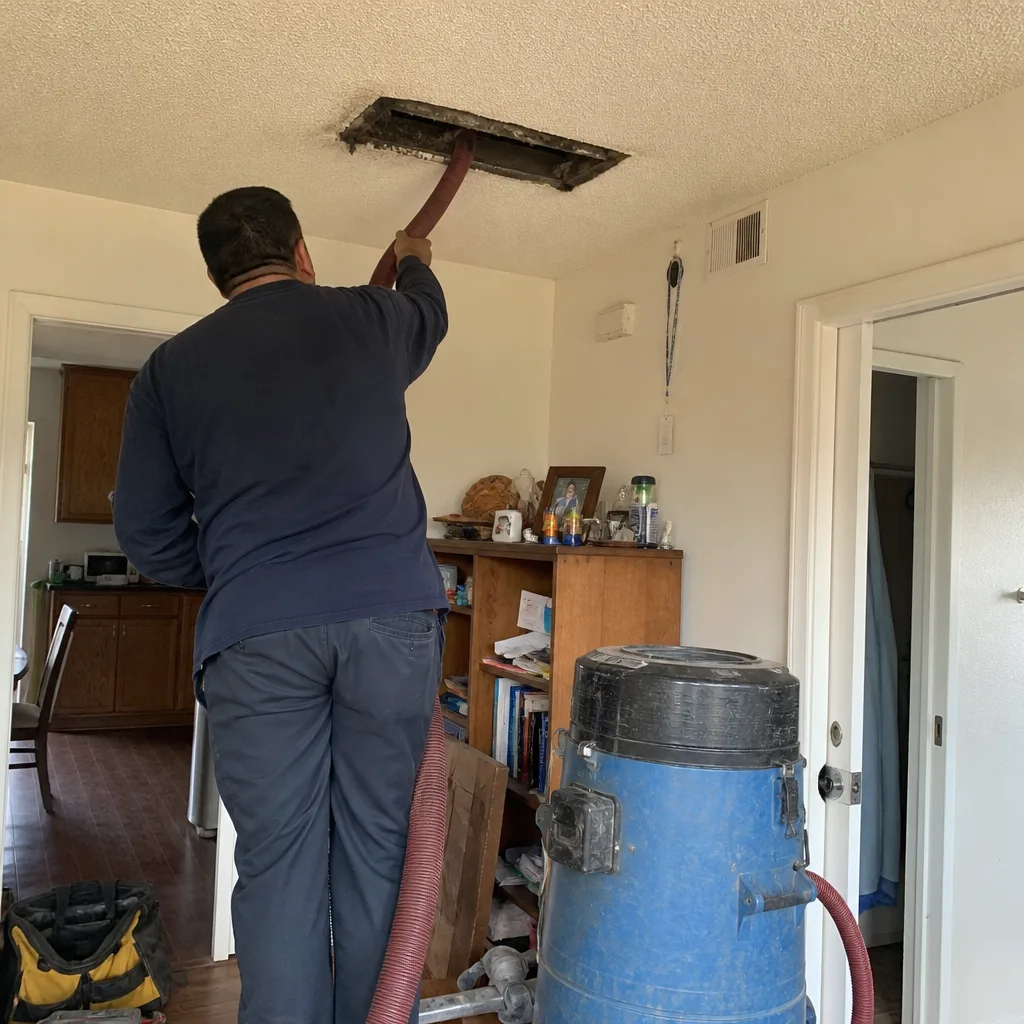
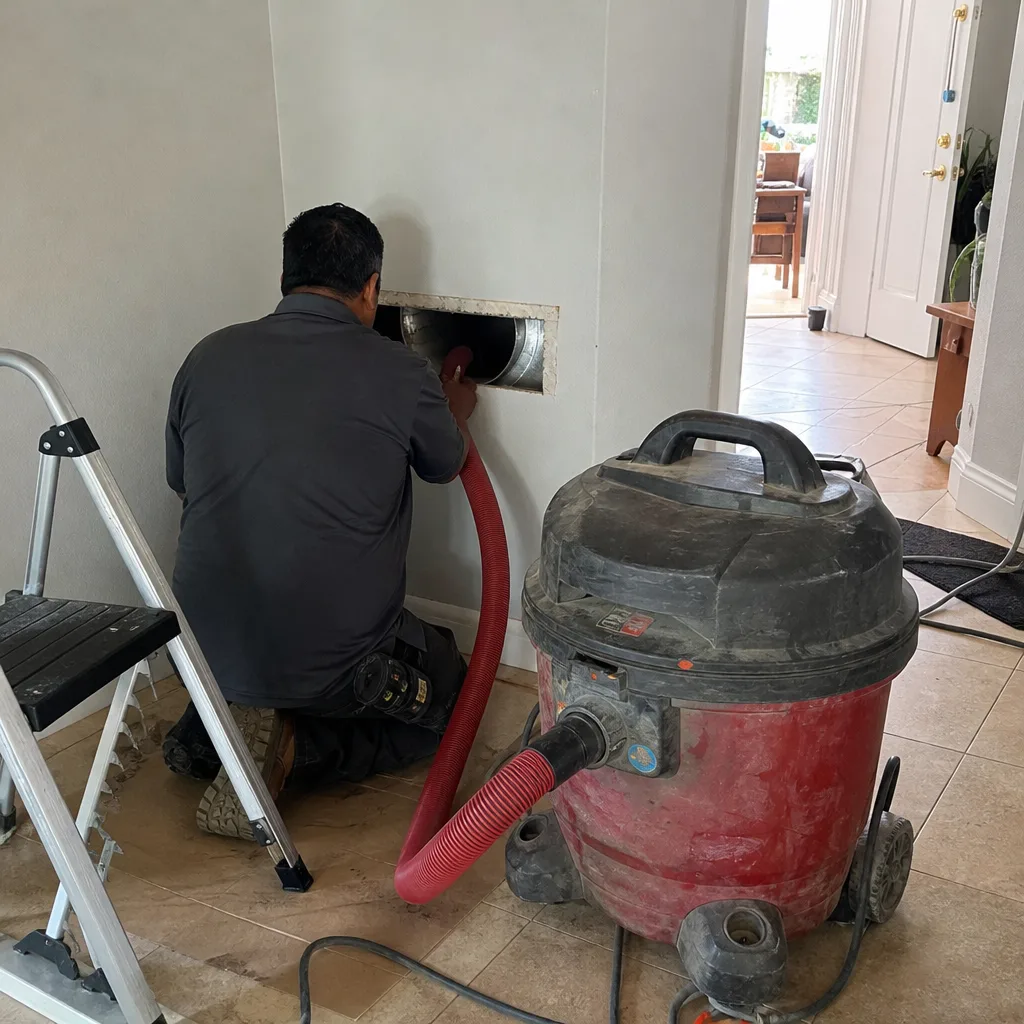
Negative-pressure extraction works differently. A powerful vacuum unit, typically truck-mounted or trailer-mounted, is connected to the duct system at the main trunk line or plenum. The vacuum creates strong negative pressure throughout the entire system, meaning air flows from every register opening toward the vacuum connection. While the system is under negative pressure, agitation tools (rotary brushes, compressed-air whips) work through each register opening to dislodge settled debris. Because the entire system is under suction, the dislodged material is carried toward the vacuum and removed from the home rather than redistributed.
This is the only method that removes material from the full duct length, including the main trunk, branch lines, boots, and plenums. It’s why professional-grade equipment like Rotobrush rotary-brush systems and Nikro HEPA-vacuum rigs exist. These are the same tools used in commercial duct remediation projects, not consumer adaptations. A HEPA-filtered vacuum unit is essential because it captures sub-micron particulate that otherwise would be exhausted outside and potentially re-enter the home through open windows or the HVAC’s outside air intake.
The mechanical distinction you should care about: surface blowout removes what you can see at the register. Negative-pressure extraction removes what’s actually in the system.
What You Can Check Yourself Before Calling Anyone
Before you spend money on duct cleaning in Inglewood, do a visual inspection. This takes 20 minutes and tells you whether the job is urgent, routine, or unnecessary. You’ll need a flashlight and a Phillips-head screwdriver. Here’s the process:
- Turn off the HVAC system at the thermostat. You don’t want airflow pushing dust while you inspect.
- Check your air filter first. Pull it out and hold it up to a light. If you can’t see light through it, it’s been overdue for replacement. A clogged filter forces the blower to pull air through return ducts harder, which draws more particulate into the system. Note: a dirty filter is not proof the ducts are dirty. Replace the filter and see if symptoms improve before assuming you need duct work.
- Remove two or three supply registers. Choose one in a bedroom and one in a hallway or living area. Shine the flashlight down into the boot (the metal box below the register). Look at the interior surfaces. Light dust film is normal. A thick gray or brown coating that obscures the metal surface is accumulated debris.
- Wipe the register boot with a white paper towel. If the towel comes back with a thick, dark residue that’s greasy or clumped, you’re looking at a combination of dust and moisture, which is the Inglewood marine-layer signature we discussed earlier.
- Look at the return grille. If your return is in a hallway ceiling or wall, remove the grille and look at the filter slot area and the first visible section of return duct. Return ducts in Inglewood homes often show the most dramatic buildup because all household air passes through them.
- Check the supply registers in rooms farthest from the furnace. In many Inglewood homes, the master bedroom or a converted garage room is at the end of the longest duct run. Those rooms get the weakest airflow and the most particulate settling.
- Smell the air coming from the registers when you turn the system back on. Turn the system back on, set the fan to “on” rather than “auto,” and go register to register. A musty, stale odor that appears only when the fan runs suggests microbial activity in the duct interior, not in the room itself.
This inspection doesn’t replace professional assessment, but it tells you whether a cleaning is warranted and gives you a baseline to verify the work afterward. We’ve had homeowners show us photos from this exact checklist before calling, and it speeds up the quote process considerably.
How Professional Duct Cleaning Actually Works, Step by Step
Here’s what a proper full-system cleaning should look like when it’s done with professional equipment, not a consumer-grade blower. This is the process we follow at Air Duct Cleaning in Inglewood, and it’s a fair reference for any company you’re considering.
- System walkthrough and inspection (15 to 30 minutes). The technician should walk the system with you, identify the furnace location, return locations, register locations, and access points. They should open the blower compartment and visually inspect the filter, blower wheel, coil (if accessible), and the visible interior of the supply plenum. They should note duct material (metal, flex, or a mix) and any visible damage or disconnections.
- Pre-cleaning photos (10 minutes). Before any tools touch the system, the technician should photograph the interior of the return duct, supply plenum, and at least one representative supply boot. Without pre-work photos, you have no basis to verify post-work results.
- Negative-pressure setup (15 to 30 minutes). The vacuum unit connects to the main trunk line, typically at the supply plenum or a dedicated access cut near the furnace. The system is sealed so that all airflow paths are under suction. This is the step that separates professional extraction from blow-and-go methods.
- Agitation and extraction pass (1 to 3 hours depending on system size). Working register by register, the technician runs the agitation tool (rotary brush or air whip) through each branch line while the system remains under negative pressure. The dislodged material is pulled toward the vacuum and removed from the home. For homes with floor registers, the boots are opened and cleaned individually, since floor boots collect compacted debris that a brush alone won’t dislodge.
- Return-side cleaning (30 to 45 minutes). The return ducts, which are typically the dirtiest part of the system, get a full pass including the return drop, return boot, and the area behind the filter slot. In many Inglewood homes, this is where years of household dust and pet hair have accumulated, often in layers an inch thick.
- Blower compartment and coil check (15 to 30 minutes). The blower wheel is pulled (if accessible) and cleaned. A blower wheel caked with dust reduces airflow significantly, which defeats the purpose of cleaning the ducts. If the evaporator coil is visibly fouled, the technician should flag it for you, even if coil cleaning is a separate service.
- Post-cleaning photos and walkthrough (15 to 20 minutes). The technician should show you the post-cleaning photos side by side with the pre-cleaning shots. You should be able to see the same interior surfaces, now free of visible debris. This is the documentation that proves the work happened.
- System reactivation and airflow check (10 minutes). The system is turned back on, and the technician verifies airflow at several registers. You should feel noticeably stronger airflow at the farthest register if the system was heavily contaminated.
A full cleaning on a typical three-bedroom Inglewood home takes 3 to 6 hours total. Anything dramatically shorter than that, and you should ask what steps were skipped.
How to Read a Post-Cleaning Inspection Report
Most Inglewood homeowners don’t know what documentation to ask for after a duct cleaning, so they accept a verbal “all done” and move on. A professional operation should provide some form of written or photographic verification. Here’s how to evaluate what you’re given.
What the report should include:
- Pre-cleaning photos of the return duct interior, supply plenum, and at least two supply boots.
- Post-cleaning photos of the same locations, same angles.
- A note on duct material condition: any flex duct tears, disconnections, crushed sections, or asbestos-wrapped sections observed.
- A note on the filter condition and a recommendation for replacement schedule.
- Observation notes on any visible microbial growth, water staining, or pest activity (rodent droppings in ducts are more common in Inglewood’s older homes than most people want to know).
- Any access points cut into the ductwork and how they were sealed afterward.
Red flags in a report (or in the absence of one):
- No pre-cleaning photos. Without a baseline, the post-cleaning photo proves nothing.
- Photographs that don’t match the ductwork in your home. A generic photo of a clean duct is not documentation of work done in your attic. Compare the duct material and orientation to what you saw during your DIY inspection.
- A report with checkboxes but no narrative notes. Checkboxes indicate a task list, not an inspection. A real report notes what was found, what was cleaned, and what condition the system is in.
- No mention of the return side. If the report only covers supply ducts, the job was incomplete. Return ducts are typically the most contaminated part of any Inglewood home’s system.
If you’re comparing companies, ask upfront what documentation they provide. If the answer is vague, call someone else. At Air Duct Repair in Inglewood, we photograph every system before and after because the documentation is the only thing that separates a professional job from a claim.
Key Takeaways
- Inglewood’s marine layer creates a moisture cycle in attic ductwork that accelerates biological buildup compared to inland LA County homes.
- Pre-1980 Inglewood homes often have flex duct retrofits or asbestos-wrapped metal ducts that require different cleaning protocols than newer construction.
- A surface blowout with a shop-vac rig doesn’t clean your ducts. Only full negative-pressure extraction removes material from the entire system.
- You can do a meaningful 20-minute visual inspection yourself before spending money.
- Pre- and post-cleaning photos are the verification standard. If a company won’t provide them, the work isn’t verifiable.
- Return ducts matter more than supply ducts. A cleaning that skips the return side solves nothing.
Common Mistakes to Avoid
- Hiring based on a low-price flyer or online coupon without checking equipment. In Inglewood, the sub-$100 advertised specials are almost always surface blowouts with a portable vacuum. The pricing model depends on upselling once the technician is in the house. When you call, ask what equipment they run: rotary brush with HEPA vacuum, or a shop-vac attachment. If they can’t answer, hang up.
- Skipping the visual inspection before booking. Some Inglewood homes genuinely don’t need duct cleaning, especially newer builds with well-maintained filtration. Doing the 20-minute DIY check first tells you if the call is worth making.
- Not asking about the return side. A surprising number of “cleanings” cover supply registers only. The return ducts carry 100 percent of the air entering your HVAC system. Cleaning supplies without touching returns is like washing one half of a shirt.
- Allowing cleaning on older flex duct without a condition assessment. Flex duct older than 15 years can tear under aggressive brushing. A careful technician checks first. An aggressive one creates new problems while solving old ones.
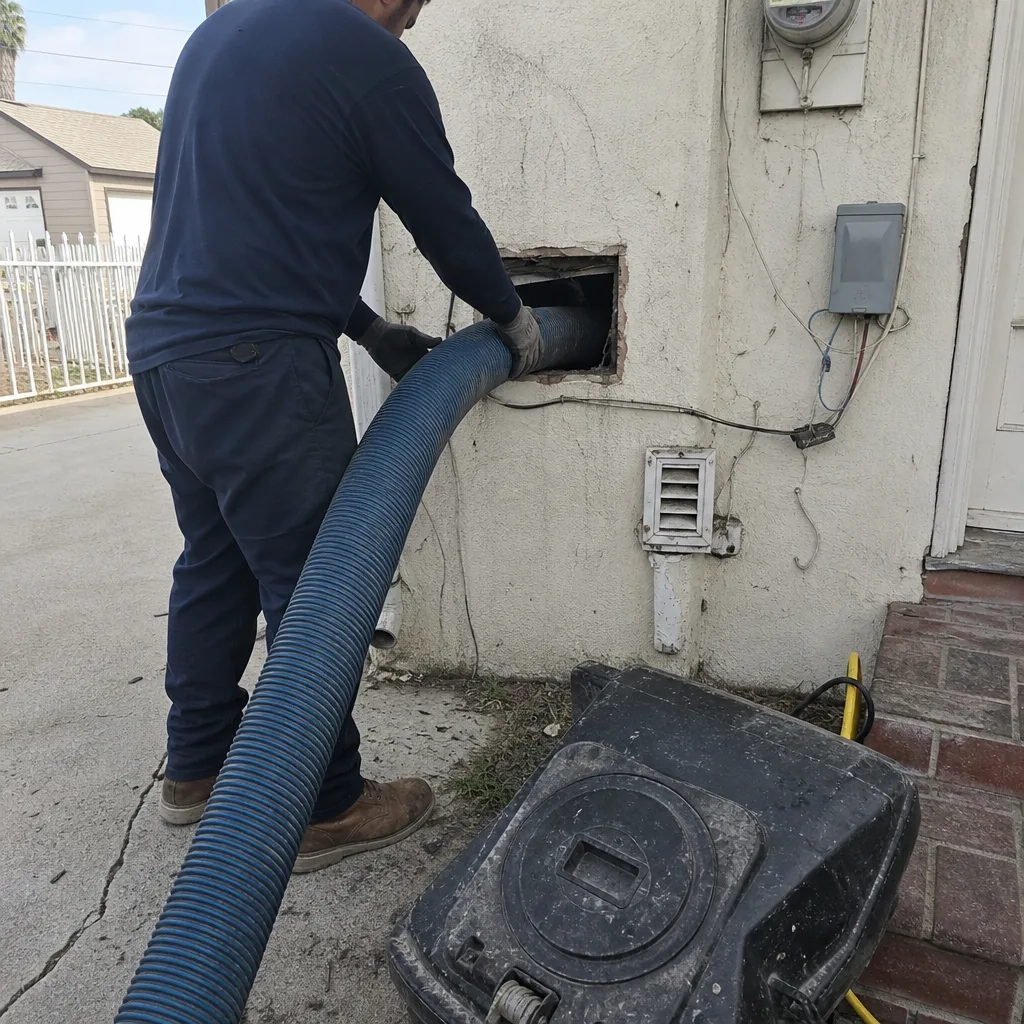
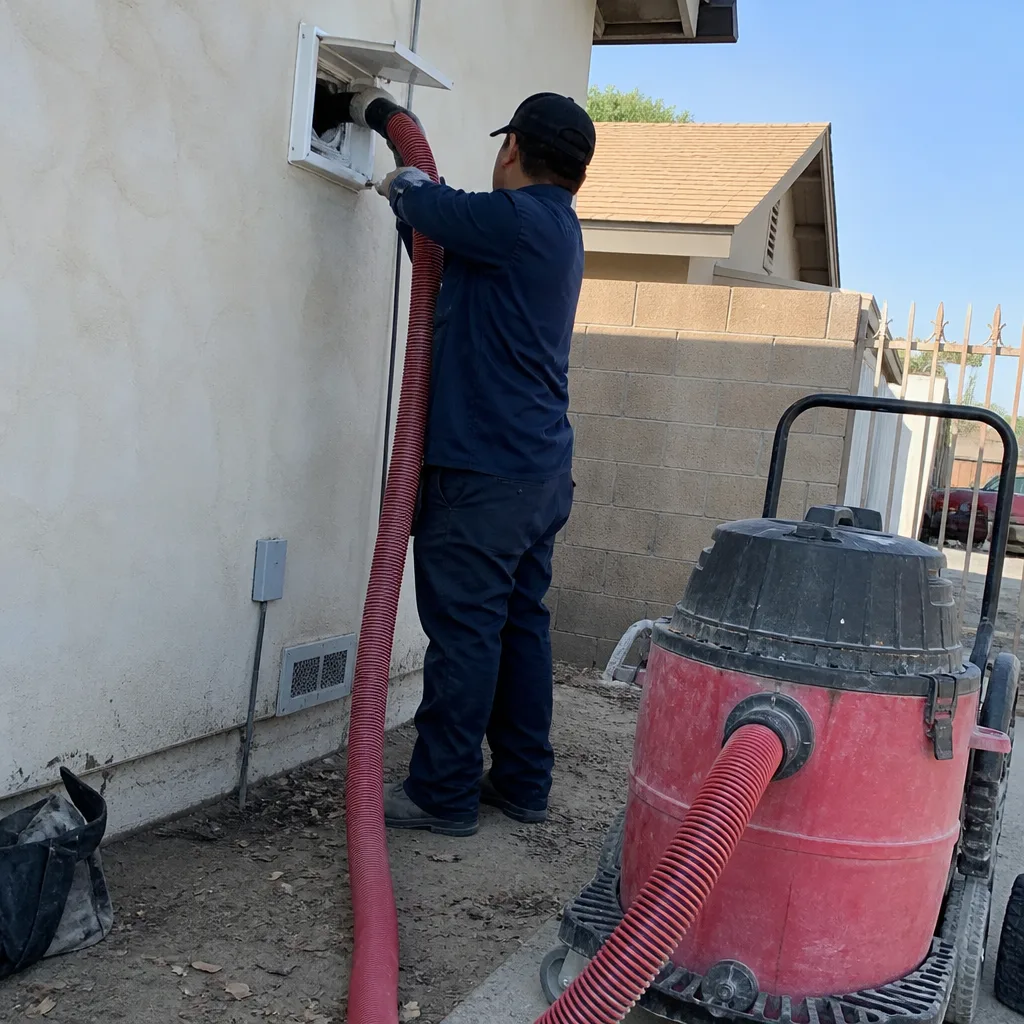
- Ignoring the dryer vent while you’re at it. Your dryer vent is a separate system from your HVAC ducts, but Inglewood’s older homes often route them through shared wall cavities. A clogged dryer vent is a fire hazard and a separate service from Dryer Vent Cleaning in Inglewood. Getting both done on the same visit saves a second service call.
- Expecting duct cleaning to fix unrelated problems. Duct cleaning removes debris from the duct system. It does not fix a failing blower motor, an undersized furnace, a leaking coil, or poor insulation. A professional will tell you what the cleaning can and cannot do for your specific situation.
When to Call a Professional
Some situations call for a professional assessment rather than a DIY check. If you’ve had recent renovation work in an Inglewood home (even cosmetic updates), drywall dust and construction debris have likely entered the return ducts. If you have pets and members of the household with diagnosed allergies or asthma, accumulated dander in the ductwork recirculates continuously. If your registers show black streaking or you smell mustiness only when the fan runs, the system needs professional attention. If your filter is clogging within weeks of replacement, something upstream is shedding particulate. If you’ve purchased an older Inglewood home and don’t know when ducts were last serviced, assume they weren’t. Duct Cleaning Inglewood offers free estimates in Inglewood, call (855) 341-8387 to schedule an inspection. We’ll tell you honestly whether cleaning is warranted or whether your issues are coming from somewhere else.
Frequently Asked Questions
Air duct cleaning in Inglewood typically costs between $350 and $800 for a full single-family home system, depending on square footage, number of registers, and contamination level. Homes with severe buildup, older flex duct requiring careful handling, or extensive return-side contamination run toward the higher end. Call (855) 341-8387 for a free estimate; we quote per system, not per vent.
Cheaper quotes usually come from companies running portable vacuum units or shop-vac adaptations that can’t produce enough static pressure to clean the full system. They may also quote per vent to pad the final invoice. A professional negative-pressure setup with commercial-grade equipment costs more to operate, and that cost is reflected in the price.
Demand pre- and post-cleaning photos of the same interior duct surfaces. A legitimate professional will photograph the return duct interior, supply plenum, and representative register boots before and after the work. If a company won’t provide photographic documentation, you have no verification and should find another provider.
For most Inglewood homes, every 3 to 5 years is sufficient. Homes near the 405 or 105 freeway corridors, homes with multiple pets, or homes with older furnace systems may need more frequent service. If you’ve just finished a renovation, schedule a cleaning immediately afterward, regardless of how much time has passed since the last one.
It can, if the allergens are coming from the duct system rather than the room itself. Pet dander, dust mite material, and pollen that accumulate inside ducts and recirculate through the air handler cause ongoing exposure. Cleaning removes that reservoir. However, if allergens enter through open windows or are tracked in on shoes, duct cleaning alone won’t solve the problem. Air filtration at the air handler makes a significant difference, which is where familiarity with Honeywell and Aprilaire filtration systems matters.
It shouldn’t, if the technician is experienced with older Inglewood housing stock. Pre-1980 homes may have flex duct retrofits that tear under aggressive brushing or asbestos-wrapped metal ducts that should be left undisturbed. A qualified professional assesses duct material before cleaning begins and adjusts tools and techniques accordingly. A careless tech with a consumer-grade brush can absolutely damage aged flex duct. Ask about their experience with older systems before you book. See our breakdown in DIY vs Professional Air Duct Cleaning: The Inglewood Homeowner’s Decision Guide for more on what to look for.
The Bottom Line
Inglewood’s climate, housing stock, and freeway-adjacent geography create a specific duct contamination scenario that deserves specific attention. The marine layer drives moisture cycling through attic ductwork. Older homes carry materials that require careful handling. Generic low-bid cleaning services with consumer-grade equipment leave more problems than they solve. A real cleaning uses negative-pressure extraction with professional tools like Rotobrush rotary systems and Nikro HEPA vacuums, covers both supply and return sides, and provides photographic proof of the work. If you’ve never had your ducts inspected, or if it’s been more than five years, start with The Complete Guide to Air Duct Cleaning in Inglewood and the visual checklist in this guide. Then call (855) 341-8387 for a free estimate from a team that specializes in ducts and nothing else.
Written by the team at Duct Cleaning Inglewood, serving Inglewood since 2015.
See the difference
 Before
 After
 Before
 After
 Before
 After