
Last updated November 3, 2026
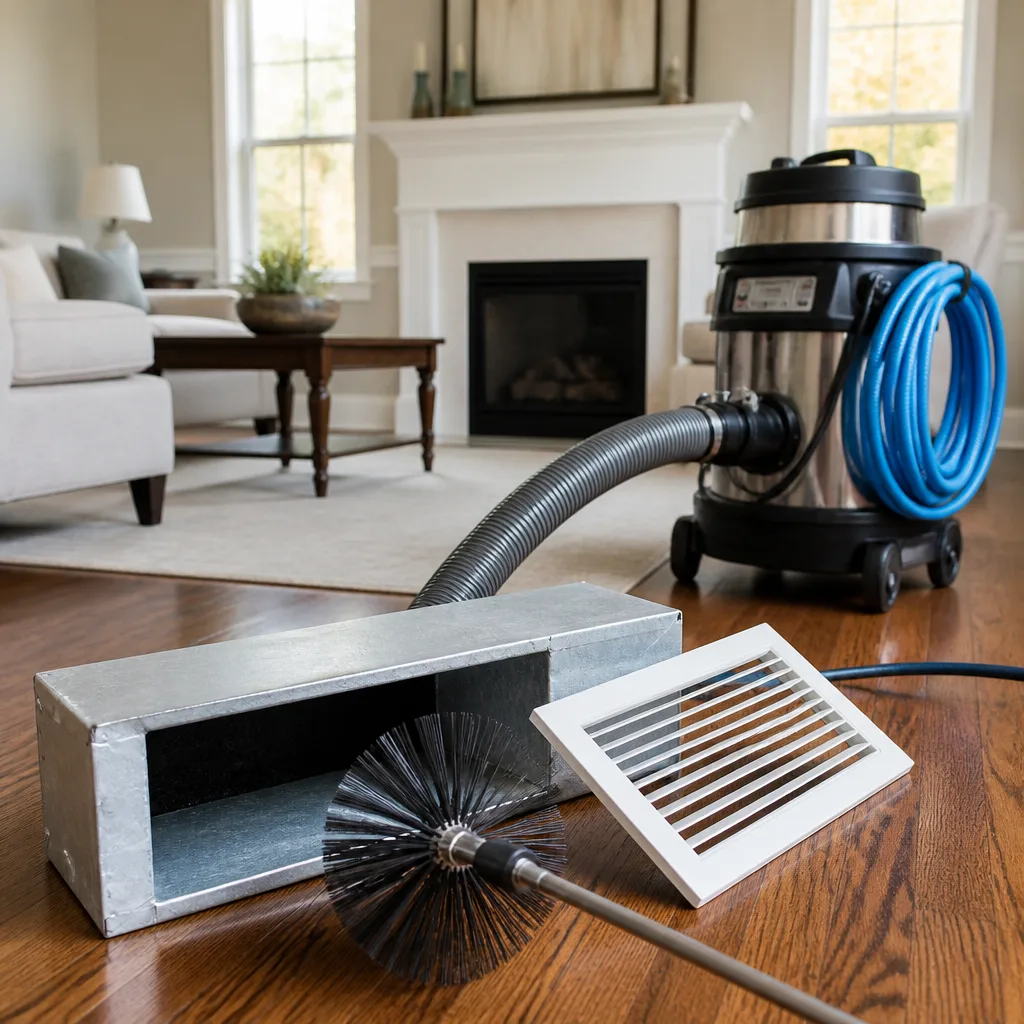 Whole-home duct cleaning
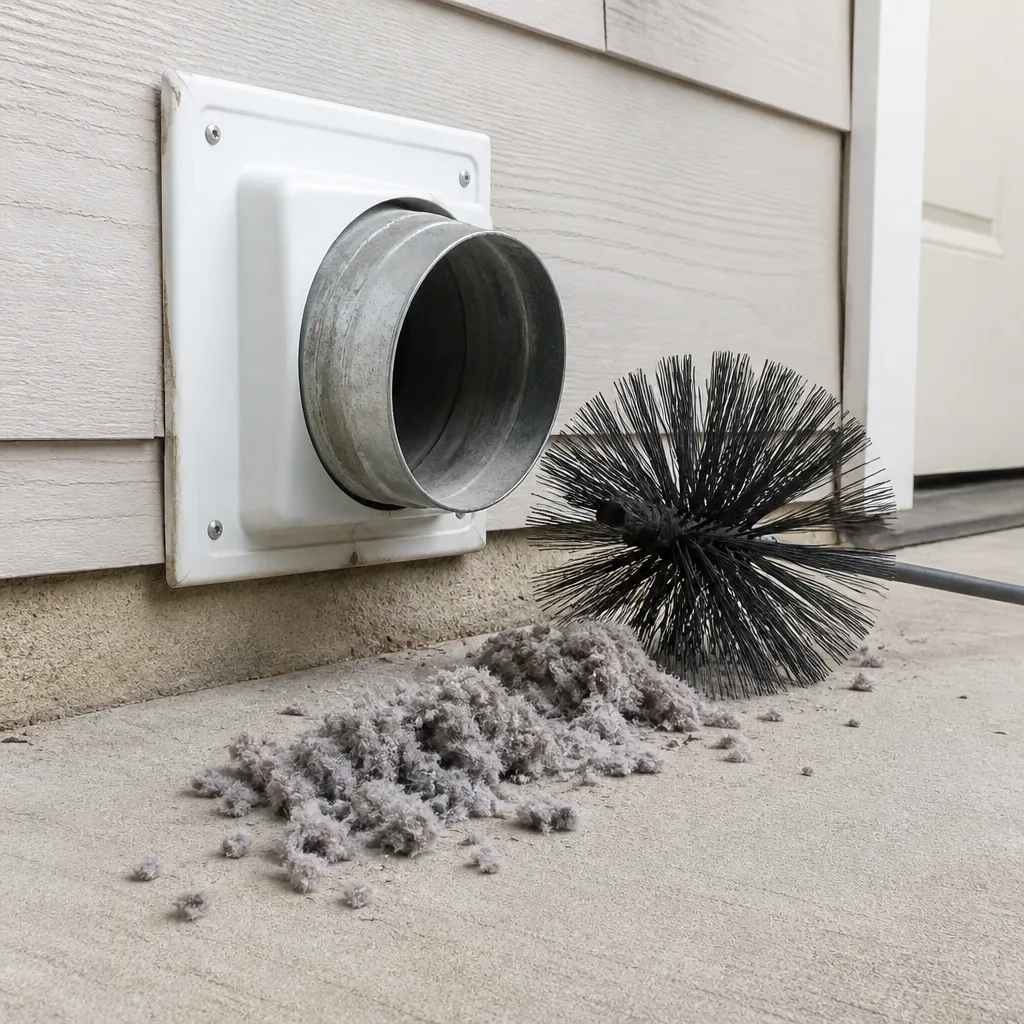 Dryer vent cleaning
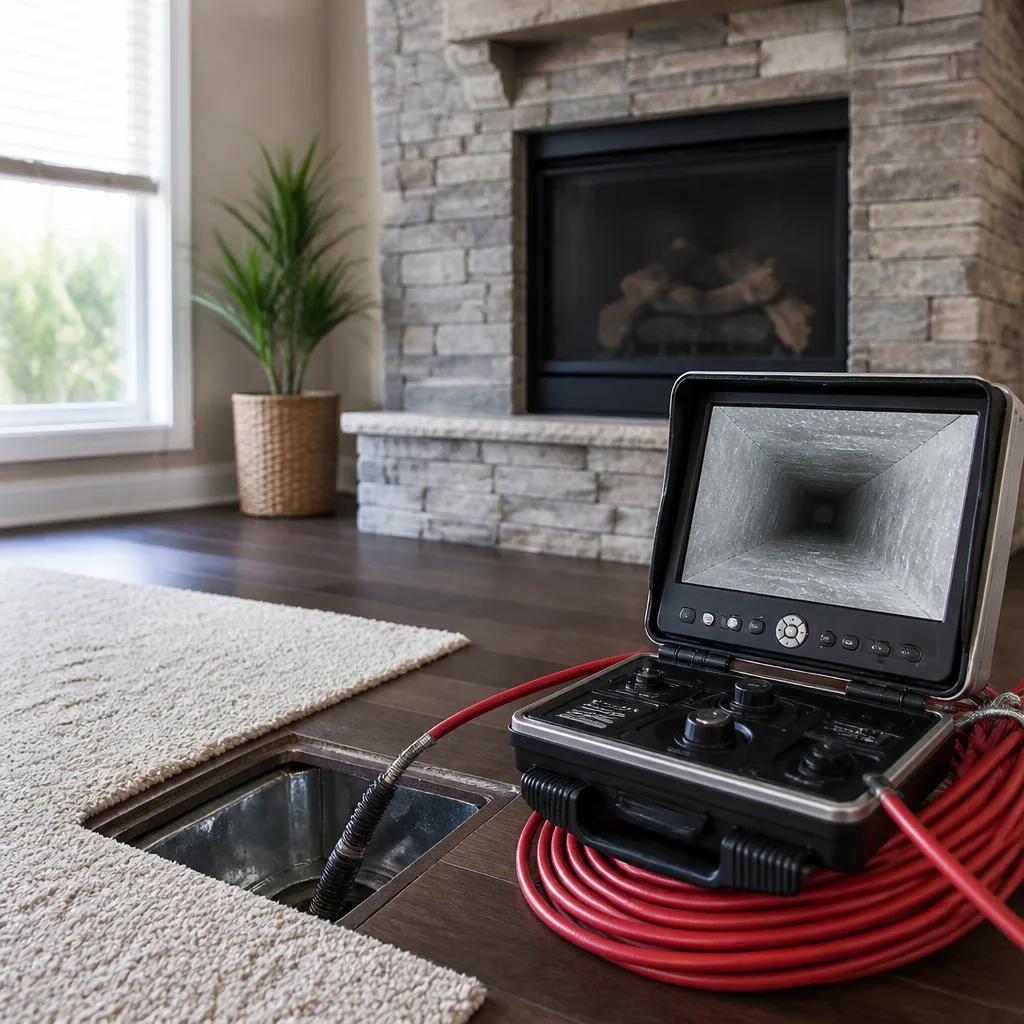 Camera inspection
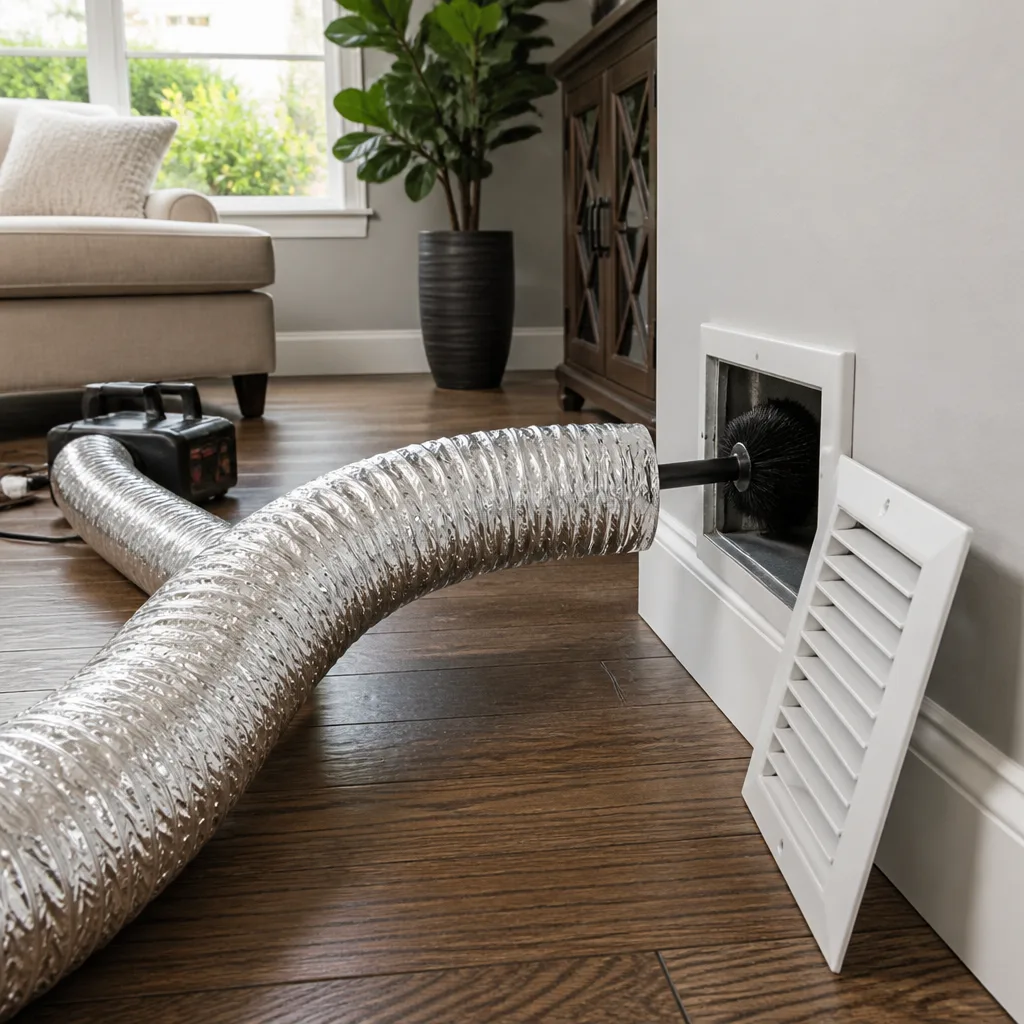 Sanitizing & deodorizing
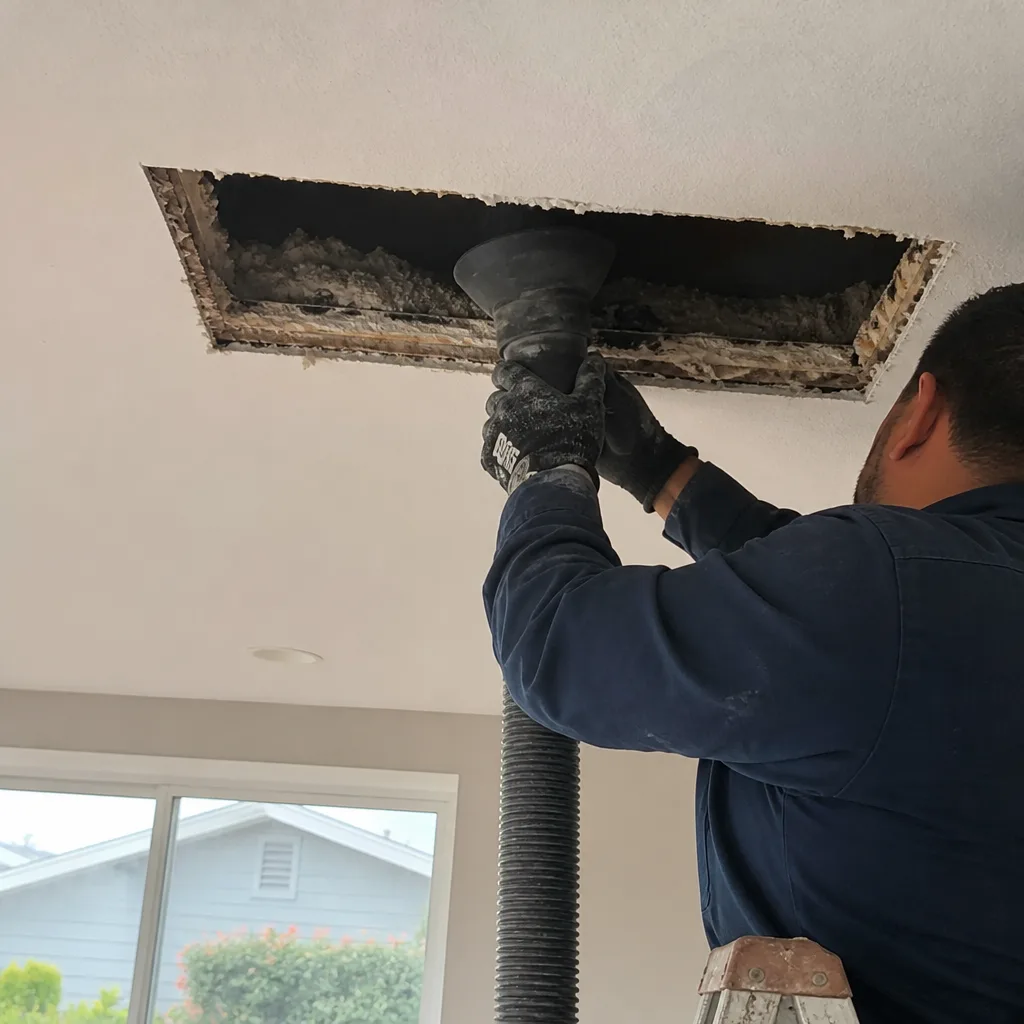
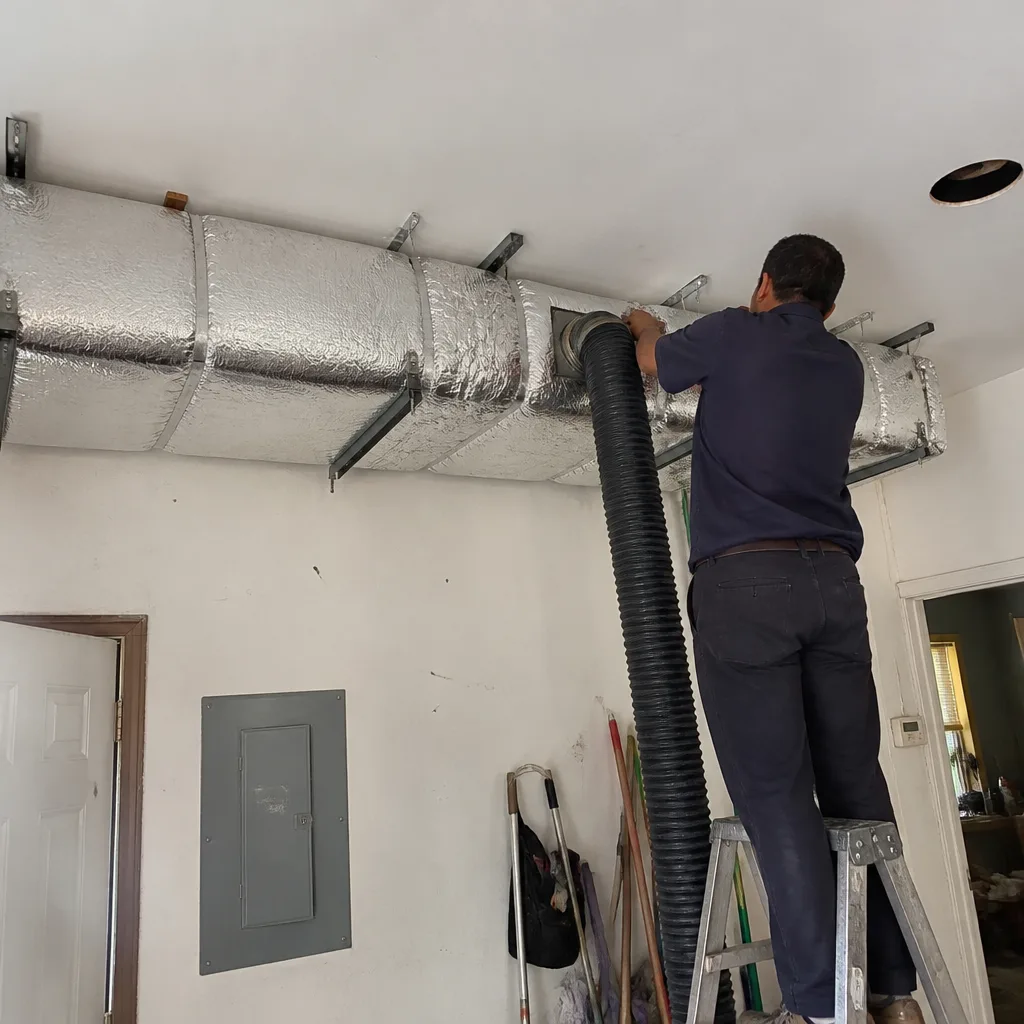
Whole-system duct and dryer vent check with before-and-after photos - you see exactly what came out of your vents
That "$99 whole-house special" is a bait ad - the real number appears once they are in your hallway, or the "clean" is a shop-vac at the register. We photograph the inside of your ducts before and after instead.
Choosing the Right Air Duct Cleaning Brand: A Buyer’s Guide for Inglewood
There is no Carrier or Trane equivalent in the duct cleaning industry. No consumer-facing brand that guarantees equipment quality or technician training sits on the side of an air duct cleaning van. The name painted on the door tells you nothing about the CFM rating of the vacuum inside it, whether the equipment is owned or rented for the day, or whether the technician has ever looked through a duct camera before. For homeowners in Inglewood, where coastal air and older housing stock create a specific set of duct problems, this absence of brand accountability means the buying decision has to be built on something else entirely: the equipment being used, the operator’s training, and the inspection process that precedes any cleaning. This The Complete Air Duct Cleaning Guide for Inglewood Homeowners will walk you through how to evaluate those factors so you can hire a real specialist rather than a franchise name backed by a shop vac.
Styles & brands we work with
- Whole-home duct cleaning
- Dryer vent cleaning
- Camera inspection
- Sanitizing & deodorizing
Quick Answer
The “right” air duct cleaning brand in Inglewood is not a franchise name, it’s a company that uses commercial-grade equipment like Rotobrush rotary-brush systems and Nikro HEPA vacuums, performs a camera inspection before every job, and works on ducts as a core specialty rather than an add-on service. Compare companies by asking three questions: what vacuum system do they use and what’s its CFM rating, do they inspect with a camera before quoting, and is duct cleaning their primary business or one line item on a generalist service list. If you can’t get clear answers to all three, keep looking.
Table of Contents
- What “Brand” Actually Means in Air Duct Cleaning
- The Equipment Specifications That Determine Cleaning Quality
- Why the Inspection Process Tells You Everything
- NADCA Certification: What It Means and What It Does Not
- Dedicated Duct Specialist vs. Generalist HVAC Add-On
- How to Read Google Reviews for Duct Cleaning Specifically
- What Inglewood’s Climate and Housing Stock Mean for Your Ducts
- Common Mistakes to Avoid
- When to Call a Professional
- Frequently Asked Questions
- The Bottom Line
What “Brand” Actually Means in Air Duct Cleaning
Walk down the duct cleaning aisle of the internet and you’ll see dozens of company names that sound like brands. Some are franchises with national marketing budgets. Some are local operations that have built reputations over a decade or more. Some exist only as a Google Business Profile and a rented van. None of this tells you what will happen when a technician parks in your Inglewood driveway and opens the back door of the truck.
What actually determines the quality of an air duct cleaning job is the equipment inside that truck and the judgment of the person operating it. A franchise name means the owner paid for territory rights and standardized branding. It does not mean the technician was trained on commercial-grade extraction systems, or that the vacuum produces enough negative pressure to pull debris from deep inside a duct run, or that anyone will inspect the work before they leave. In our experience at Duct Cleaning Inglewood, we have repeatedly seen the same pattern: an Inglewood homeowner hires a recognizable-sounding name, gets a low bid, and later asks us to re-clean ducts that were barely touched. The brand was on the van. The cleaning was never in the ducts.
So when we talk about “choosing a brand” in this guide, we mean something different. We mean choosing the equipment brand the company relies on, and the operational brand of professionalism it demonstrates in how it inspects, quotes, and cleans. Those are the things you can actually verify.
The Equipment Specifications That Determine Cleaning Quality
If you take one concept away from this guide, make it this: the vacuum system is the entire ballgame. Air duct cleaning works by creating negative pressure inside the duct system while agitating debris off the duct walls. Without sufficient airflow, measured in cubic feet per minute (CFM), nothing else matters. The most thorough brushing in the world does no good if the loosened debris resettles because the vacuum could not carry it out of the duct.
Professional-grade systems in commercial remediation work typically move 2,000 CFM or more. Many portable machines sold to generalist contractors and rental yards move a fraction of that. A machine with low CFM can agitate dust, but it cannot extract it from a long duct run. The dust becomes airborne in your home, or it settles back into the ducts and waits for the next time your blower kicks on.
Here are the specific things to ask about any company’s equipment before you hire them:
- CFM rating. Ask for a number, not a description. A company that knows its equipment will answer instantly. A company that does not know is not a duct specialist.
- Truck-mount vs. portable. Truck-mounted vacuums generally produce higher CFM than portable units because they run on a dedicated engine or PTO rather than household current. Portable units can be effective when properly sized, but they are also what rental companies hand to unqualified operators.
- Rotary brush vs. air sweep. Rotary brush systems, like the Rotobrush equipment we run, physically scrub the duct walls while the vacuum extracts. This is the same approach used in commercial duct remediation. Air-sweep systems rely on compressed air alone, which misses what is adhered to the duct surface.
- HEPA filtration. A vacuum without a HEPA final filter collects the big stuff and exhausts the fine particulate back into your living space. We run Nikro HEPA-vacuum rigs for exactly this reason: the air leaving the machine is cleaner than the air entering it.
- Owned vs. rented. A company that owns professional-grade equipment has made a capital investment that signals long-term commitment to the trade. A company renting a blower and a brush for the day is price-shopping on your job.
For Inglewood homeowners dealing with post-construction dust, decades of accumulated particulate, or the fine soot that drifts in during wildfire season, equipment capability is not a technical footnote. It is the difference between cleaning your ducts and simply rearranging the dust.
Why the Inspection Process Tells You Everything
A company that skips pre-job inspection is skipping the diagnostic step that separates real duct cleaning from a visual performance. Before any cleaning begins, a competent technician needs to know what is actually inside your ducts: the debris type, the level of buildup, any disconnected sections, any evidence of moisture, any presence of pest activity. Without that information, the cleaning is a guess.
The standard professional approach is a camera inspection. A small video camera is run through the duct system before the quote is finalized, and the homeowner sees the images. This does three things. It confirms the ducts actually need cleaning, which protects you from a service that was never necessary. It establishes the baseline condition so you can compare against the final result. And it demonstrates that the company has nothing to hide. A firm that will not show you the inside of your own ducts before and after is a firm that does not want you to know how little changed.
Here is the assessment sequence we consider standard for any proper air duct cleaning in Inglewood:
- Camera inspection of the supply and return runs. This takes 15 to 30 minutes and produces images you keep.
- Assessment of the entire duct ecosystem. This includes the plenum, the registers, the return drops, and the connections at the air handler. Duct problems rarely start at the vents.
- A written scope with a flat price. Not a verbal estimate with room to grow. The number you agree to is the number you pay.
- Post-cleaning camera verification. You see the same runs after the work, and you compare. If the company will not do this, walk away.
We have worked in enough Inglewood homes to know that a skipped inspection almost always predicts a skipped cleaning. The two failures come from the same root: the operator either does not have the tools to look or does not want anyone seeing what is there.
NADCA Certification: What It Means and What It Does Not
NADCA, the National Air Duct Cleaners Association, is the closest thing this industry has to a professional standards body. It publishes reference standards for assessment, cleaning, and restoration of HVAC systems, and it offers certification programs for technicians and companies. When you see a NADCA member logo, you are looking at a signal that the company has at least committed to paper-level compliance with industry standards.
That is valuable, and you should look for it. But it is a floor, not a ceiling. NADCA certification does not guarantee the company uses high-CFM equipment, does not guarantee the technician who shows up at your Inglewood home is the one who was certified, and does not guarantee anything about the company’s honesty on pricing. A NADCA-certified company that performs a lazy cleaning is still a lazy cleaning.
Think of NADCA this way: it screens out the worst 40% of the market. Operators who will not bother with a basic certification process are also unlikely to bother with proper equipment, training, or inspection. Require it as a minimum. But then apply the rest of the filters in this guide on top of it. The goal is not a company that passed a test. The goal is a company that behaves like a specialist on every job, every day.
Dedicated Duct Specialist vs. Generalist HVAC Add-On
Most Americans encounter air duct cleaning through an HVAC company that offers it as one service among many. The furnace technician mentions during a tune-up that the ducts look dirty, and suddenly a cleaning is appended to the invoice. This is not inherently dishonest, but it does embed a conflict of interest: the company’s competence is in heating and cooling equipment, not duct hygiene, and the cleaning is often performed with portable equipment that cannot match dedicated extraction rigs.
A dedicated duct specialist is different in ways you can verify:
- The equipment inventory is duct equipment. A real specialist owns rotary-brush systems, HEPA extraction units, and camera inspection tools. A generalist owns HVAC gauges and a portable vacuum.
- The service list is duct-shaped. We clean air ducts, we clean dryer vents, and we repair air ducts in Inglewood. That is the entire discipline. No furnace swap-outs, no condenser replacements, no belt-tightening side jobs.
- The technician’s fluency runs deep. Ask a generalist technician about static pressure drop from a dirty evaporator coil, and you may get a blank look. Ask about the CFM required to pull debris from a 35-foot return run, and you will know within ten seconds whether you are talking to a duct specialist.
- The company’s economics depend on duct quality. When every revenue dollar comes from duct work, reputation risk is existential. A generalist can absorb a bad duct cleaning review because they have five other service lines. A specialist cannot.
In Inglewood’s competitive market, the generalist route often wins on convenience. The same technician who services your furnace can schedule the cleaning. But that convenience carries a capability cost, and it shows up in the result: ducts that look cleaner at the register but still carry heavy loading ten feet in.
How to Read Google Reviews for Duct Cleaning Specifically
Google reviews are a powerful vetting tool if you read them correctly, and nearly useless if you read them for quantity alone. With duct cleaning, genuine reviews have a texture that paid and templated reviews lack. Here is what we have learned from years of watching this market in Inglewood.
Signals of genuine, technically informed reviews:
- They mention specific equipment: “they used a truck-mounted vacuum with a HEPA filter” or “he showed me the camera footage before and after.”
- They describe the inspection: “he found a disconnected return in the crawlspace and showed it to me on camera.”
- They mention time: “the team spent four hours on a two-story house” or “they were thorough but not rushed.”
- They reference problems the homeowner did not know about: “they found the dryer vent was completely blocked and showed me the lint.”
- They compare before and after: “the dust on my furniture dropped noticeably in the weeks after.”
Signals of templated or purchased reviews:
- Generic praise with no job-specific detail: “great company, very professional, would recommend” and nothing else.
- Clusters of reviews posted within days of each other, often with similar phrasing.
- No mention of any inspection, equipment, or before-and-after comparison.
- Reviewer accounts with exactly one review total.
- Claims that are too fast to be plausible: “entire 3-bedroom house cleaned in 45 minutes, amazing!” A proper cleaning of a 3-bedroom system takes hours.
Read the negative reviews too. A company’s response to criticism reveals more than the criticism itself. Defensive or hostile replies are disqualifying. A measured response that acknowledges the specific complaint and offers a specific remedy suggests a company that actually manages its work.
What Inglewood’s Climate and Housing Stock Mean for Your Ducts
Inglewood’s duct problems are shaped by geography, and a capable duct company should be able to talk about that with you. The city sits close enough to the coast that airborne salt and marine-layer humidity find their way into duct systems, but far enough inland that summer temperatures regularly push into the 90s. That combination produces a particular form of buildup: fine, slightly adhesive dust that clings to duct walls and responds poorly to air-sweep cleaning alone. It needs mechanical agitation, which is why rotary-brush systems matter more here than in drier inland markets.
Wildfire season adds another layer. When smoke settles over the LA basin, the fine particulate does not stay outdoors. It enters homes through every gap and gets pulled into return air, where much of it remains. Duct systems in Inglewood homes become reservoirs for the acrid fine ash that settles in the weeks after a fire event. This is exactly the kind of high-contamination scenario where Abatement Technologies air-filtration equipment matters: it is built for situations that exceed routine cleaning, not for routine dusting between filter changes.
The housing stock matters too. Inglewood has a large inventory of mid-century single-story homes, many with original ductwork now 40 to 60 years old. Clay tile roofs and conditioned crawlspaces are common. Duct leaks in these homes are frequent, especially at the plenum connections and where flex duct meets rigid runs. We regularly find disconnected returns in older Inglewood homes where the duct tape has dried and the joint has opened, pulling crawlspace air directly into the living space. A proper dryer vent cleaning in Inglewood follows the same principle: the vent is part of the airflow system, and a blocked vent does not only reduce dryer efficiency, it creates a fire hazard.
If a company quotes you for duct cleaning in Inglewood without asking about the age of your home, the condition of your crawlspace, or whether you have a whole-home filtration system, they are not evaluating your ducts. They are running a route.
Common Mistakes to Avoid
- Choosing by coupon price. In the Inglewood market, a $99 whole-house duct cleaning coupon is a widely used bait-and-switch tactic. The price inflates dramatically once the technician is inside, often for services that were never necessary. A legitimate specialist quotes a flat price for the defined scope and does not change it mid-job.
- Hiring a company that skips the pre-inspection. If a technician arrives and begins laying out tools without first running a camera through the ducts, you are watching a production line, not a diagnostic process. Stop the job before it starts.
- Treating all dust as the same. Dust from a renovation, dust from a pack-a-day smoker, dust from a wildfire event, and dust from decades of normal occupancy all require different approaches. A company that does not ask about the source of the dust is a company that cannot clean it properly.
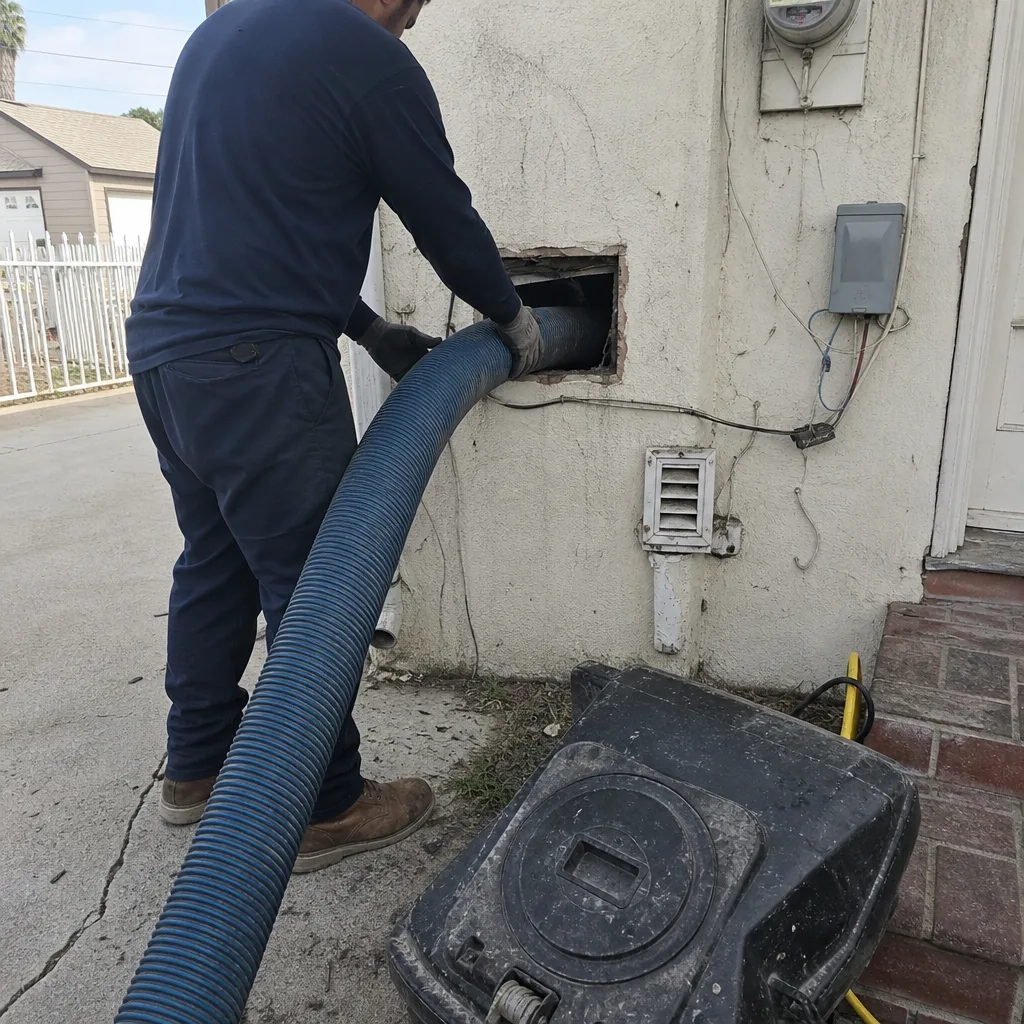
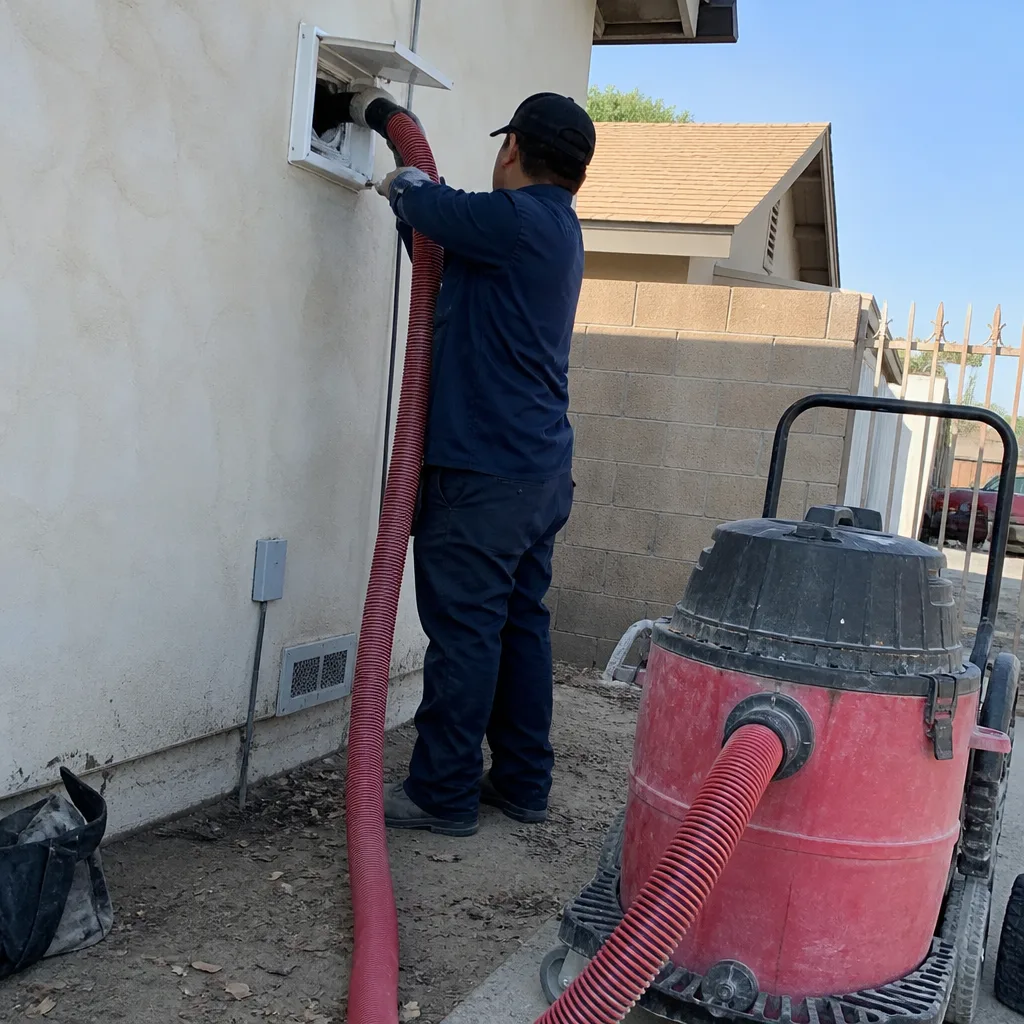
- Confusing dryer vent cleaning with air duct cleaning. These are different services, different equipment, and different purposes. A company should offer both and treat them as distinct scopes. When we clean dryer vents, we use the same Rotobrush and Nikro equipment we run on full duct systems because a dryer vent is a duct, and it deserves the same standard.
- Ignoring the repair signal. If an inspection reveals disconnected sections, crushed flex, or rusted rigid runs, cleaning alone will not fix the system. You need duct cleaning in Inglewood plus repair capability in the same team, or you are going to be hiring two contractors to do one job.
- Buying the franchise story. A national name does not test the local technician’s competence. The work happens inside your ducts, not inside the franchise agreement. Evaluate the person and the equipment, not the logo.
When to Call a Professional
Duct cleaning is not a skill you acquire from a weekend at a hardware store. The equipment, the inspection tools, and the diagnostic judgment are professional capabilities, and the failure mode of an amateur attempt is worse than the original problem: loosened debris that never gets extracted, damaged duct seams, torn flex runs, and a false belief that the system is clean. Call a professional when you see dust accumulating within days of cleaning, when you find mold or moisture evidence inside the vents, when your energy bills climb without explanation, when your allergies spike at home but not at work, or when you are moving into an Inglewood home with unknown duct history. Air Duct Cleaning by Duct Cleaning Inglewood offers free estimates in Inglewood, call (855) 341-8387 to schedule one. A 20-minute camera inspection tells us, and you, exactly what the system needs.
Frequently Asked Questions
A serious duct cleaning operation in Inglewood should run a vacuum system with a CFM rating in the thousands, not the hundreds, with a HEPA final filter and a mechanical agitation mechanism. We use Rotobrush rotary-brush systems paired with Nikro HEPA-vacuum rigs, the same equipment tier used in commercial remediation projects. If a company cannot name its CFM rating or its filtration standard, treat that as a red flag. Call (855) 341-8387 and ask us directly, you will get specific answers.
The only reliable way to know is a camera inspection of the supply and return runs. Visible dust at the registers is a weak signal because many homes show that while still being acceptable elsewhere. But if you see dust accumulating quickly on horizontal surfaces after cleaning, if your energy bills have climbed without a rate change, or if you find evidence of moisture, pests, or renovation debris, an inspection is warranted. We perform camera inspections as part of our standard assessment before quoting any cleaning in Inglewood.
NADCA certification demonstrates that a company has committed to an industry standard for cleaning practices and technician training. It filters out the least professional operators, but it does not guarantee the quality of any specific job. Use NADCA membership as a baseline requirement, then apply the equipment and inspection filters described in this guide and our The Complete Air Duct Cleaning Guide for Inglewood Homeowners. The certification tells you the company read the book; the camera and the CFM rating tell you whether they actually do the work.
The price variation usually reflects differences in scope, equipment, and inspection standards. A company that quotes low may be planning a surface-level air sweep with rental equipment and no camera verification. A company that quotes higher is often pricing a real cleaning with commercial-grade extraction and before-and-after inspection. In our experience with Inglewood’s market, the lowest bid is frequently the most expensive once the job is actually done properly. Get a flat quote for a defined scope from each bidder and compare what each one is actually doing, not just the number.
A full-system cleaning of a typical single-family Inglewood home takes three to five hours for the ductwork, plus additional time if dryer vent cleaning or repairs are part of the scope. Faster than two hours and the system was not thoroughly cleaned, full stop. If a company tells you they will be done in under an hour, they are selling a visual performance, not a cleaning.
It can, but only if the cleaning actually removes the allergen load rather than redistributing it. Allergens like dust mite particulate, pollen, and pet dander settle into duct surfaces and re-enter the living space when the system runs. A thorough mechanical cleaning with HEPA extraction removes that reservoir. For households with serious allergy concerns, we recommend pairing a cleaned duct system with a quality filtration setup; we work routinely with Honeywell and Aprilaire systems and can advise on compatibility. Call (855) 341-8387 for a free estimate if allergies are part of your picture.
The Bottom Line
Choosing an air duct cleaning company in Inglewood is not a brand decision in the traditional sense. There is no national manufacturer standing behind the technician in your attic. What stands behind that technician is the equipment in the truck, the camera in the inspection kit, and the training of the operator. Verify those three things and the franchise name stops mattering. For more guides & resources, see our blog. Inglewood’s specific climate and housing stock make thorough mechanical cleaning more important here than in many markets, and the companies that do this work properly are the ones that can show you the inside of your ducts before and after. That is the standard. Everything less is a van with a logo and a shop vac.
Written by the team at Duct Cleaning Inglewood, serving Inglewood since 2015.
See the difference
 Before
 After
 Before
 After
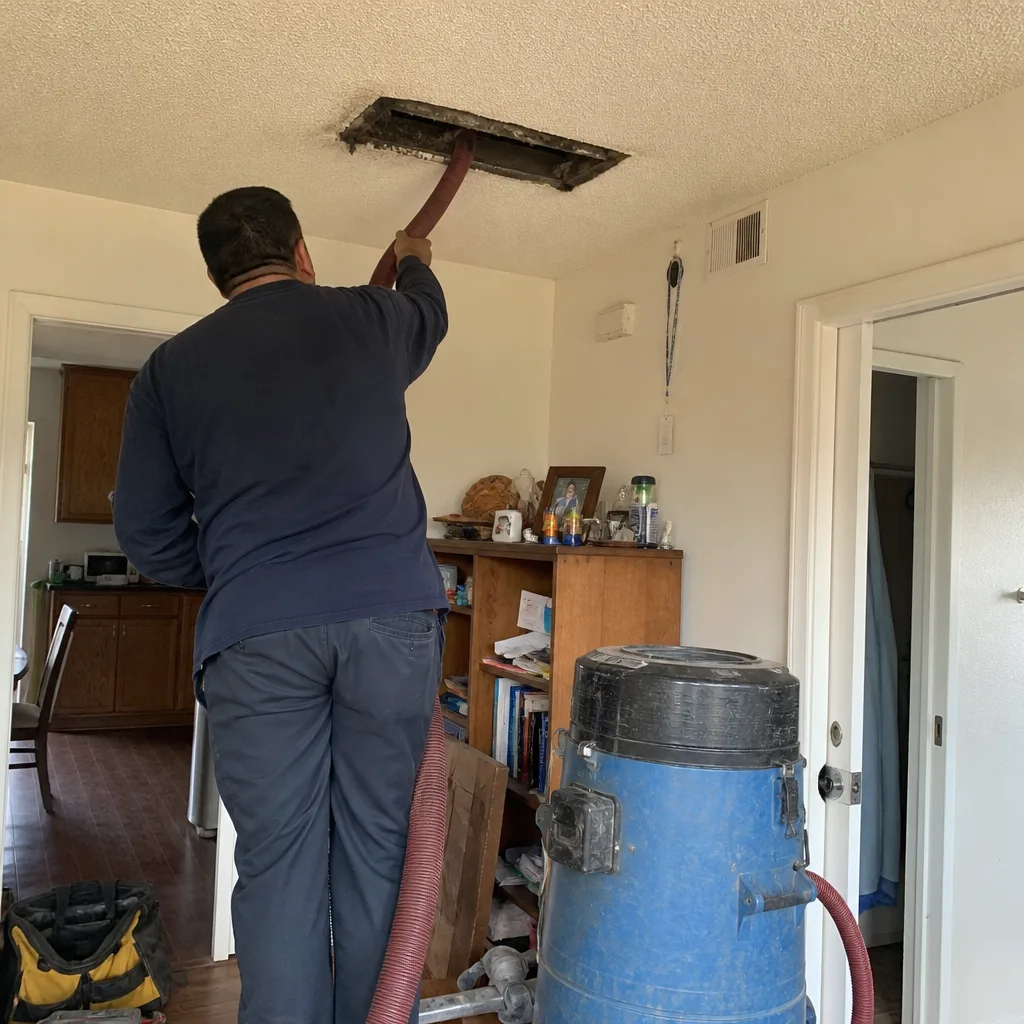 Before
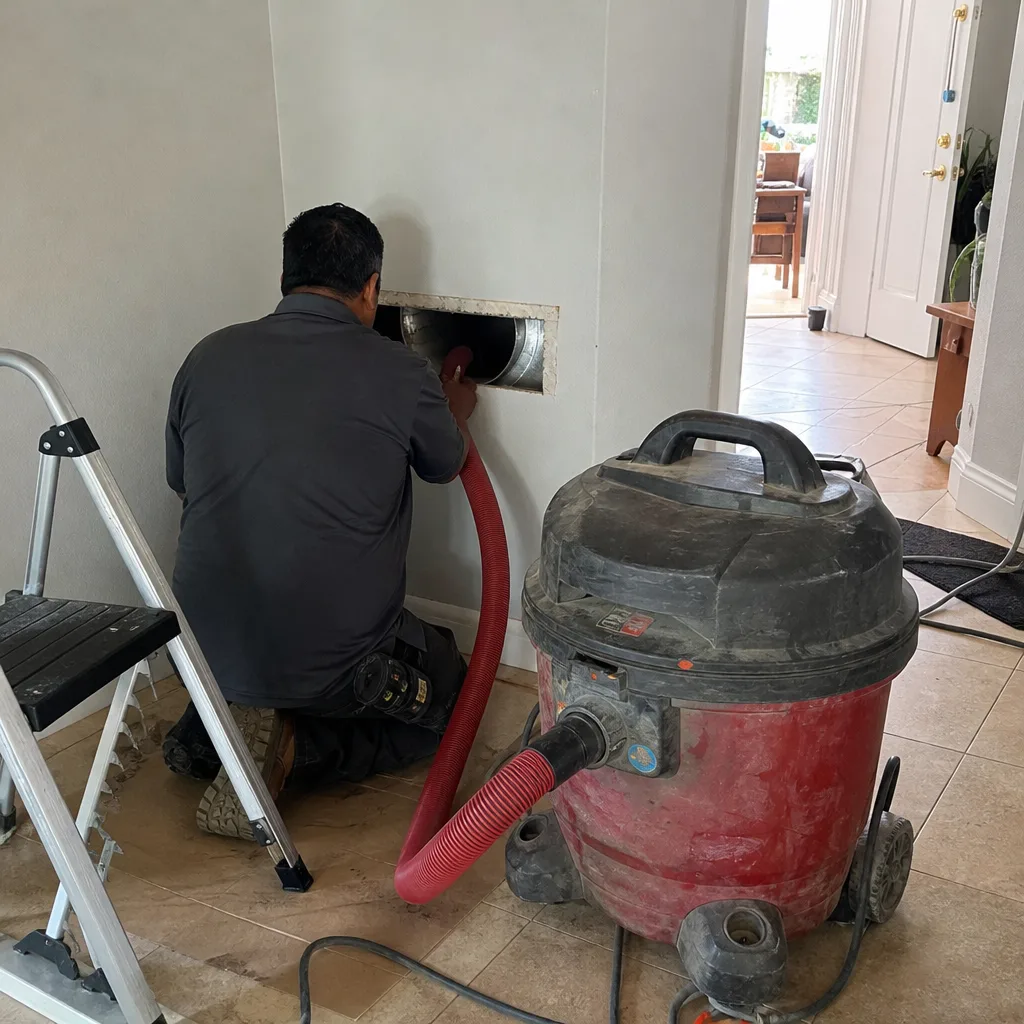 After