
Last updated November 2, 2026
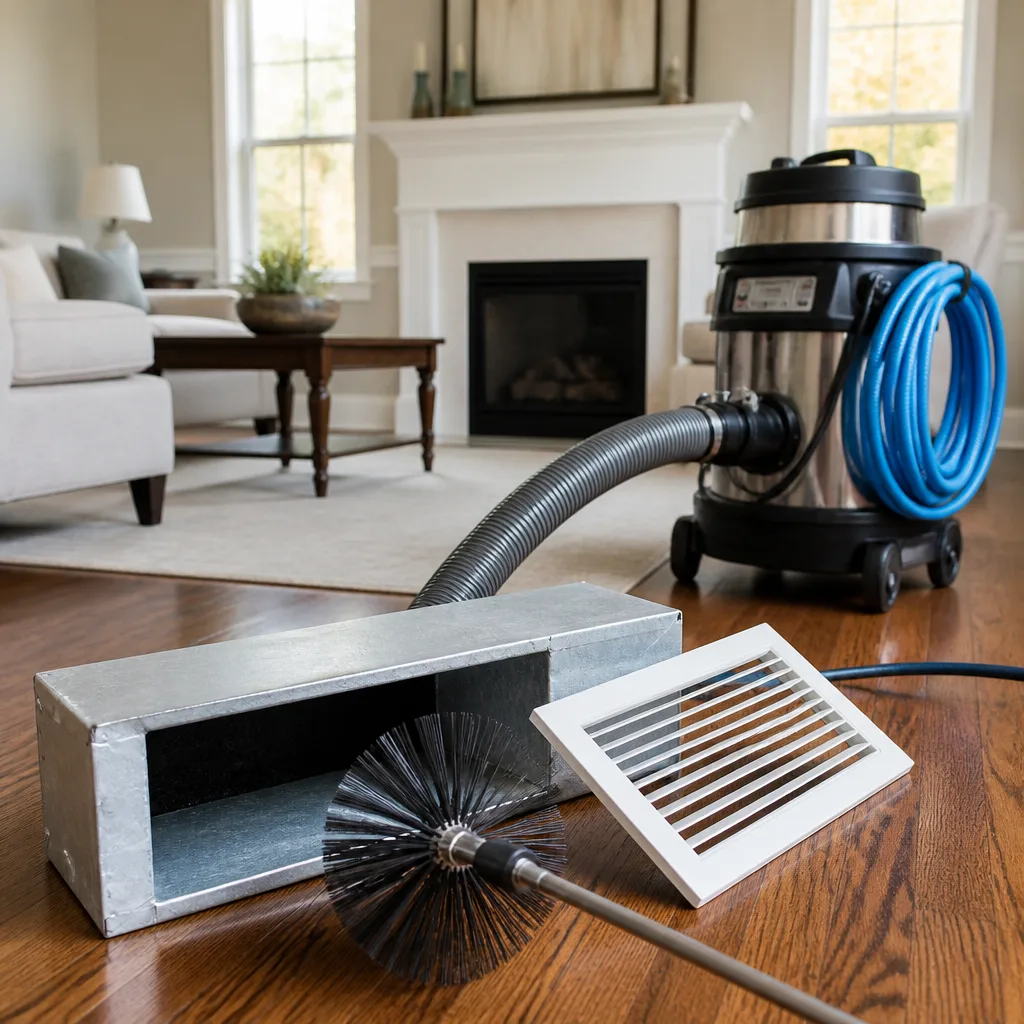 Whole-home duct cleaning
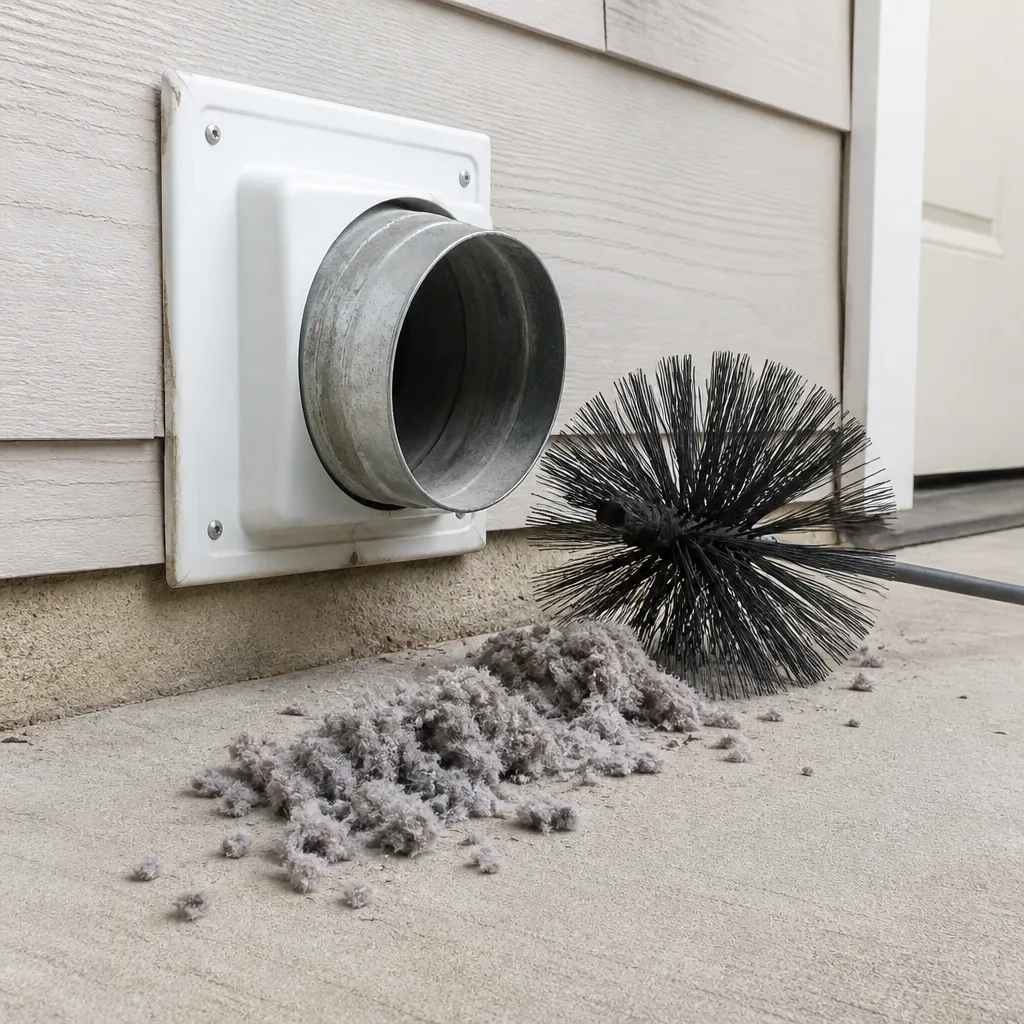 Dryer vent cleaning
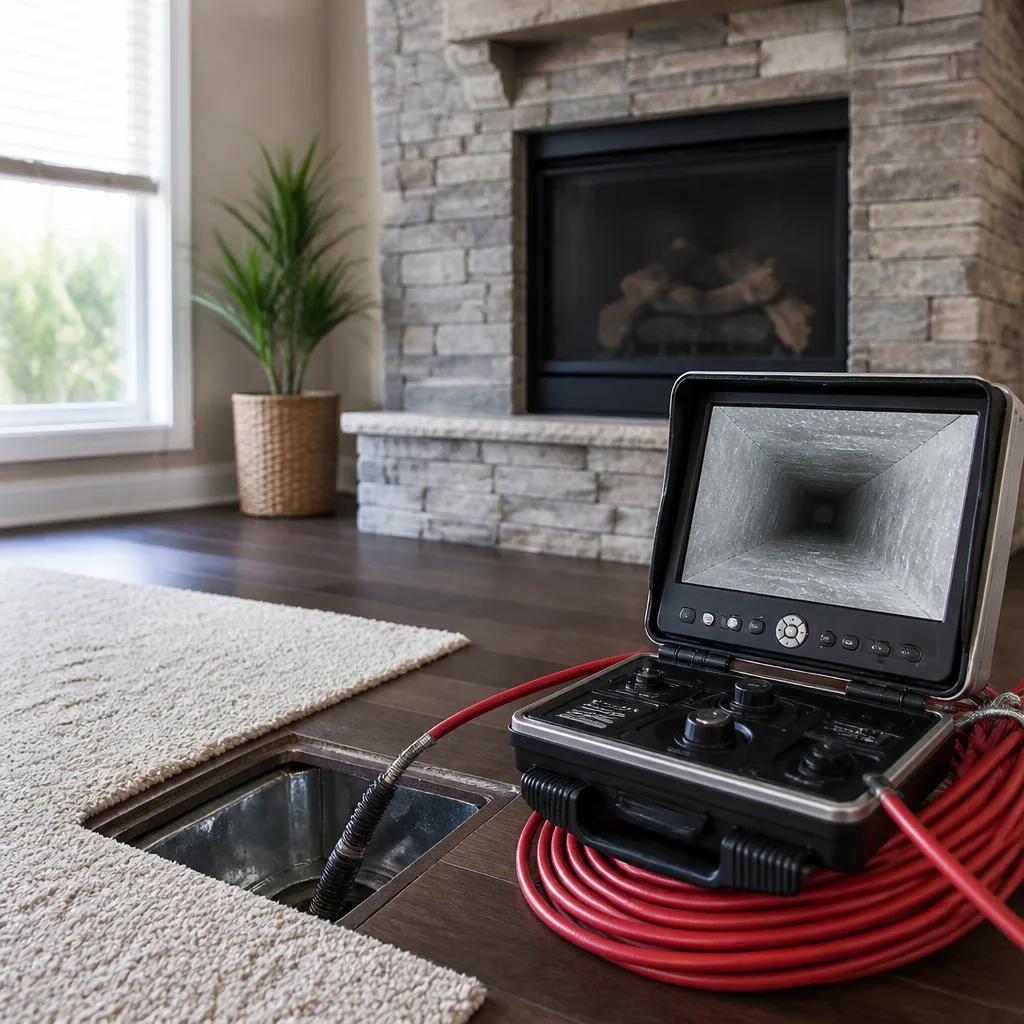 Camera inspection
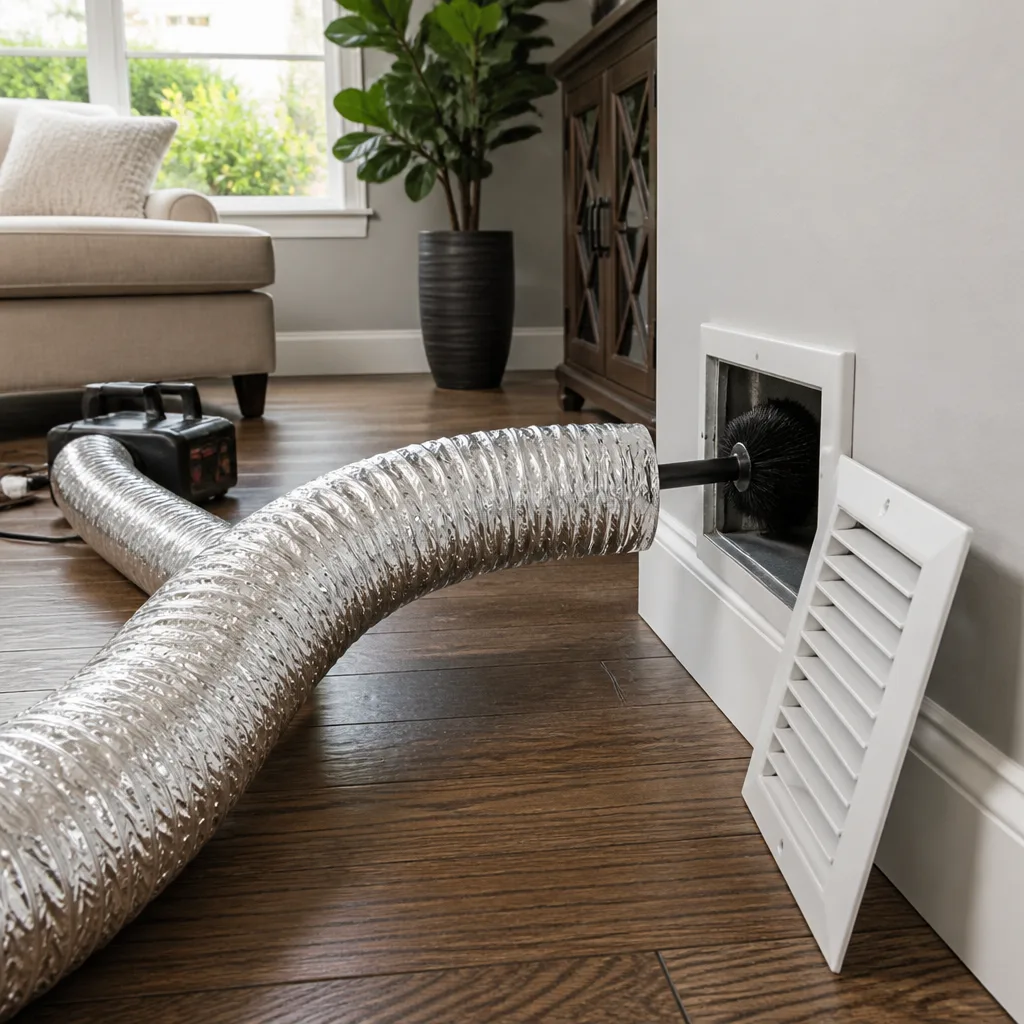 Sanitizing & deodorizing
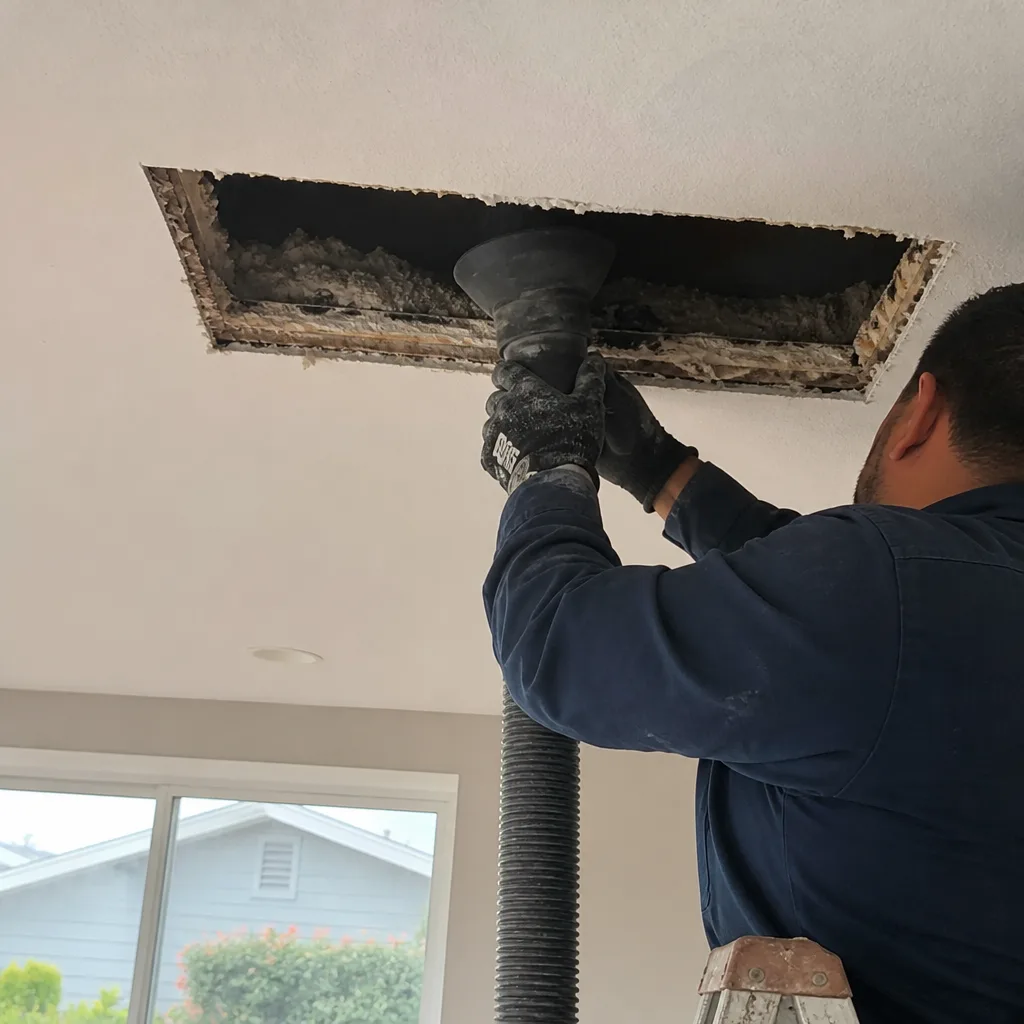
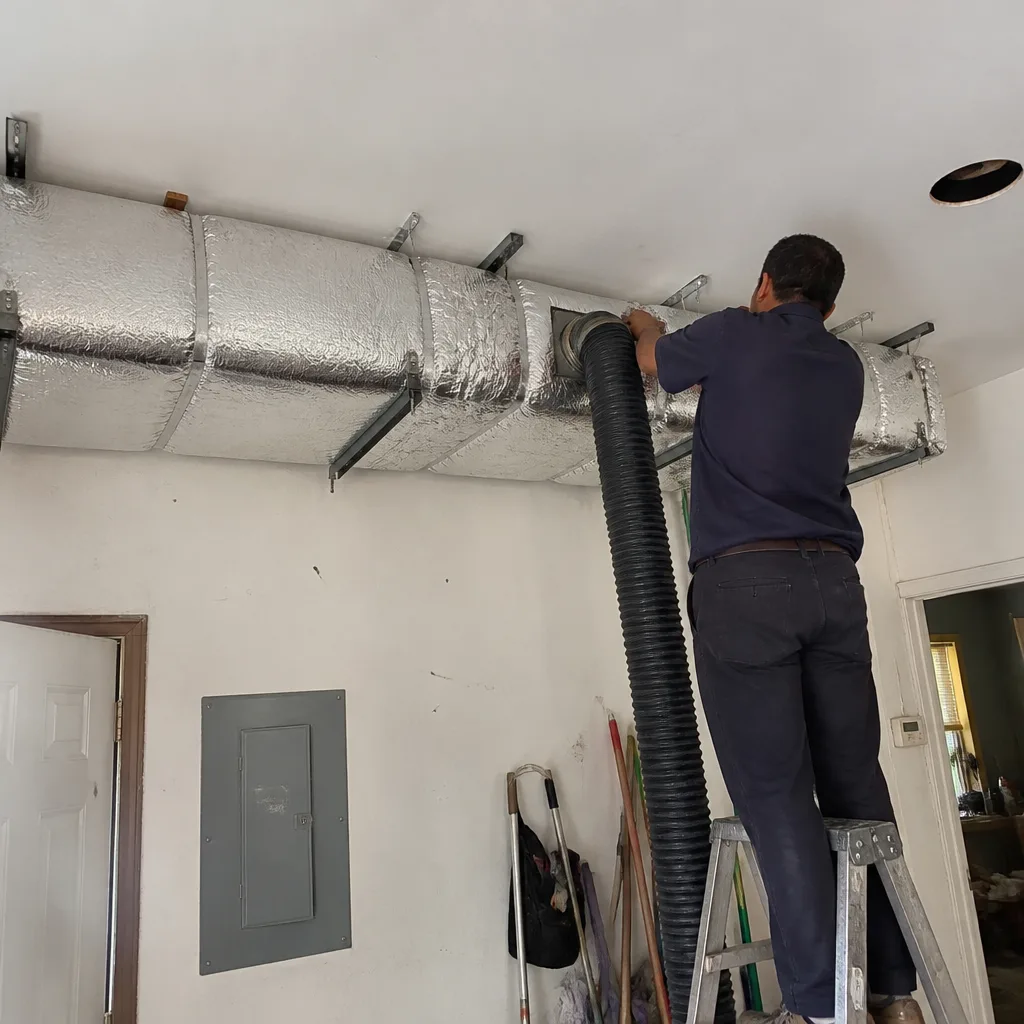
Whole-system duct and dryer vent check with before-and-after photos - you see exactly what came out of your vents
That "$99 whole-house special" is a bait ad - the real number appears once they are in your hallway, or the "clean" is a shop-vac at the register. We photograph the inside of your ducts before and after instead.
Air Duct Cleaning Warning Signs: An Inglewood Homeowner’s Reference Guide
Here’s something most Inglewood homeowners don’t realize: the air inside your home moves through the same channels dozens of times every single day. Each pass deposits whatever is floating in your air onto the duct walls. Over a few years, that buildup changes the physics of your HVAC system. This guide explains what specific warning signs mean, what’s actually happening inside your ductwork when you notice them, and which ones demand immediate attention versus which can wait. You’ll learn how to inspect your own registers with a phone camera, how to distinguish between three very different kinds of odors, and why some problems calling for duct cleaning are actually repair issues in disguise.
Styles & brands we work with
- Whole-home duct cleaning
- Dryer vent cleaning
- Camera inspection
- Sanitizing & deodorizing
Quick Answer
The most reliable air duct cleaning warning signs in Inglewood are: visible dust or debris actively blowing from supply registers when the system runs, a musty odor that intensifies during the first ten minutes of operation then fades, rooms that stay consistently warmer or cooler than the rest of the house despite a balanced thermostat, and return registers caked with gray fibrous buildup visible to the naked eye. Any combination of these signals means the duct system has accumulated enough material to affect airflow or air quality, and professional cleaning with commercial-grade equipment is the appropriate response.
Table of Contents
- Dust Accumulation vs. Biological Growth: Two Different Problems
- Visible Signs You Can Check Right Now
- Airflow Warning Signs: What Weak or Uneven Air Tells You
- Odor Identification Guide: Musty, Burning, and Chemical Smells
- Inglewood-Specific Warning Signs: Santa Ana Season and Coastal Humidity
- Why Inconsistent Room Temperatures Are Often a Sealing Problem
- How to Inspect Your Ducts With a Flashlight and Phone Camera
- Common Mistakes to Avoid
- When to Call a Professional
- Frequently Asked Questions
- The Bottom Line
Dust Accumulation vs. Biological Growth: Two Different Problems
Most warning sign articles treat every duct problem as if it has one cause. That’s not how duct systems work. The material accumulating inside your ductwork falls into three distinct categories, and each one produces different symptoms and requires a different response.
Dust accumulation is the most common and least urgent. It’s composed of dead skin cells, fabric fibers, pet dander, and fine particulate matter that enters your home through open doors and windows or rides in on clothing. In Inglewood, add a contribution from vehicle traffic along Century Boulevard and the 405 corridor. This material is dry, gray, and inert. It doesn’t smell. It doesn’t cause a biological reaction beyond general dust irritation. What it does is reduce airflow efficiency and recirculate particulate matter through your living space.
Biological growth is an entirely different problem. When moisture enters a duct system, whether from a humidifier set too high, a condensation leak, or Inglewood’s coastal morning fog interacting with a poorly sealed crawlspace, the organic material in accumulated dust becomes a growth medium. What results is not always visible as mold. It may present as a thin biofilm, a musty odor, or speckled discoloration on register covers. The key diagnostic difference: biological issues smell. Dust doesn’t.
Mechanical degradation is the third category, and it’s the one most homeowners mistake for a cleaning problem. When duct seams separate, when flexible duct runs sag or kink, when fiberglass insulation inside duct board begins to shed, or when a rodent chews through a return plenum, the symptoms can mimic dirty ducts. You’ll see reduced airflow, unusual noises, and sometimes debris at registers. But cleaning won’t fix a disconnected duct. This is where an air duct repair in Inglewood assessment matters, and why a specialist who understands the full duct ecosystem is better positioned than a cleaning-only crew to tell you which problem you actually have.
Visible Signs You Can Check Right Now
Before you call anyone, walk through your house and look at the registers. Not just a glance. Get down at eye level with a flashlight. Here’s what matters and what doesn’t.
What You’re Looking For
Supply registers are the ones that blow conditioned air into rooms. Return registers pull air back toward the HVAC unit. Both matter, but they accumulate different material. Return registers typically show heavier buildup because they’re on the intake side, pulling unfiltered air from your living space.
On a supply register, look for gray or brown particulate clinging to the vent fins. A light coating is normal. What you’re watching for is accumulation depth. If you can see distinct ridges or if the vent louvers are partially blocked by material that doesn’t wipe away with a dry cloth, the deposits inside the duct run are likely heavier than what’s visible at the opening.
On a return register, look for fibrous material. In homes with pets, this often includes hair wrapped around the grille. But more diagnostically useful is what’s clinging to the inside of the return duct. Shine a flashlight past the grille. If the interior walls appear coated with a soft, gray, felt-like layer, that’s accumulated dust that has been trapping additional particles for months or years. A thin dust film is manageable. A felt-like layer a quarter-inch thick is a legitimate cleaning signal.
One distinction we see regularly in Inglewood homes: dust accumulation at registers is usually gray and dry. Biological growth presents differently. Look for speckled black, brown, or greenish dots that don’t wipe away easily, or a staining pattern that looks like water ran through the duct and left a mark. That water-mark pattern is important. It means moisture entered the duct at some point, and where moisture has been, biological growth has often followed.
What Does NOT Indicate You Need Duct Cleaning
Dust on furniture a day after you wipe it down is not, by itself, a duct cleaning signal. Every home produces dust from fabric fibers, human skin cells, and outside air infiltration. Ducts are a contributor, not the sole source. The same applies to a register cover that’s dusty on the outside surface. That’s cosmetic. It means air has been circulating through the room, and airborne particles settled on the metal. The inside surface is what tells you about the duct system itself.
Visible dust on the outside of a return grille is normal in most homes after a week without cleaning. It becomes a signal only when you notice it reappearing within a day or two after cleaning, especially in rooms where doors stay closed and outside dust sources are minimal.
Airflow Warning Signs: What Weak or Uneven Air Tells You
Reduced airflow is the warning sign most homeowners notice first, mostly because it affects comfort directly. But airflow problems have multiple possible causes, and only some of them respond to cleaning.
Hold your hand in front of a supply register while the system runs. The airflow should feel steady and consistent from register to register in comparable rooms. If one room’s register feels noticeably weaker than another’s, something is restricting the air path. The restriction could be:
- Accumulated dust and debris at the register boot or along the duct run. This is the cleaning-responsive cause. If the buildup is thick enough to narrow the airflow path, cleaning restores volume.
- A crushed, kinked, or disconnected flexible duct run. Flex duct is common in Inglewood homes built since the 1980s. It’s a flexible tube with a wire coil support. If it’s bent too sharply, crushed by stored items in an attic, or has separated at a connection point, airflow drops dramatically. Cleaning does nothing for this. It requires repair or replacement of the affected run.
- A damper that’s been closed or partially closed. Many systems have manual volume dampers in the duct runs. If a previous occupant or a technician adjusted one, the room it feeds will feel weak. This is a five-minute fix, but only if you know the dampers exist and can locate them.
- A failing blower motor or dirty evaporator coil. This is an HVAC equipment issue, not a duct issue. A duct cleaning specialist can tell you which one you’re dealing with by inspecting the system, but the fix belongs to a licensed HVAC technician if the blower or coil is at fault.
If you have no airflow at all from one register while others blow normally, that points to a disconnect or complete blockage, not accumulation. In that case, call an air duct repair in Inglewood specialist before scheduling a cleaning. A camera inspection of the duct run identifies the problem in minutes.
Odor Identification Guide: Musty, Burning, and Chemical Smells
Odor is the most diagnostically useful warning sign a duct system produces, because different smells point to different root causes. Here’s how to read them.
Musty or earthy odor. If you notice a damp, basement-like smell when the system first turns on, and the smell fades after ten or fifteen minutes of operation, that’s a biological signal. What’s happening is this: mold or bacterial colonies inside the ductwork release volatile organic compounds continuously. When the system is off, those compounds accumulate in the duct air. When the blower starts, it pushes that concentrated air into your living space all at once. As fresh air cycles through, the concentration dilutes and the smell seems to disappear. It hasn’t gone anywhere. It’s still being produced. You’re just noticing it less.
The intensity pattern matters. A musty smell that persists at a constant level while the system runs might be coming from the HVAC unit’s evaporator coil or drain pan rather than the ducts themselves. A musty smell that pulses with the blower and fades as it runs is more likely in the ductwork. This is urgent. Not because it’s an immediate health emergency, but because the moisture source that started the growth is still present, and the problem compounds monthly.
Burning or electrical odor. A burning smell from your vents is never a dirty duct problem. It’s an equipment problem. Dust burning off heating elements produces a brief, self-limited smell at the start of heating season. That’s normal and fades within an hour. A persistent burning or acrid electrical odor means something is overheating: a blower motor, a control board, a wiring connection, or a heat exchanger. Shut the system off and call an HVAC technician. Do not run the system, and do not mistake this for a cleaning issue.
Chemical or solvent odor. A chemical smell from your ductwork points to contamination. It could be from a recent renovation (paint, adhesive, floor finish), from a household product that spilled near a return register, or from pesticide application in or around the home. If the smell is strongest at the return grille, the contamination source may be accessible. If it’s distributed equally through every supply register, the contaminant has circulated through the system. In that case, cleaning the ductwork with air duct cleaning in Inglewood using HEPA-filtered vacuum equipment is the appropriate first step toward clearing the system. The Abatement Technologies filtration equipment we run is designed for cases like this, where standard cleaning tools would simply recirculate the contaminant.
Inglewood-Specific Warning Signs: Santa Ana Season and Coastal Humidity
Inglewood sits in a narrow climate band. We’re far enough from the coast that afternoon temperatures exceed what Santa Monica feels, but close enough that marine layer mornings keep humidity elevated compared to the Valley. That combination produces two warning signs specific to this area.
Santa Ana debris. When the Santa Ana winds blow, typically between September and January, they carry fine dust and particulate matter from inland desert areas across the Los Angeles basin. Inglewood gets a measurable dose of it. If you leave windows open during Santa Ana events, that fine particulate enters your home and gets pulled into the return ducts. What you’ll notice in the weeks afterward is a fine, reddish-tan dust at supply registers that looks different from the gray household dust you usually see. It’s lighter in weight, more easily airborne, and penetrates deeper into duct runs. This is not an emergency, but it’s a signal that atmospheric conditions have added a fresh layer of fine particulate to your system. Homes near major corridors, particularly near the 405, Century Boulevard, or Manchester Boulevard, typically accumulate this material faster.
Marine layer moisture. Inglewood mornings frequently start with low cloud cover and elevated humidity from June through August. That means your air conditioner runs in humid conditions for a portion of every day. The cold coil inside your AHU produces condensation, which is normal. But if the condensation doesn’t drain properly, or if humid outside air infiltrates a leaky return duct in a crawlspace or attic, moisture enters the duct system. Over a full summer, that’s enough to trigger biological growth in accumulated dust. The warning sign: a musty odor that appears in late summer or early fall, after months of humid operation.
If you’re noticing that odor pattern, particularly if your home has a crawlspace foundation rather than a slab, have the return ducts inspected. The combination of Inglewood humidity and crawlspace air is a proven recipe for duct contamination.
Why Inconsistent Room Temperatures Are Often a Sealing Problem
Here’s a scenario we see constantly: one bedroom stays five degrees warmer than the rest of the house in summer. The homeowner calls for duct cleaning, assuming the ducts to that room are blocked. The cleaning happens. The problem remains. Why? Because the issue isn’t buildup. It’s leakage.
Duct systems in most Inglewood homes leak. The Department of Energy estimates that typical residential duct systems lose 20 to 30 percent of conditioned air through leaks at joints, seams, and connections. That air doesn’t disappear. It leaks into the attic, the crawlspace, or the wall cavity. And here’s the part most homeowners miss: the rooms farthest from the air handler feel the loss first.
Think of the duct system like a garden hose with small holes along its length. The pressure at the nozzle end is lower than the pressure at the spigot end because water is escaping through the holes. Similarly, the supply register at the end of the longest duct run in your house gets the lowest air pressure. If that run also happens to have leaking joints, the pressure may be too low to adequately condition the room.
How do you tell the difference between a leakage problem and a buildup problem before calling anyone? There’s a simple observational test. Walk through your house and compare rooms of the same size and similar window exposure. If the temperature difference between them is consistent regardless of season, and if the warm room never improves even after the system runs for hours, the problem is often duct leakage or an airflow imbalance, not accumulation. Accumulation tends to affect airflow gradually over years. Leaks affect it immediately upon installation or appear suddenly after work in the attic or crawlspace.
The other telltale sign: check the rooms directly above or below the duct runs. If the attic above a warm room is surprisingly cool in summer, or if a crawlspace below a cold room is noticeably warm in winter, conditioned air is leaking into spaces you don’t occupy. That’s a duct sealing issue, and it’s exactly the kind of thing an air duct repair in Inglewood visit should address. Sealing and mastic repair restore the air pressure your system was designed to deliver.
How to Inspect Your Ducts With a Flashlight and Phone Camera
You don’t need special equipment to do a preliminary assessment of your duct system. A flashlight, a phone camera, and ten minutes will tell you more than a phone call to a stranger ever could.
Step 1: Turn off the HVAC system. You want no airflow while you’re inspecting. Air movement makes dust airborne and makes it harder to see what’s actually adhered to duct surfaces.
Step 2: Remove a supply register cover. Most are held by two screws or simply friction-fit into the opening. Choose a register in a frequently used room, ideally one where you’ve noticed symptoms.
Step 3: Shine the flashlight into the register boot. The boot is the metal transition piece between the duct run and the register opening. Look at the interior walls. Dust accumulation here is a direct indicator of what’s in the duct run behind it. If the boot walls are coated with a dense, matted layer, the run itself is likely similar.
Step 4: Insert your phone camera. Most modern phones have a camera lens that can poke into a register opening. Use video mode with the flashlight on, and record a slow pan of the interior. The phone captures what your eye can’t see at the angle you’re viewing from. Pull the phone out and review the footage.
Step 5: Repeat on a return register. Return ducts are usually larger and easier to see into. Look specifically for fibrous accumulation, pet hair, and any sign of water staining on the interior. If the return duct in a hall or stairwell shows heavy accumulation, the system has been running without adequate filtration for a long time.
What you’re not going to see with this method: the interior of horizontal duct runs, the condition of flexible ducts in the attic, and anything beyond about eighteen inches from the register opening. For a complete assessment, a professional camera inspection of the entire duct run is necessary.
One more thing worth checking while you’re at the register: the filter. If your system has a filter at the return grille, pull it out and look at it. A filter that’s completely loaded with dust means the system has been running unfiltered and pulling particulate into the ducts at a higher rate. A filter that’s clean but that shows clear through-lines of light means it’s too porous for the job. We recommend filters rated MERV 8 to MERV 11 for most Inglewood homes. Higher is not always better, because very high MERV ratings restrict airflow in systems not designed for them. If you’re replacing filters and want to know which suits your system, the team at Duct Cleaning Inglewood home can point you in the right direction.
Common Mistakes to Avoid
- Treating all duct problems as cleaning problems. Dust accumulation, biological growth, and mechanical failure present with different symptoms. Applying a cleaning solution to a cracked duct or a disconnected run wastes money and leaves the problem untouched.
- Assuming a dusty register cover means dirty ducts. The outside of a register collects dust from room air. The inside surface and the duct boot behind it are what tell you about duct condition. Don’t schedule a cleaning based on cosmetic dust on the grille exterior.
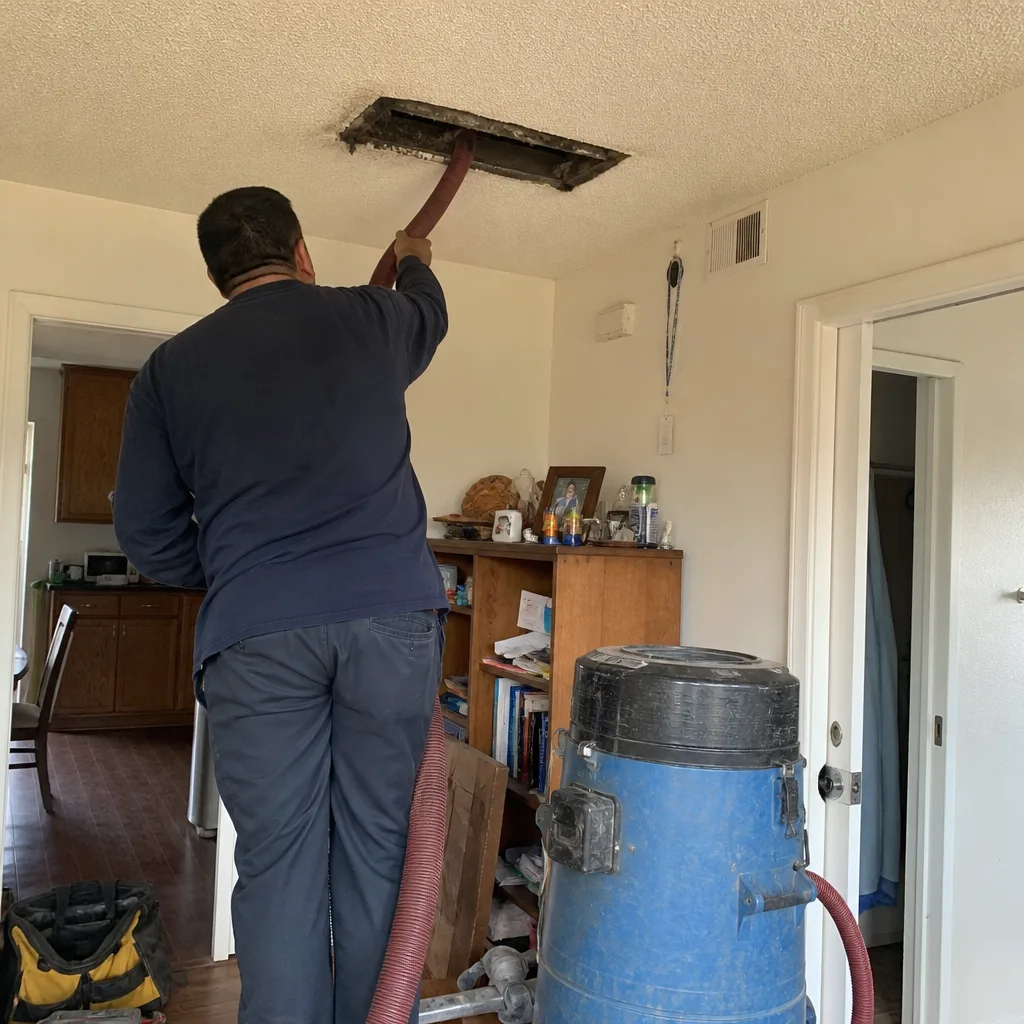
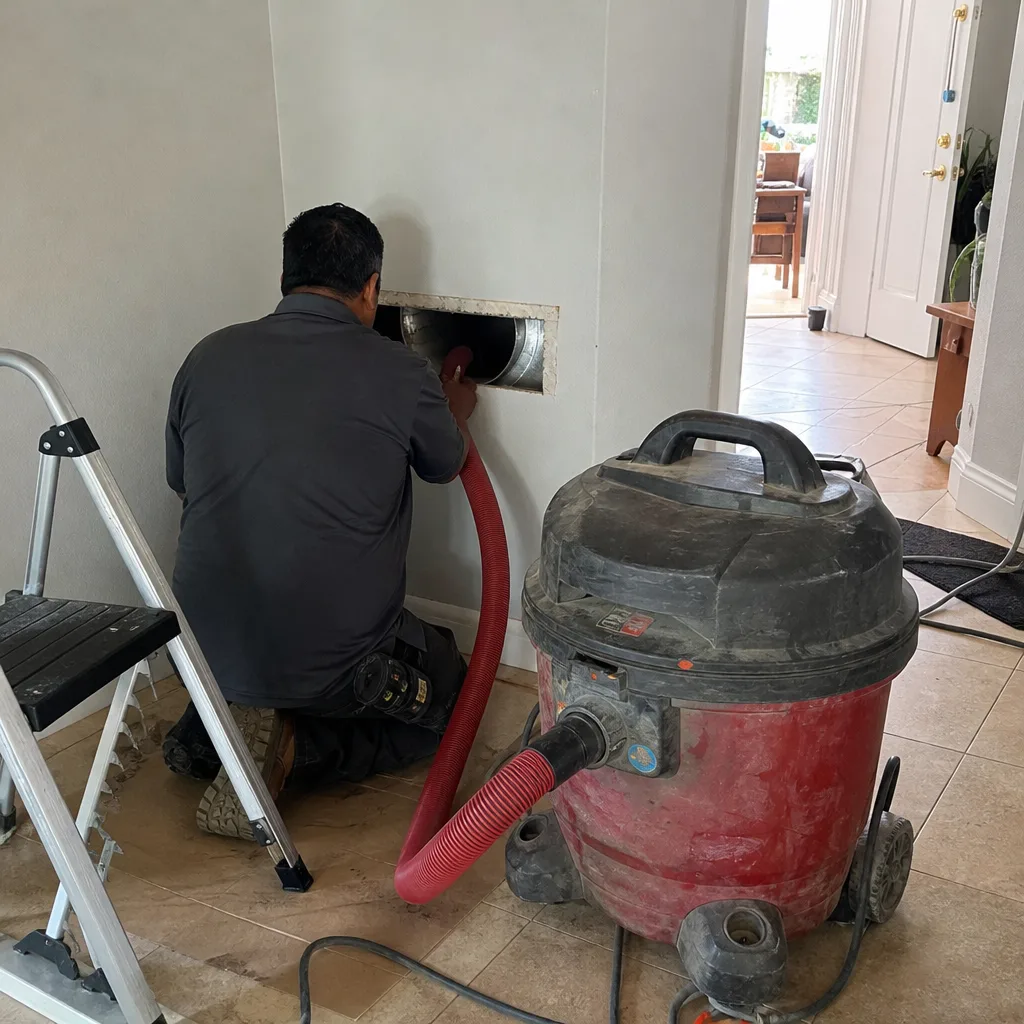
- Using a consumer shop vac to “clean” your ducts. A household vacuum doesn’t have the airflow or filtration to reach more than the first few feet of a duct run, and it kicks fine particulate through its exhaust. Professional duct cleaning uses rotary brush systems and HEPA-filtered negative air machines. That’s not an upsell. It’s the difference between cleaning the visible opening and cleaning the system.
- Waiting until the smell is unbearable. By the time a musty odor is strong enough to notice constantly, biological growth inside the ducts has been established for months. Earlier intervention means a less involved, less expensive resolution.
- Ignoring a sudden change in system noise. A new whistling, rattling, or thumping sound from the ductwork is often mechanical. Loose dampers, separated joints, and debris moving in the air stream all make distinctive noises. These don’t resolve with cleaning.
- Assuming one room’s temperature problem is a duct blockage. Temperature imbalance is more often caused by duct leakage or damper settings than by accumulation. Ruling out the simpler causes first saves you from paying for a cleaning that won’t change your comfort.
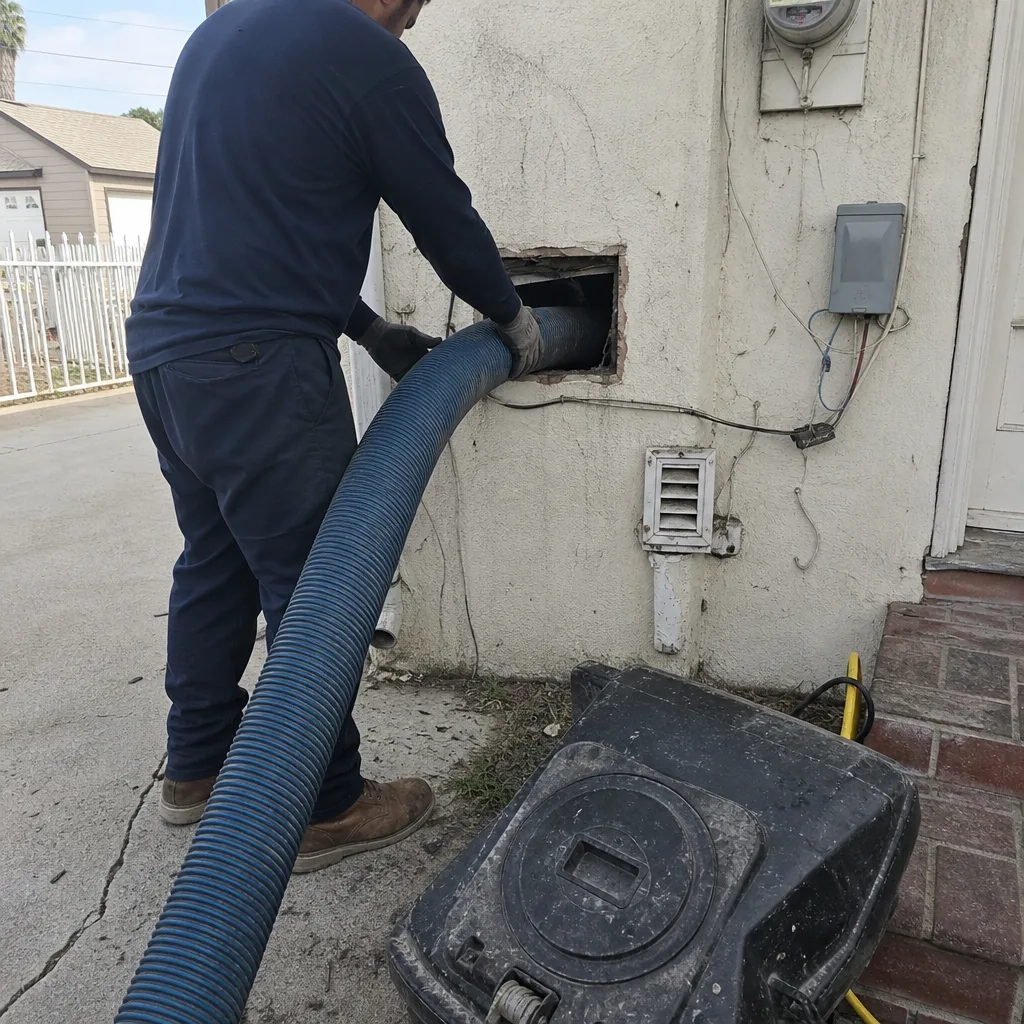
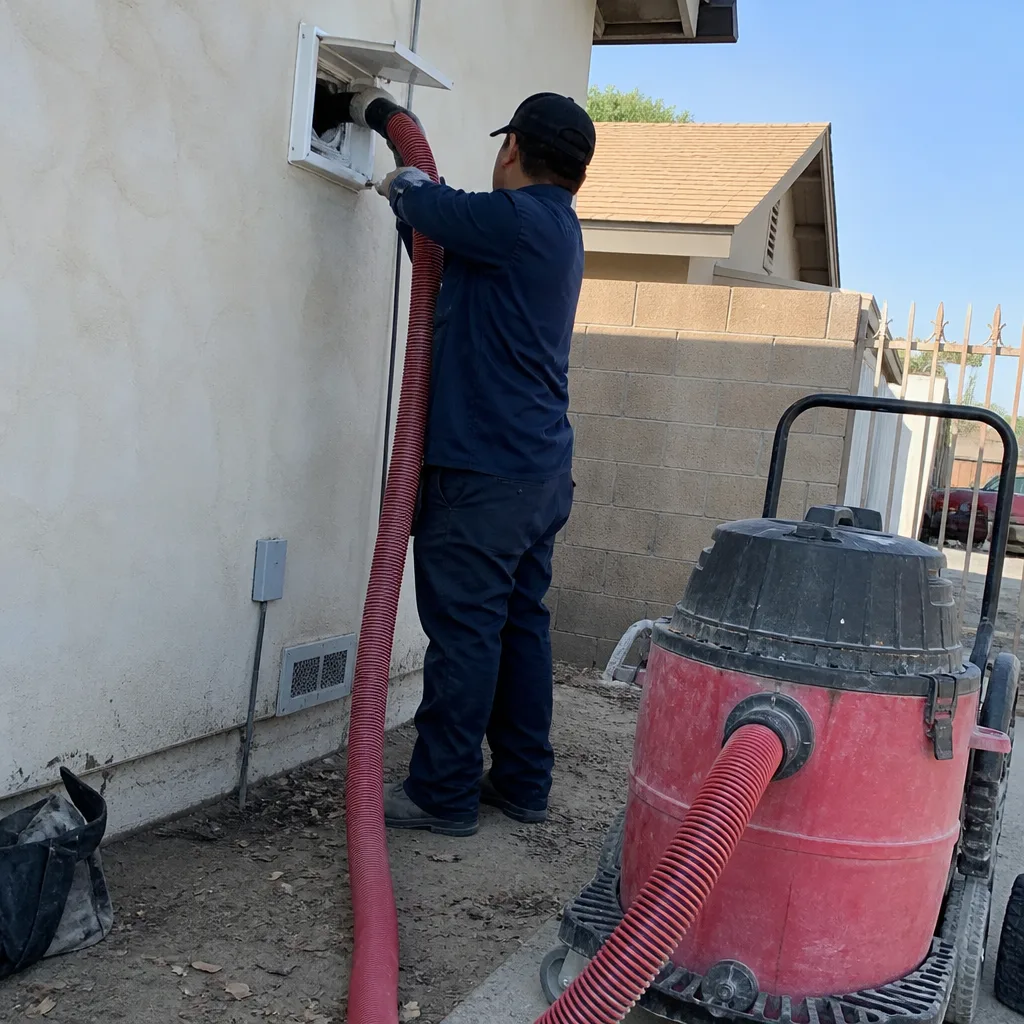
- Forgetting the dryer vent. Your clothes dryer exhaust duct is part of your home’s air system. Lint accumulation in the vent restricts dryer performance and creates a combustion hazard. Dryer vent cleaning in Inglewood is a separate service from air duct cleaning, but a complete duct specialist handles both.
When to Call a Professional
Call a duct specialist when you see or smell any of the following: visible dust actively blowing from supply registers while the system runs, a musty odor tied to system operation that doesn’t resolve with filter replacement, heavy accumulation visible inside the register boot, return grilles coated with fibrous material, or rooms that remain uncomfortable year after year despite seasonal HVAC service.
Also call when you don’t know which problem you have. An honest duct specialist will tell you if your issue is cleaning-responsive, repair-responsive, or actually an HVAC equipment issue that belongs with a different trade. That assessment should happen before any work is quoted, not after. Duct Cleaning Inglewood offers free estimates in Inglewood. Call (855) 341-8387 and we’ll inspect the system and tell you what the warning signs actually mean in your home.
Frequently Asked Questions
Your air ducts need cleaning if you can see visible dust actively blowing from supply registers while the system runs, if you notice a musty odor that intensifies when the system first starts and fades after several minutes, or if the interior of the register boot shows a dense layer of accumulated material. A light dust film at the register opening is normal and doesn’t justify a cleaning. Compare symptoms before deciding.
Air duct cleaning in Inglewood typically ranges from $350 to $750 for a standard single-family home, depending on the number of registers, the system configuration, and the level of contamination. Homes with heavy buildup, biological growth concerns, or multiple systems run higher. Any price quote based on square footage alone or a per-vent price should be questioned. Get a system inspection first, then a flat price for the complete job. Call (855) 341-8387 for a free estimate with no per-vent pricing.
Excess dust in your house has several possible sources: a duct system that’s recirculating accumulated particulate, leaky return ducts pulling air from an attic or crawlspace, an inefficient filter allowing fine particles through, or outside air infiltration around windows and doors. If the dust appears primarily on horizontal surfaces near supply registers, the ducts are a likely contributor. If it’s evenly distributed and appears even when the HVAC is off, look at infiltration and general household sources.
Most Inglewood homes benefit from air duct cleaning every three to five years. Homes with pets, homes near major roadways like the 405, homes with residents who have respiratory conditions, and homes that have had recent renovation work should consider cleaning on the shorter end of that range. Homes with high-quality filtration and no specific symptoms can often go longer.
Yes. Duct systems that have accumulated dust, pollen, pet dander, and biological material become a recirculation source. Every time the blower runs, microscopic particles are re-introduced to the living space. If you notice allergy symptoms that improve when you leave the house and worsen within an hour of returning home, the duct system is one of the prime suspects. Cleaning the ducts removes the reservoir and gives your body’s immune response a break.
Air duct cleaning addresses the HVAC system: supply ducts, return ducts, registers, and plenums that carry conditioned air through your home. Dryer vent cleaning in Inglewood addresses a separate, smaller duct that exhausts hot, lint-laden air from your clothes dryer to the outside. The two systems are not connected. A proper duct specialist handles both, but they’re billed and performed as separate services because they involve different tools and different procedures. We run both because a duct system that matters includes every air pathway in the home.
The Bottom Line
Duct warning signs fall into three categories: dust (gray, dry, airflow-restricting), biological (musty, odor-producing, moisture-derived), and mechanical (temperature imbalances, noises, sudden airflow changes). Each produces different symptoms and requires a different response. Inglewood homeowners work with two distinct environmental pressures, Santa Ana particulate and marine layer humidity, that accelerate duct contamination in specific ways. Before calling anyone, check your registers with a flashlight, note the odor patterns, and test airflow room to room. Then call a specialist who can tell you which category your problem falls into, and who runs professional-grade equipment, Rotobrush rotary brush systems and Nikro HEPA vacuums, rather than consumer tools. Your ducts are the only thing we do.
Written by the team at Duct Cleaning Inglewood, serving Inglewood since 2015.
See the difference
 Before
 After
 Before
 After
 Before
 After